Skip to Content

Research & Commentary

Read in-depth research, analysis, and commentary from MEI’s fellows and experts on the Middle East. 

Trump’s Family Business Deals Risk Further Undermining the Credibility of US Middle East Policy
  • Analysis
  • Trump’s Family Business Deals Risk Further Undermining the Credibility of US Middle East Policy

    President Trump’s family businesses are once again in the spotlight as a new financial disclosure showed they earned $2 billion in income in 2025 — a dramatic increase on the year before, with much of it coming from Gulf entities, raising emoluments concerns. Mounting perceptions of corruption, combined with unresolved crises in Iran and Israel-Palestine, are eroding trust among key partners in the Middle East. With the 2026 midterms approaching, these entanglements could represent a major political vulnerability and further undermine America’s already-strained standing in the region.

    Do the Gulf States Need a New Playbook?
  • Podcast
  • Do the Gulf States Need a New Playbook?

    After the US-Israel-Iran war — and the strikes that followed the cease-fire — the Gulf states find themselves dangerously exposed. Host Alistair Taylor is joined by MEI Associate Fellow Gregory Gause to discuss the war’s impact on the Gulf, their partnership with the United States, and whether the turmoil of recent months will push Gulf leaders to reassess their alliances and international engagement.

    July 2, 2026

    Additional Research & Commentary

    Backgrounders

    The Houthis
  • Backgrounder
  • The Houthis

    The Houthis are a political-military faction and Zaydi religious movement founded in northwestern Yemen in the 1980s. A key member of Iran’s Axis of Resistance with links to other militant organizations in the Arabian Peninsula and the Horn of Africa, the group has continued to pose a threat to Western interests on a global scale.

    May 15, 2026

    The Abraham Accords
    Photo by Alex Wong/Getty Images
  • Backgrounder
  • The Abraham Accords

    This backgrounder provides an overview of how the Abraham Accords came about, the US interests involved, their economic and strategic consequences, and the prospects for further enlargement going forward.

    November 17, 2025

    Turkish Foreign Policy
  • Backgrounder
  • Turkish Foreign Policy

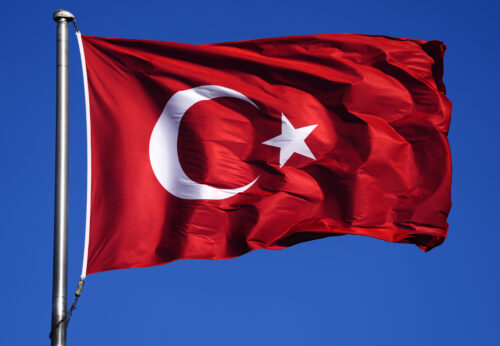
    After a decade of post-Arab Spring isolation, Turkey’s leaders have recognized that their ambition to position the country as an agenda-setter on the world stage requires active engagement in all directions. President Recep Tayyip Erdoğan’s consolidation of executive authority has centralized foreign policy decision-making and tied it to his domestic political priorities, transforming the country’s revisionist approach to one shaped primarily by personal and pragmatic interests.

    April 23, 2026

    Western Sahara: Why the conflict still matters
  • Video
  • Western Sahara: Why the conflict still matters

    As the Western Sahara conflict reaches its fifth decade, the territorial dispute remains unresolved and largely unknown. MEI’s Intissar Fakir unpacks the Western Sahara’s complex history and the rival claims by Morocco and the Sahrawi Arab Democratic Republic. She examines recent developments, such as President Trump’s recognition of Moroccan sovereignty over the territory and the collapse of a 30-year cease-fire, as well as the core questions that remain unanswered after half a century.

    August 7, 2025

    Podcasts

    Middle East Focus

    MEI’s flagship weekly podcast on US foreign policy and contemporary political and social issues in the Middle East.

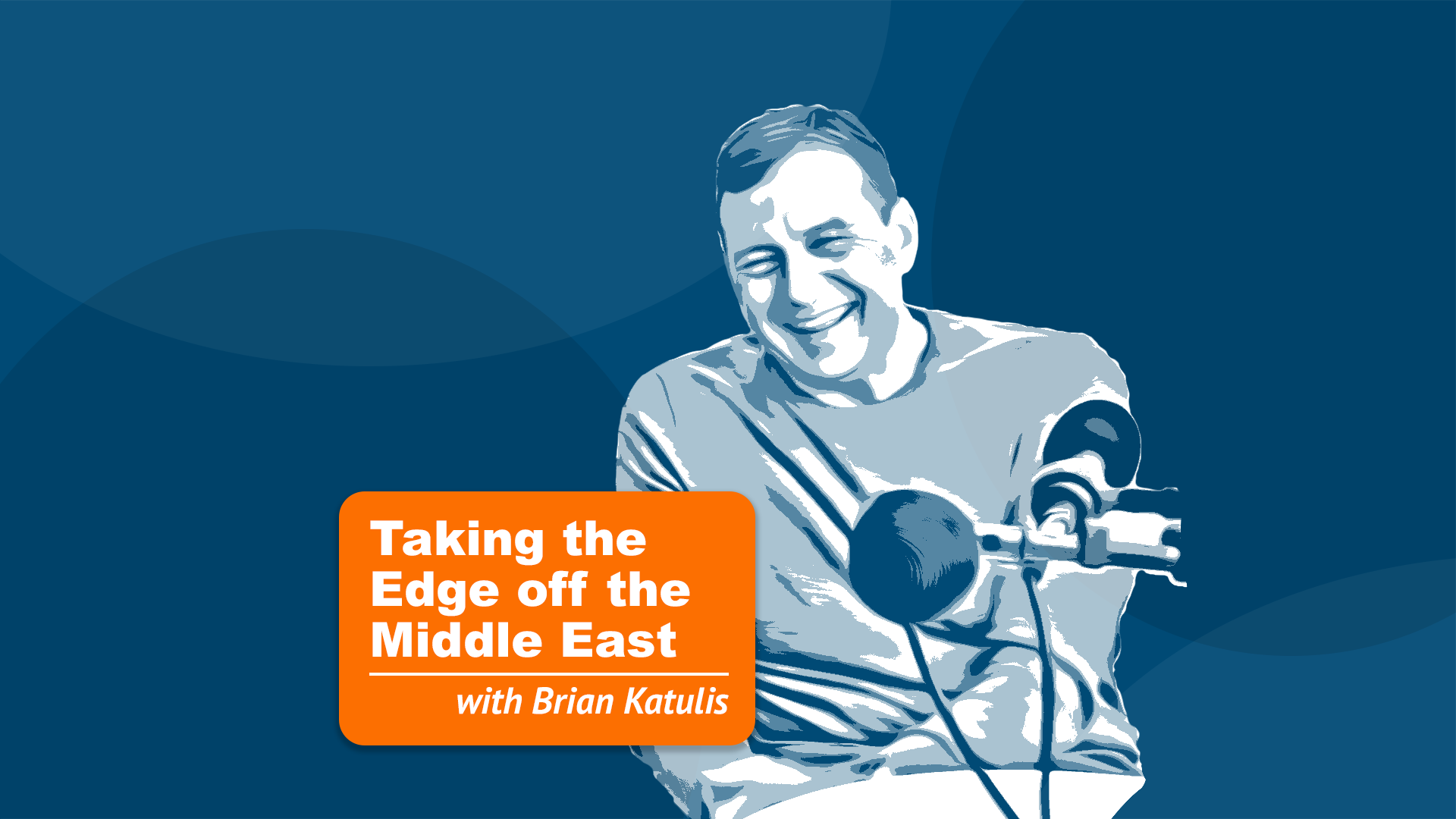
    Taking the Edge Off the Middle East

    MEI Senior Fellow Brian Katulis engages friends, colleagues, and policy experts in casual conversations on the most important happenings in the Middle East. 

    Rethinking Democracy

    MEI Senior Fellow Gonul Tol hosts leading scholars and thought leaders on global democracy trends and the state of the liberal international order. 

    Filter by
    8748 Results
    Keynote by Amb. Robert Ford at MEI's 2015 Annual Awards Banquet
    Middle East Institute
  • Analysis
  • Keynote by Amb. Robert Ford at MEI's 2015 Annual Awards Banquet

    Robert S. Ford, senior fellow at The Middle East Institute and former U.S. Ambassador to Syria and Algeria, delivered the keynote address at MEI’s Annual Awards Banquet on November 12, 2015, in Washington, D.C.

    November 20, 2015

    Obama's Mideast Legacy and the Next Administration
    Middle East Institute
  • Analysis
  • Obama's Mideast Legacy and the Next Administration

    The first panel at MEI’s 69th Annual Conference featured Prem Kumar (Albright Stonebridge Group), Michael Singh (The Washington Institute for Near East Policy), Tamara Cofman Wittes (The Brookings Institution), Robin Wright (The New Yorker, U.S. Institute of Peace and the Woodrow Wilson International Center for Scholars), and moderator Elise Labott (CNN).

    November 20, 2015

    Egypt’s Military Business: The Need for Change
    Middle East Institute
  • Analysis
  • Egypt’s Military Business: The Need for Change

    The Egyptian state today faces one acute crisis after the other. To be fair, the Egyptian military cannot be held responsible for creating these crises. However, it is unlikely that Egypt will be able to resolve them unless and until the armed forces divests itself of the power and the privileges associated with the immense economic power and privileges it has accumulated.

    November 20, 2015

    5 Obstacles That We Must Overcome in Syria — Starting with Assad
  • Analysis
  • 5 Obstacles That We Must Overcome in Syria — Starting with Assad

    This article was first published on The World Post.

    Under the pall cast by the horrific terrorist attacks in Paris, the U.S., Russia and other world powers met in Vienna Saturday and agreed on a timetable for a political process in Syria. However, the principles and steps they set conjure a sense of déjà vu.

    November 17, 2015

    Sectarian Backfire? Assessing Gulf Political Strategy Five Years after the Arab Uprisings
    Middle East Institute
  • Analysis
  • Sectarian Backfire? Assessing Gulf Political Strategy Five Years after the Arab Uprisings

    The division of citizens into confessional and other group constituencies, rather than some spontaneous outpouring of primordial hatred, was in fact a calculated survival strategy employed by frightened regimes under siege. It was and remains one premised on forestalling the emergence of cross-cutting societal factions that could challenge the political status quo, coalitions that—unlike narrow sectarian groups—could claim to represent the will of all the people and mobilize a broad base of support in pursuit of those claims. But has playing the sectarian card paid off?

    November 17, 2015

    The One-State Solution: Obama’s Sorry Legacy
  • Analysis
  • The One-State Solution: Obama’s Sorry Legacy

    Read the full article on Al Jazeera America.

    The White House recently acknowledged that it was out of ideas on how to pursue Israeli-Palestinian peace talks in the final year of Barack Obama’s presidency, raising — for the first time — the prospect that Israel’s occupation of East Jerusalem and the rest of the West Bank is permanent.

    November 16, 2015

    Immunizing Against Sectarian “Sickness”: The Case of Oman
    Middle East Institute
  • Analysis
  • Immunizing Against Sectarian “Sickness”: The Case of Oman

    The political culture in Oman seems to foster a pluralist intermeshing of national and sub-national identities that other diverse Arab states like Syria and Iraq were at pains to eliminate. This essay examines the Omani case to explore whether there are any lessons to be learned about sectarianism and how it can be confronted in the wider Middle East.

    November 12, 2015

    Debating Russia's Aims in Syria
  • Analysis
  • Debating Russia's Aims in Syria

    There is a debate within U.S. policy circles about Russian president Vladimir Putin’s strategy in Syria. While all agree that Putin intervened to shore up the faltering regime of Bashar al-Assad, there are at least two interpretations of what Putin’s ultimate objective is.

    November 10, 2015

    Lebanon’s Uprisings—Bringing the Political Back In
    Middle East Institute
  • Analysis
  • Lebanon’s Uprisings—Bringing the Political Back In

    The #YouStink movement and its various associate movements have denounced “the system,” “confessionalism,” and “the political class” of all orientations, including the parliament, the cabinet of minister, the prime minister, and so on, without really showing an understanding of how all these institutional positions relate to one another, and to the problem of corruption and of the poor public sector. By looking at the recent protests in Lebanon, this article proposes ways to avoid this slippery slope and demonstrates how to think of genuine change––and recognize its limits––given the prevailing political context.

    November 10, 2015

    Syria in Vienna: Governance Before Elections
  • Analysis
  • Syria in Vienna: Governance Before Elections

    Ten days ago 17 countries called for “credible, inclusive, nonsectarian governance” in Syria followed by a new constitution and elections.  It sounds good on paper.  However, the key element is not elections, nor is it a new constitution; it is the rule of law.  Syria has had no rule of law to speak of under Baath and Assad family rule, and in its absence the Constitution is worth little and fair elections are impossible.  Thus,  the governance reference in the Vienna statement is the vital element.  Only after serious governance changes are made can a new constitution come into real effect

    Governing Megacities in the MENA and Asia
    Middle East Institute
  • Analysis
  • Governing Megacities in the MENA and Asia

    According to the UN’s World Urbanization Prospects 2014, there are 28 “megacities” worldwide (i.e., urban agglomerations with populations in excess of 10 million). By 2030 another dozen will likely be added to their ranks.

    November 7, 2015

    Read the Middle East Journal

    The oldest peer-reviewed publication dedicated to the study of the modern Middle East, MEI’s flagship journal covers politics, society, and culture in the region.