Skip to Content

Research & Commentary

Read in-depth research, analysis, and commentary from MEI’s fellows and experts on the Middle East. 

Trump’s Family Business Deals Risk Further Undermining the Credibility of US Middle East Policy
  • Analysis
  • Trump’s Family Business Deals Risk Further Undermining the Credibility of US Middle East Policy

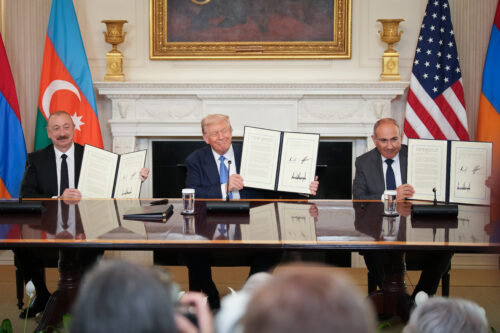
    President Trump’s family businesses are once again in the spotlight as a new financial disclosure showed they earned $2 billion in income in 2025 — a dramatic increase on the year before, with much of it coming from Gulf entities, raising emoluments concerns. Mounting perceptions of corruption, combined with unresolved crises in Iran and Israel-Palestine, are eroding trust among key partners in the Middle East. With the 2026 midterms approaching, these entanglements could represent a major political vulnerability and further undermine America’s already-strained standing in the region.

    Do the Gulf States Need a New Playbook?
  • Podcast
  • Do the Gulf States Need a New Playbook?

    After the US-Israel-Iran war — and the strikes that followed the cease-fire — the Gulf states find themselves dangerously exposed. Host Alistair Taylor is joined by MEI Associate Fellow Gregory Gause to discuss the war’s impact on the Gulf, their partnership with the United States, and whether the turmoil of recent months will push Gulf leaders to reassess their alliances and international engagement.

    July 2, 2026

    Additional Research & Commentary

    Backgrounders

    The Houthis
  • Backgrounder
  • The Houthis

    The Houthis are a political-military faction and Zaydi religious movement founded in northwestern Yemen in the 1980s. A key member of Iran’s Axis of Resistance with links to other militant organizations in the Arabian Peninsula and the Horn of Africa, the group has continued to pose a threat to Western interests on a global scale.

    May 15, 2026

    The Abraham Accords
    Photo by Alex Wong/Getty Images
  • Backgrounder
  • The Abraham Accords

    This backgrounder provides an overview of how the Abraham Accords came about, the US interests involved, their economic and strategic consequences, and the prospects for further enlargement going forward.

    November 17, 2025

    Turkish Foreign Policy
  • Backgrounder
  • Turkish Foreign Policy

    After a decade of post-Arab Spring isolation, Turkey’s leaders have recognized that their ambition to position the country as an agenda-setter on the world stage requires active engagement in all directions. President Recep Tayyip Erdoğan’s consolidation of executive authority has centralized foreign policy decision-making and tied it to his domestic political priorities, transforming the country’s revisionist approach to one shaped primarily by personal and pragmatic interests.

    April 23, 2026

    Western Sahara: Why the conflict still matters
  • Video
  • Western Sahara: Why the conflict still matters

    As the Western Sahara conflict reaches its fifth decade, the territorial dispute remains unresolved and largely unknown. MEI’s Intissar Fakir unpacks the Western Sahara’s complex history and the rival claims by Morocco and the Sahrawi Arab Democratic Republic. She examines recent developments, such as President Trump’s recognition of Moroccan sovereignty over the territory and the collapse of a 30-year cease-fire, as well as the core questions that remain unanswered after half a century.

    August 7, 2025

    Podcasts

    Middle East Focus

    MEI’s flagship weekly podcast on US foreign policy and contemporary political and social issues in the Middle East.

    Taking the Edge Off the Middle East

    MEI Senior Fellow Brian Katulis engages friends, colleagues, and policy experts in casual conversations on the most important happenings in the Middle East. 

    Rethinking Democracy

    MEI Senior Fellow Gonul Tol hosts leading scholars and thought leaders on global democracy trends and the state of the liberal international order. 

    Filter by
    8748 Results
    Egyptian Economic Challenges and Policy Exigencies
  • Analysis
  • Egyptian Economic Challenges and Policy Exigencies

    In the last three years, Egypt’s economic position has deteriorated dramatically. Domestic and external deficits have increased, causing public debt to grow sharply, external reserves to fall, investment to shrink, and inflation to increase. In the process, growth decelerated, unemployment rose, income distribution worsened, and the medium term economic outlook became clouded.

    September 8, 2014

    Extremist Groups in Syria
  • Analysis
  • Extremist Groups in Syria

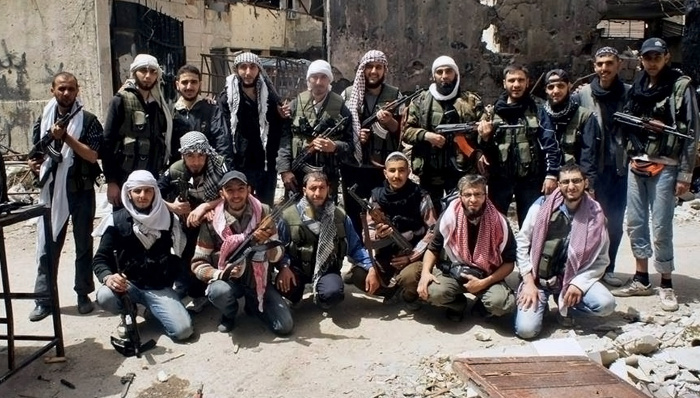
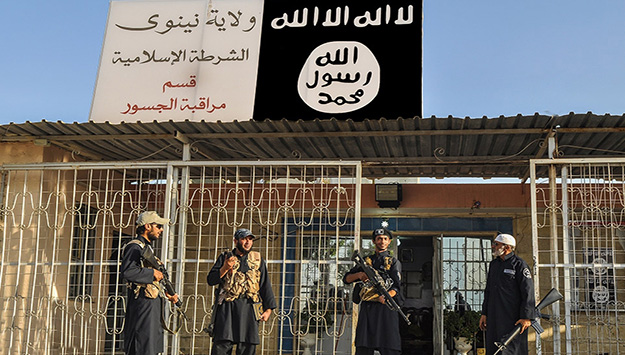
    Three and a half years into the Syrian civil war, it is clear that any hopes that the overall insurgency against the Assad regime might develop in a more “mainstream” and “moderate” direction have dissipated.[1]

    September 7, 2014

    On Probation: The Open-Ended Future of Sino-Israeli Relations
    Middle East Institute
  • Analysis
  • On Probation: The Open-Ended Future of Sino-Israeli Relations

    China, “a quarter of mankind,” can no longer be ignored.[1] Economic reform is not the essence of Deng Xiaoping’s revolution; opening China to the outside world is. Israel is part of this phenomenon. After thirty years of no relations (and even mutual hostility); ten years of unofficial relations; and more than twenty years of official relations, both countries have managed to overcome their earlier illusions and to come to terms with the limits of their bilateral relations.

    September 5, 2014

    Pakistan's Political Turmoil: Interview with Dr. Marvin Weinbaum
  • Analysis
  • Pakistan's Political Turmoil: Interview with Dr. Marvin Weinbaum

    The crisis in Pakistan is coming to a head. Of course it’s been building since the 15th of August, but now we’re faced with a situation in which this government is either going to survive or, very likely, were going to see a military takeover.

    The big question is where does the military stand, because everybody realizes that ultimately the outcome will depend on what the military is willing to accept or, indeed, what the military wants.

    Delivering Innovation to the “Zero-Defects” Culture: Japanese Conservatism Meets Israeli Risk-Taking
    Middle East Institute
  • Analysis
  • Delivering Innovation to the “Zero-Defects” Culture: Japanese Conservatism Meets Israeli Risk-Taking

    Despite the fact that Japan was one of the first countries in the world to recognize Israel as an independent nation, and despite the fact that relations between the two peoples have been generally amicable, the business linkages that would have been mutually beneficial have been very slow to develop. Only quite recently has there been a change in the wind that promises much more positive economic interaction between Israel and Japan as we enter the second half of this second decade of the new millennium.

    September 4, 2014

    The Power Generation Crisis in Egypt
  • Analysis
  • The Power Generation Crisis in Egypt

    Although power cuts are hardly new in Egypt, no Egyptian government has tackled the problem seriously and transparently. After the January 25, 2011 uprising, Egyptians had less patience with the failures of state services and demanded change.

    September 3, 2014

    Egypt’s Muslim Brotherhood: Politically Down and Out?
    Middle East Institute
  • Analysis
  • Egypt’s Muslim Brotherhood: Politically Down and Out?

    On August 9, 2014, the Muslim Brotherhood in Egypt began another chapter in its besieged political life.  The highest administrative court in Egypt, the Supreme Administrative Court, dissolved the Freedom and Justice Party (FJP), the political arm of the Muslim Brotherhood.  The Court also liquidated all of the FJP’s assets in an effort to quash any further political ambitions and activities that the Brotherhood might have in Egypt.  The ruling—a calculated move conducted prior to upcoming parliamentary elections, scheduled for later this year—was an attempt

    September 3, 2014

    The Road Not Taken
  • Analysis
  • The Road Not Taken

    Within four months of the military’s ouster of Mohamed Morsi, one of the icons of liberalism serving in the new cabinet, Ziad Bahaa-Eldin, admitted to CNN that those who called for political reconciliation, like himself, were alienated by the political mood, where the very concept of reconciliation has become “a dirty word” in Egypt.

    September 2, 2014

    Obama Needs Both a Peace Plan and a War Plan
  • Analysis
  • Obama Needs Both a Peace Plan and a War Plan

    Last week, President Obama said that he has no strategy yet to confront the Islamic State (IS) in Syria.  He was attempting to counter speculation about American bombing of IS targets there.  It had been rumored that the President wanted to decide on a war plan by the end of the week.[1] 

    September 2, 2014

    Turkey’s Syria and Iraq Policy Hostage to Islamic State
  • Analysis
  • Turkey’s Syria and Iraq Policy Hostage to Islamic State

    As the United States struggles to mobilize a coalition of allies including Turkey behind potential military action against the Islamic State (formerly known as ISIS) in Syria, Turkey’s Iraq and Syria policies remain captive to ISIS and the 49 Turkish hostages it holds. Turkey might be key to the U.S. effort to confront ISIS, and it is in a very tough spot.

    Ending Gaza’s Race to the Bottom
  • Analysis
  • Ending Gaza’s Race to the Bottom

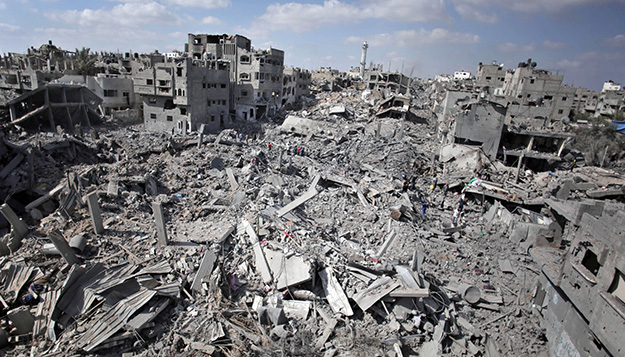
    The August 26 permanent cease-fire crafted by Egypt between Israel and Hamas and Islamic Jihad forces in the Gaza Strip offers the best opportunity in years to take Palestinians off the “diet” imposed on them by Israel after Hamas ousted Fatah security forces from Gaza in June 2007.

    No sooner had that confrontation ended than Israel expanded an already draconian economic “siege” on the enclave of 1.8 million. It closed Gaza’s border with Israel—its only functioning trade link to the outside world—to all commercial activity.

    August 29, 2014

    How U.S. can help Syria drive out ISIS
  • Analysis
  • How U.S. can help Syria drive out ISIS

    Read the full article on CNN.

    American airstrikes might be needed in Syria, but that would not be the most important tactic for success, nor would more material aid to the rebels be sufficient to contain the Islamic State over the long term. As in Iraq, there has to be a political angle as well.

    Egypt's Emerging Libya Policy
  • Analysis
  • Egypt's Emerging Libya Policy

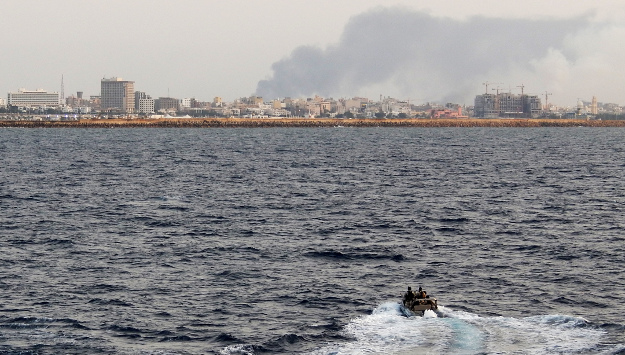
    Several weeks ago an Islamist and jihadist alliance led by Ansar al-Sharia–a group with ties to Islamic State (formerly ISIS)–took control of Benghazi and declared an “Islamic Emirate.” A few days ago, an Islamist alliance took control of Tripoli’s main airport. These developments have come as a shock to the Egyptian government, which considers an Islamic state on Egypt’s 720-mile long western border an immediate threat to Egypt’s national security. This helps explain Egypt’s alleged role in recent airstrikes inside Libya coordinated with the United Arab Emirates.

    August 27, 2014

    Read the Middle East Journal

    The oldest peer-reviewed publication dedicated to the study of the modern Middle East, MEI’s flagship journal covers politics, society, and culture in the region.