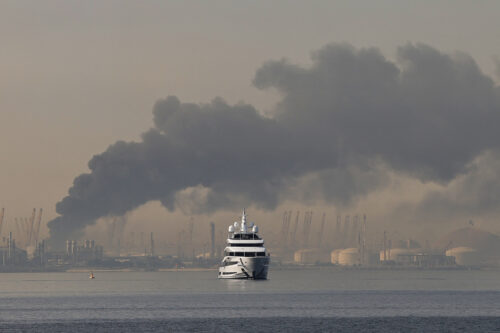
Geopolitical influence over trade increasingly rests on controlling the systems that make them work. The Middle East illustrates the stakes. US ports, cable corridors, cloud facilities, artificial intelligence (AI) investments, and maritime routes connect regional economies to global commerce while exposing them to external decisions and disruptions. For the United States, the challenge is to translate technological advantage into resilient networks rather than rely on centrality that can itself become a source of vulnerability and coercion.
Bonus Episode: Previewing Israel’s First Post-October 7 Election
Israel is preparing to hold what may be its most consequential election in decades. On October 27, Prime Minister Benjamin Netanyahu will face his first electoral test since October 7, 2023. In this bonus episode of Middle East Focus, we present the audio from a recent MEI webinar, hosted in Israel on the eve of the vote. Senior Fellow Natan Sachs is joined by Dr. Shira Efron, Distinguished Chair for Israel Policy and senior fellow at the RAND Corporation, and Neri Zilber, veteran journalist and Financial Times correspondent. They explore what’s at stake in this historic election and how different outcomes could reshape Israel’s domestic politics and the wider region.
Israel Was Built on Hope. This Election May Be Our Last Chance to Save It
Israel’s national anthem, Hatikva, means “the hope.” Israel is not just another country, but the culmination of a 2,000-year-old dream of national redemption. The rebirth of the Jewish people’s ancestral homeland, just three years after the Holocaust, was a miraculous triumph of hope over all odds.
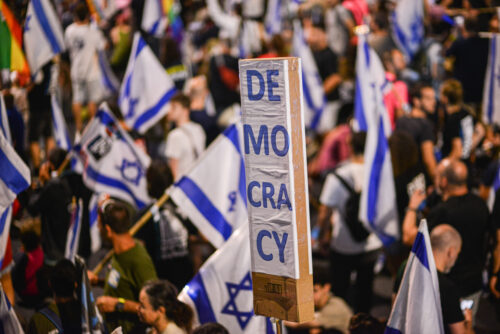
Today, that hope has been shattered and the elections on October 27 have become the most consequential in Israel’s history.
Since 1967, Israeli settlements in the West Bank have been a contested feature of the Israeli-Palestinian conflict. The ultimate disposition of the settlements and ongoing activity related to their growth have repeatedly defied agreement in negotiations over a resolution to the conflict.
The Houthis are a political-military faction and Zaydi religious movement founded in northwestern Yemen in the 1980s. A key member of Iran’s Axis of Resistance with links to other militant organizations in the Arabian Peninsula and the Horn of Africa, the group has continued to pose a threat to Western interests on a global scale.
The India-Middle East-Europe Economic Corridor (IMEC) is a proposed multinational infrastructure initiative aimed at upgrading connectivity between the three regions through integrated trade, energy, and digital networks. Announced at the G20 summit in New Delhi in September 2023, IMEC is envisioned partially as a counterweight to China’s international infrastructure project, the Belt and Road Initiative.
After a decade of post-Arab Spring isolation, Turkey’s leaders have recognized that their ambition to position the country as an agenda-setter on the world stage requires active engagement in all directions. President Recep Tayyip Erdoğan’s consolidation of executive authority has centralized foreign policy decision-making and tied it to his domestic political priorities, transforming the country’s revisionist approach to one shaped primarily by personal and pragmatic interests.
MEI Senior Fellow Brian Katulis engages friends, colleagues, and policy experts in casual conversations on the most important happenings in the Middle East.
Harm Reduction in Indonesia: At a Difficult Juncture
Harm reduction started in Asia about two decades ago, as a response to both the increase in injecting drug use and the spread of HIV/AIDS in the region. Most of these programs were spearheaded by community organizations and NGOs, often in conflict with the more moralistic approaches of their respective governments. Indonesia began moving toward the adoption of harm reduction policies in 1999, when various stakeholders gathered to discuss the state of AIDS and injecting drug use in the country.
Mohammed Dahlan is making a comeback, and not for the first time since his ignominious ouster from Gaza almost eight years ago, when the Palestinian Authority (PA) forces he was leading as the PA’s security chief were routed by Hamas. These days, the 53-year-old, who grew up in the poorest of Gaza’s refugee camps, is seeking to do well for himself by doing good for Gaza.
The Rise of Harm Reduction in Morocco: Successes and Challenges
Morocco has become the second MENA country after Iran to implement a nationwide harm reduction strategy aimed at stopping the spread of HIV/AIDS among people who use drugs. Moroccan civil society organizations (CSOs) have worked to devise a comprehensive strategy that will disseminate a full package of harm reduction services. The longstanding HIV/AIDS community-based organization Association de Lutte Contre le Sida (ALCS) is leading these efforts to make the national drug policy less repressive and more effective. Harm reduction is based on the notion that marginalized populations are entitled to their basic human rights, but in some countries, governments have merely used it as another tool for social control. ALCS has sought to prevent this from occurring in Morocco by remaining focused on harm reduction’s core principles.
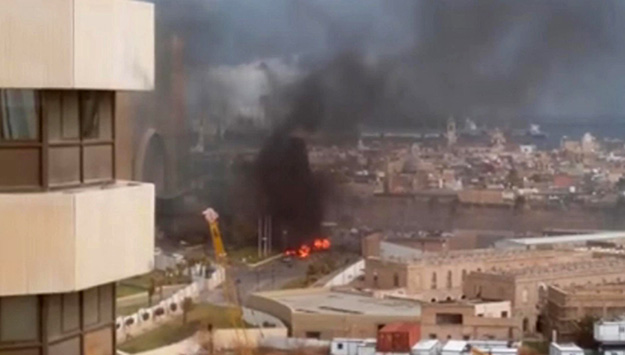
“Crises left to fester sometimes find their own way to the front burner.” Written on January 5, 2015, this sentence reflected my fear that starving Libya of high-profile international attention was increasingly risky. The beheading of 21 Egyptian Coptic Christians in Libya by Islamic State (ISIS) extremists this week appears to have placed the situation in Libya front and center.
Outreach Workers on the Front Lines: Malaysia’s Needle and Syringe Exchange Program
Outreach workers have been the backbone of Malaysia’s Needle and Syringe Exchange Program (NSEP) since its inception in 2006. This essay examines the origins of the NSEP, the role that outreach workers play, the everyday challenges they face in providing services to people who inject drugs (PWID), and the critical importance of supporting their efforts.
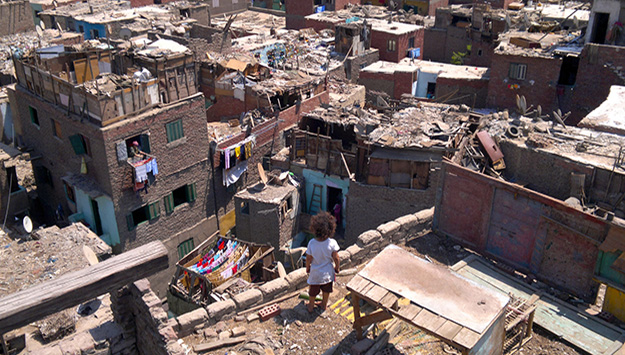
The government of former Egyptian President Hosni Mubarak had a vision for Cairo’s future. In 2007, it put forth a plan dubbed “Cairo 2050,” and among its objectives was to create wide avenues, green spaces, and new or revamped tourist sites, such as near the Pyramids.
Egypt's Security Challenge: ISIS, Sinai, and the Libyan Border
On January 28, 2015, jihadis in Sinai launched multiple, simultaneous attacks against Egyptian security forces in the vicinity of El Arish and the nearby towns of Sheikh Zuweid and Rafah. These attacks occurred only hours after President Abdul-Fattah el-Sisi said that he would die defending the region from terror. “We will never leave Sinai,” Sisi said. “Sinai is ours.
Notice: MEI Delegation Visit to Cairo, February 3-5, 2015
The Middle East Institute sponsored a bipartisan delegation of former high-level U.S. government officials to Cairo in early February. The delegation included Stephen Hadley, former National Security Advisor to President George W. Bush; General Anthony Zinni, former Commander of U.S. Central Command; and Daniel Kurtzer, former Ambassador to Egypt and Israel. They were accompanied by Middle East Institute President Wendy Chamberlin and Vice President Dr. Paul Salem.
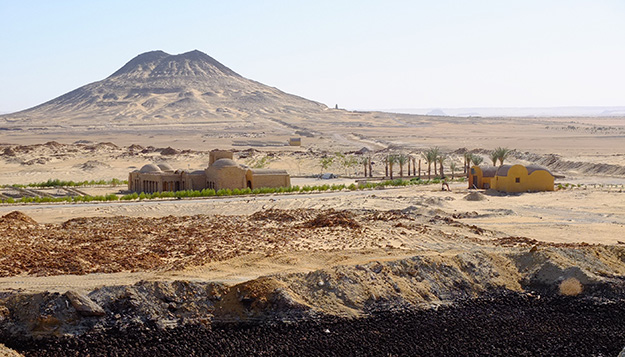
At the Bahariya Oasis 235 miles southwest of Cairo, the mountains of the Western Desert are interrupted by vast circular patterns of greenery. On one of these large farms, in striking contrast to the ancient, wind-shaped sandstone in the background, solar panels stand in neat rows. Here at the center of the largest hyper-arid region on earth, KarmSolar, a three-year-old Egyptian solar energy start-up company, has built its headquarters.
Harm Reduction Responses to Drug Use: Cross-Regional Perspectives
Many people throughout the world continue to use psychoactive drugs despite strong efforts to prevent them from doing so. There is a wide range of adverse medical, public health, and social consequences associated with such use. People Who Inject Drugs (PWID) face, among other things, elevated rates of HIV, viral hepatitis and tuberculosis.
Yemen’s Ansar Allah: Causes and Effects of Its Pursuit of Power
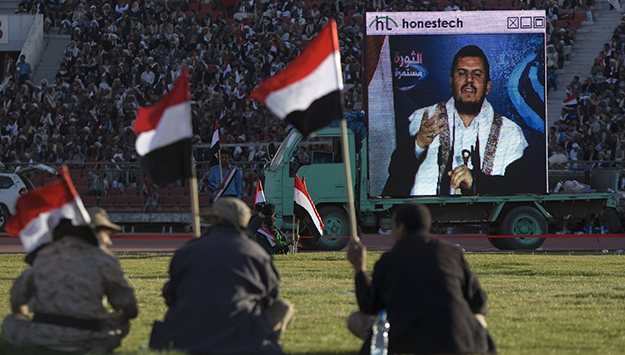
Observers can be excused for confusion over events in Yemen. In late January, Ansar Allah—the group often referred to as Houthis—kidnapped President Abdu Rabbu Mansour Hadi’s chief of staff, sacked the presidential palace, and effectively placed the president and government ministers under house arrest. Ansar Allah’s demands, strangely, were that the president and government stay in power rather than leave.
Sovereignty, the Hezbollah Model, or Dissolution: Managing Factional Forces in Iraq
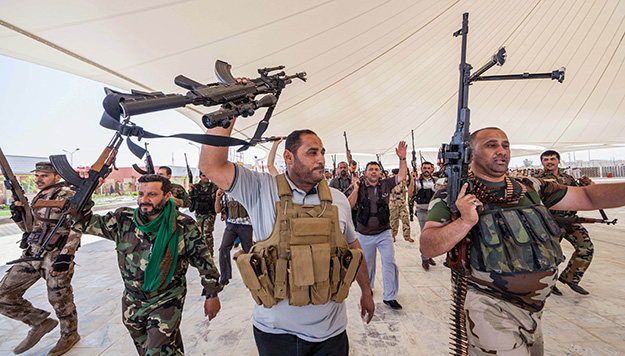
When the Islamic State of Iraq and Syria (ISIS) overran Mosul last June, Grand Ayatollah Ali al-Sistani, the preeminent Shi‘i cleric in Iraq, called for voluntary jihad. The outlook for the central government was bleak. Reports from the battlefronts, as well as threatening statements by ISIS leaders, suggested that the capital Baghdad could also fall to ISIS. The group repeatedly massacred its captives and systematically destroyed important religious and cultural sites.
Drug Use and Harm Reduction in the MENA Region and in Lebanon
Repressive policies that stigmatize and punish drug users have tended to exacerbate social problems rather than mitigate them. In contrast, harm reduction (HR) approaches to drug use have been shown to prevent the spread of blood-borne viruses (such as HIV, HBV, and HCV), thereby lowering morbidity and mortality rates. Over the past 15 years, many HR initiatives have been launched in the MENA region, including Lebanon. However, continued progress in HIV prevention will require more structured and comprehensive HR interventions, adjusted to the needs of local populations.
Save the Date: MEI's 69th Annual Banquet and Conference
Save the Date! The Middle East Institute’s 69th Annual Banquet and Conference November 12-13, 2015 Capital Hilton Hotel 1001 16th St. NW Washington, DC
Watch this space for more information, or call 202-785-1141 ext.213 for details.
The oldest peer-reviewed publication dedicated to the study of the modern Middle East, MEI’s flagship journal covers politics, society, and culture in the region.