Skip to Content

Research & Commentary

Read in-depth research, analysis, and commentary from MEI’s fellows and experts on the Middle East. 

Trump’s Family Business Deals Risk Further Undermining the Credibility of US Middle East Policy
  • Analysis
  • Trump’s Family Business Deals Risk Further Undermining the Credibility of US Middle East Policy

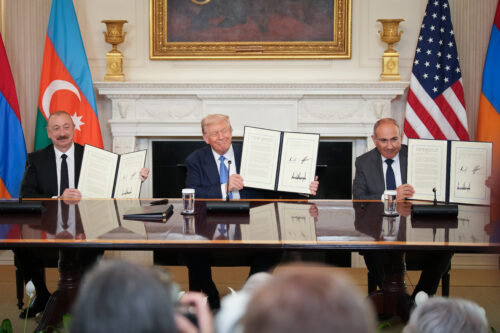
    President Trump’s family businesses are once again in the spotlight as a new financial disclosure showed they earned $2 billion in income in 2025 — a dramatic increase on the year before, with much of it coming from Gulf entities, raising emoluments concerns. Mounting perceptions of corruption, combined with unresolved crises in Iran and Israel-Palestine, are eroding trust among key partners in the Middle East. With the 2026 midterms approaching, these entanglements could represent a major political vulnerability and further undermine America’s already-strained standing in the region.

    Do the Gulf States Need a New Playbook?
  • Podcast
  • Do the Gulf States Need a New Playbook?

    After the US-Israel-Iran war — and the strikes that followed the cease-fire — the Gulf states find themselves dangerously exposed. Host Alistair Taylor is joined by MEI Associate Fellow Gregory Gause to discuss the war’s impact on the Gulf, their partnership with the United States, and whether the turmoil of recent months will push Gulf leaders to reassess their alliances and international engagement.

    July 2, 2026

    Additional Research & Commentary

    Backgrounders

    The Houthis
  • Backgrounder
  • The Houthis

    The Houthis are a political-military faction and Zaydi religious movement founded in northwestern Yemen in the 1980s. A key member of Iran’s Axis of Resistance with links to other militant organizations in the Arabian Peninsula and the Horn of Africa, the group has continued to pose a threat to Western interests on a global scale.

    May 15, 2026

    The Abraham Accords
    Photo by Alex Wong/Getty Images
  • Backgrounder
  • The Abraham Accords

    This backgrounder provides an overview of how the Abraham Accords came about, the US interests involved, their economic and strategic consequences, and the prospects for further enlargement going forward.

    November 17, 2025

    Turkish Foreign Policy
  • Backgrounder
  • Turkish Foreign Policy

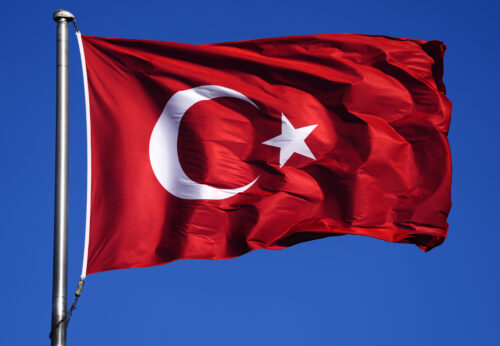
    After a decade of post-Arab Spring isolation, Turkey’s leaders have recognized that their ambition to position the country as an agenda-setter on the world stage requires active engagement in all directions. President Recep Tayyip Erdoğan’s consolidation of executive authority has centralized foreign policy decision-making and tied it to his domestic political priorities, transforming the country’s revisionist approach to one shaped primarily by personal and pragmatic interests.

    April 23, 2026

    Western Sahara: Why the conflict still matters
  • Video
  • Western Sahara: Why the conflict still matters

    As the Western Sahara conflict reaches its fifth decade, the territorial dispute remains unresolved and largely unknown. MEI’s Intissar Fakir unpacks the Western Sahara’s complex history and the rival claims by Morocco and the Sahrawi Arab Democratic Republic. She examines recent developments, such as President Trump’s recognition of Moroccan sovereignty over the territory and the collapse of a 30-year cease-fire, as well as the core questions that remain unanswered after half a century.

    August 7, 2025

    Podcasts

    Middle East Focus

    MEI’s flagship weekly podcast on US foreign policy and contemporary political and social issues in the Middle East.

    Taking the Edge Off the Middle East

    MEI Senior Fellow Brian Katulis engages friends, colleagues, and policy experts in casual conversations on the most important happenings in the Middle East. 

    Rethinking Democracy

    MEI Senior Fellow Gonul Tol hosts leading scholars and thought leaders on global democracy trends and the state of the liberal international order. 

    Filter by
    8748 Results
    Salafism and the Persecution of Shi‘ites in Malaysia
    Middle East Institute
  • Analysis
  • Salafism and the Persecution of Shi‘ites in Malaysia

    In the last few decades, religious scholars have branded many age-old Malay and Sufi religious practices as wrongful innovations. One of the great casualties of this rising intolerance has been Shi‘ism, whose followers have received some of the most intense criticism. It is widely accepted that these developments have much to do with the rise of Salafism.

    July 30, 2014

    El-Sisi’s Predicament with the Gaza Crisis
    Middle East Institute
  • Analysis
  • El-Sisi’s Predicament with the Gaza Crisis

    The current crisis in Gaza represents the first real foreign policy test for Egyptian president Abdel Fattah el-Sisi.  Hamas’s rejection of the Egyptian initiative to end hostilities calls into question Egypt’s ability to maintain its decades-long special status as mediator, a role it assumed by virtue of its relations with all parties – Israel and the United States on one hand, and the PLO and Hamas on the other.

    July 30, 2014

    Gaza Crisis Shows Turkey’s Declining Regional Influence
    Middle East Institute
  • Analysis
  • Gaza Crisis Shows Turkey’s Declining Regional Influence

    The Israeli incursion into Gaza and the ensuing diplomatic efforts to end the violence have revealed Turkey’s waning influence in the region.  

    The Turkish government has been promoting itself as a potential mediator between Israel and Hamas.  The latter’s rejection of an Egyptian ceasefire in mid-July bolstered Turkey’s hopes of playing a key role, as did its inclusion in this past weekend’s Paris summit hosted by U.S. Secretary of State John Kerry.

    Malaysia and its Shi‘a “Problem”
    Middle East Institute
  • Analysis
  • Malaysia and its Shi‘a “Problem”

    The primacy of ethnic Malays (and by association their adherence to Sunni Islam) has meant that Shi‘i Islam is considered a “deviant” sect in the country. Although official spokespeople regularly claim that the state has no concerns about Shi’a practicing their faith as long as they refrain from proselytizing, adherents face both social and legal restrictions.

    July 25, 2014

    The Future of Tunisia's Nidaa Tounes Party
    Middle East Institute
  • Analysis
  • The Future of Tunisia's Nidaa Tounes Party

    When the Nidaa Tounes (“Call for Tunisia”) party was formally licensed in July 2012, it positioned itself as a “modern” alternative to the Islamist Ennahda party. Led by former interim prime minister Béji Caid Essebsi, Nidaa Tounes drew a wide range of people, including supporters of Tunisia’s Destourian (“Constitution”) movement, trade unionists, leftists, and independents, as well as former members of Zine el-Abidine Ben Ali’s Constitutional Democratic Rally (RCD) party.

    July 25, 2014

    Egypt’s Least Bad Option for Addressing Energy Troubles
    Middle East Institute
  • Analysis
  • Egypt’s Least Bad Option for Addressing Energy Troubles

    A proposed deal to export Israeli natural gas through Egypt has the potential to enable Israel’s entry into its first major export markets, help Egypt escape a deepening energy crisis, and welcome the first European players into Israel’s natural gas industry. However, the deal is complicated by political realities and a history of deeply rooted grievances between the two countries, made worse by the recent violence between Israel and Hamas in Gaza.

    July 24, 2014

    Shi‘a-Inspired Violence in Malaysia: A Possibility?
    Middle East Institute
  • Analysis
  • Shi‘a-Inspired Violence in Malaysia: A Possibility?

    Ever since the triumph of Iranian Shi’a revolutionaries against the shah in 1979, the Malaysian government has been wary of the dangers of the revolution being exported across its borders. The author argues that rather than oppressing and vilifying indigenous Shi‘a citizens, the state should engage them intellectually, socially, and perhaps even religiously, in the spirit of Prime Minister Najib Razak.

    July 24, 2014

    Why the U.S. Has Limited Options In Iraq
  • Analysis
  • Why the U.S. Has Limited Options In Iraq

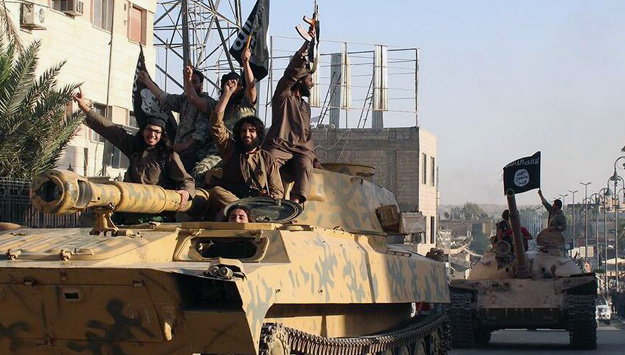
    When US commanders in Iraq in 2006 were trying to figure out the best way to approach the burgeoning insurgency, two points of view emerged from the debate. 

    July 24, 2014

    Sectarian-Based Violence: The Case of the Yezidis in Iraq and Syria
    Middle East Institute
  • Analysis
  • Sectarian-Based Violence: The Case of the Yezidis in Iraq and Syria

    Historically, the Yezidis — an ancient Kurdish-speaking ethno-religious community — have been subject to discrimination and violence. The current status of this community in Iraq and Syria is precarious, at best.

    July 23, 2014

    The Role of Civil Society in Countering Violent Extremism in Indonesia
    Middle East Institute
  • Analysis
  • The Role of Civil Society in Countering Violent Extremism in Indonesia

    The Indonesian experience suggests that an over-reliance on hard power may actually be counter-productive, inadvertently strengthening rather than weakening the violent Islamist extremists. The author explains the need for an indirect strategy in which calibrated hard power is subordinated to and supplemented by softer measures aimed at diminishing the underlying conditions that give rise to violent extremism.

    July 21, 2014

    Israel's Unwinnable War
  • Analysis
  • Israel's Unwinnable War

    Amb. Philip Wilcox, MEI scholar and president of the Foundation for Middle East Peace, discusses the motivations that led to the current escalation of hostilities between Israel and Hamas, and why Israel decided to pursue a ground assault in Gaza.

    Israel’s ground assault continues an historical pattern of dealing with threats from adversaries. How well has this strategy worked before?

    July 18, 2014

    The Humanitarian Situation in Gaza
    Middle East Institute
  • Analysis
  • The Humanitarian Situation in Gaza

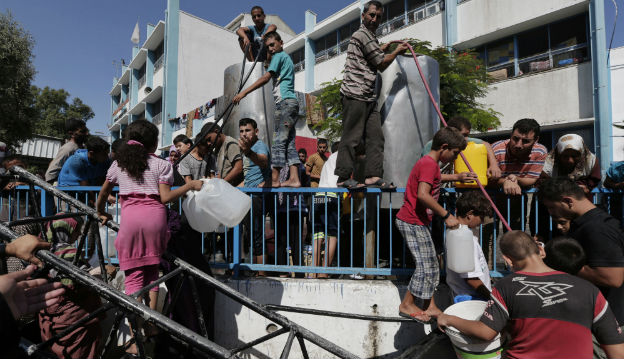
    Israel’s ground offensive against the Gaza Strip will make already dire humanitarian conditions for Palestinians there much worse.

    July 17, 2014

    Egypt’s Sexual Harassment Law: An Insufficient Measure to End Sexual Violence
  • Analysis
  • Egypt’s Sexual Harassment Law: An Insufficient Measure to End Sexual Violence

    A few days ago, heavy court sentences were imposed on seven men who were convicted of attempted rape, attempted murder, and torture, in a ruling seen by many as unprecedented in Egypt. In the words of one activist, the verdict was “a strong message to all harassers that their actions are no longer tolerated or accepted.”[1]  This comes in the wake of the government’s vows to combat the problem of sexual harassment; a new law passed last month criminalized sexual harassment for the first time.

    July 17, 2014

    Read the Middle East Journal

    The oldest peer-reviewed publication dedicated to the study of the modern Middle East, MEI’s flagship journal covers politics, society, and culture in the region.