Skip to Content

Research & Commentary

Read in-depth research, analysis, and commentary from MEI’s fellows and experts on the Middle East. 

Trump’s Family Business Deals Risk Further Undermining the Credibility of US Middle East Policy
  • Analysis
  • Trump’s Family Business Deals Risk Further Undermining the Credibility of US Middle East Policy

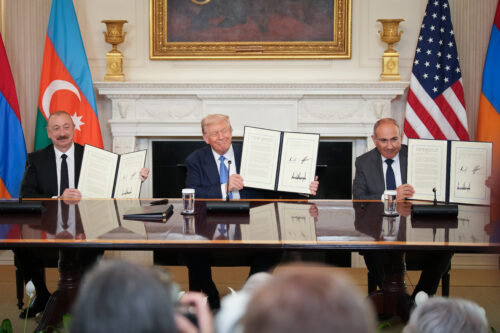
    President Trump’s family businesses are once again in the spotlight as a new financial disclosure showed they earned $2 billion in income in 2025 — a dramatic increase on the year before, with much of it coming from Gulf entities, raising emoluments concerns. Mounting perceptions of corruption, combined with unresolved crises in Iran and Israel-Palestine, are eroding trust among key partners in the Middle East. With the 2026 midterms approaching, these entanglements could represent a major political vulnerability and further undermine America’s already-strained standing in the region.

    Do the Gulf States Need a New Playbook?
  • Podcast
  • Do the Gulf States Need a New Playbook?

    After the US-Israel-Iran war — and the strikes that followed the cease-fire — the Gulf states find themselves dangerously exposed. Host Alistair Taylor is joined by MEI Associate Fellow Gregory Gause to discuss the war’s impact on the Gulf, their partnership with the United States, and whether the turmoil of recent months will push Gulf leaders to reassess their alliances and international engagement.

    July 2, 2026

    Additional Research & Commentary

    Backgrounders

    The Houthis
  • Backgrounder
  • The Houthis

    The Houthis are a political-military faction and Zaydi religious movement founded in northwestern Yemen in the 1980s. A key member of Iran’s Axis of Resistance with links to other militant organizations in the Arabian Peninsula and the Horn of Africa, the group has continued to pose a threat to Western interests on a global scale.

    May 15, 2026

    The Abraham Accords
    Photo by Alex Wong/Getty Images
  • Backgrounder
  • The Abraham Accords

    This backgrounder provides an overview of how the Abraham Accords came about, the US interests involved, their economic and strategic consequences, and the prospects for further enlargement going forward.

    November 17, 2025

    Turkish Foreign Policy
  • Backgrounder
  • Turkish Foreign Policy

    After a decade of post-Arab Spring isolation, Turkey’s leaders have recognized that their ambition to position the country as an agenda-setter on the world stage requires active engagement in all directions. President Recep Tayyip Erdoğan’s consolidation of executive authority has centralized foreign policy decision-making and tied it to his domestic political priorities, transforming the country’s revisionist approach to one shaped primarily by personal and pragmatic interests.

    April 23, 2026

    Western Sahara: Why the conflict still matters
  • Video
  • Western Sahara: Why the conflict still matters

    As the Western Sahara conflict reaches its fifth decade, the territorial dispute remains unresolved and largely unknown. MEI’s Intissar Fakir unpacks the Western Sahara’s complex history and the rival claims by Morocco and the Sahrawi Arab Democratic Republic. She examines recent developments, such as President Trump’s recognition of Moroccan sovereignty over the territory and the collapse of a 30-year cease-fire, as well as the core questions that remain unanswered after half a century.

    August 7, 2025

    Podcasts

    Middle East Focus

    MEI’s flagship weekly podcast on US foreign policy and contemporary political and social issues in the Middle East.

    Taking the Edge Off the Middle East

    MEI Senior Fellow Brian Katulis engages friends, colleagues, and policy experts in casual conversations on the most important happenings in the Middle East. 

    Rethinking Democracy

    MEI Senior Fellow Gonul Tol hosts leading scholars and thought leaders on global democracy trends and the state of the liberal international order. 

    Filter by
    8748 Results
    The Rise of Korean Islam: Migration and Da‘wa
    Middle East Institute
  • Analysis
  • The Rise of Korean Islam: Migration and Da‘wa

    In 2001, there were only 34,000 Muslims living in Korea; today there are more than 150,000. Furthermore, there are over 45,000 ethnic Korean Muslims. In contrast to Europe, where over a thousand years of political, cultural, and religious interactions have shaped social attitudes toward Islam, Korea’s Muslim population remains relatively unnoticed, comprising only 0.3 percent of the total Korean population. However, Islam in Korea is in the midst of great change. With the continuing increase in international migration over the past decade from Muslim-majority countries, the Korean Muslim community is transforming into a significant social and religious force.

    May 19, 2014

    The Egyptian Military’s Economic Channels of Influence
    Middle East Institute
  • Analysis
  • The Egyptian Military’s Economic Channels of Influence

    Egypt’s new constitution grants the country’s generals greater autonomy and an increased formal political role. The draft authorizes military trials for civilians (Article 204) and ensures that the military’s budget be beyond civilian scrutiny. The most significant change is that the Supreme Council of the Armed Forces (SCAF) will have the final say in choosing or dismissing the defense minister for two presidential terms (Article 234).

    May 14, 2014

    Who Makes Tehran's Arab Policy?
    Middle East Institute
  • Analysis
  • Who Makes Tehran's Arab Policy?

    Geography alone should make the Arab world Iran’s key foreign policy focus. Of Iran’s 13 immediate neighbors, seven are Arab countries.[1] But Tehran’s approach to the Arab world, with its 22 states extending from North Africa to the Arabian Peninsula, varies widely in intensity, and Iran’s objectives are equally varied depending on the country in question.

    Civilianizing the State: Reflections on the Egyptian Conundrum
    Middle East Institute
  • Analysis
  • Civilianizing the State: Reflections on the Egyptian Conundrum

    The military, though it has been the most powerful and influential actor during Egypt’s transition since 2011, is not the great deus ex machina of the Egyptian system. Rather, it is an actor that, since the fall of Mubarak, has managed to maintain some organizational coherence and legitimacy and has served as the convener for various and changing forces that are the crux of a new ruling coalition. Consequently, civilianizing the Egyptian state will require that security sector reforms be embedded in a broader set of political reforms.

    May 14, 2014

    Collection Spotlight: Modern Islamic Political Thought, by Hamid Enayat, 1982
  • Analysis
  • Collection Spotlight: Modern Islamic Political Thought, by Hamid Enayat, 1982

    In Modern Islamic Political Thought, Hamid Enayat discusses the major currents in twentieth-century Islamic political thought. Although the work is broad in scope, at its core is the assertion that the abolition of the Caliphate was “perhaps [the] most important controversy in twentieth-century Sunni political thought.” To prove this assertion, Enayat traces Islamic political thought from the abolition of the Caliphate to the rise of Islamic fundamentalism.

    May 13, 2014

    A Conversation with Amr Moussa
    Middle East Institute
  • Analysis
  • A Conversation with Amr Moussa

    May 6, 2014: A Conversation with H.E. Amr Moussa, Moderated by David Ignatius.

    May 13, 2014

    Five Arab Elections in Search of a Democratic Transition
    Middle East Institute
  • Analysis
  • Five Arab Elections in Search of a Democratic Transition


    Algerian President Abdelaziz Bouteflika casts his ballot on April 17.

    In the current two months between mid-April and early June, five Arab countries—Algeria, Lebanon, Iraq, Egypt, and even war-torn Syria—are holding key elections, with little sign that any is moving in the direction of meaningful democratic transition.

    May 9, 2014

    Security Sector Reform in the Philippines
    Middle East Institute
  • Analysis
  • Security Sector Reform in the Philippines

    The Philippines is often described as having one of the most vibrant civil societies in Asia. In the last three decades, the country has been home to two mass mobilizations that led to regime change. These mobilizations and other robust civil society initiatives have been attributed to “both political and social [movements] that were nurtured by politicized sectors of society for almost half a century.”

    May 9, 2014

    Qatar’s Regional Ambitions and the New Emir
  • Analysis
  • Qatar’s Regional Ambitions and the New Emir

    When Qatar’s Sheik Tamim bin Hamad al-Thani came to power after his father, Sheik Hamad bin Khalifa al-Thani, abdicated in late June 2013, he assumed a tricky diplomatic situation. While Sheik Hamad had been interested in promoting Qatar’s international position and had pursued a robust policy of regional engagement, even at the cost of alienating his neighbors, Sheik Tamim is more inclined to focus on regional collaboration and neutrality.

    May 9, 2014

    Egypt and Subsidies: A Country Living Beyond Its Means
  • Analysis
  • Egypt and Subsidies: A Country Living Beyond Its Means

    Since Egypt’s 2011 revolution, the country’s economy has been suffering, with almost all economic indicators pointing to a deteriorating situation—and this despite the unprecedented support of some of the Arab Gulf countries. Subsidies, which have always represented the social contract between the governing regime and the population, are a major problem. Though reforming subsidies has consistently been a concern, no regime over the last 60 years has been able to implement serious measures. Rather, a piecemeal approach has been used when adjustments to the subsidies system became urgent.

    May 5, 2014

    U.S. Policy and the Iraq Elections
  • Analysis
  • U.S. Policy and the Iraq Elections

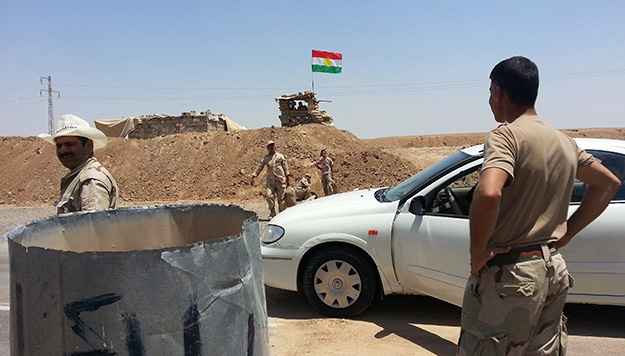
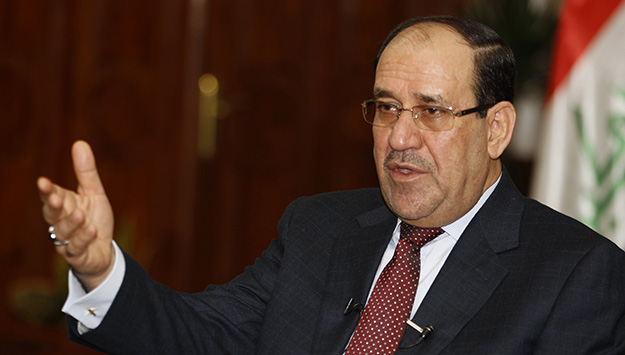
    With Iraq’s elections scheduled for April 30, the United States should be acutely aware of its reduced but remaining influence in the country. Even in 2006 and 2010, when more than 100,000 U.S. soldiers were present in Iraq, it was largely Iran that had the final say on the premierships, if not the exact shape of the cabinets that were formed after the elections.

    April 28, 2014

    The Loss and Looting of Egyptian Antiquities
  • Analysis
  • The Loss and Looting of Egyptian Antiquities

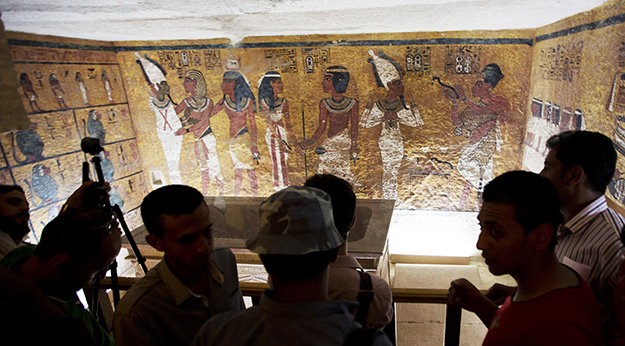
    Shortly after the onset of the Egyptian revolution in January 2011, the police and many of the associated security forces abandoned their posts, creating a vacuum that has had a devastating effect on Egypt’s antiquities. With great alacrity, villagers who lived near historic sites started appropriating land, while others with more nefarious intentions, such as tomb robbers and organized mafias, began the process of plundering.

    April 28, 2014

    Read the Middle East Journal

    The oldest peer-reviewed publication dedicated to the study of the modern Middle East, MEI’s flagship journal covers politics, society, and culture in the region.