Skip to Content

Research & Commentary

Read in-depth research, analysis, and commentary from MEI’s fellows and experts on the Middle East. 

Trump’s Family Business Deals Risk Further Undermining the Credibility of US Middle East Policy
  • Analysis
  • Trump’s Family Business Deals Risk Further Undermining the Credibility of US Middle East Policy

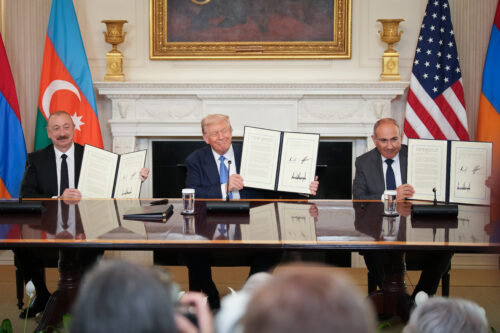
    President Trump’s family businesses are once again in the spotlight as a new financial disclosure showed they earned $2 billion in income in 2025 — a dramatic increase on the year before, with much of it coming from Gulf entities, raising emoluments concerns. Mounting perceptions of corruption, combined with unresolved crises in Iran and Israel-Palestine, are eroding trust among key partners in the Middle East. With the 2026 midterms approaching, these entanglements could represent a major political vulnerability and further undermine America’s already-strained standing in the region.

    Do the Gulf States Need a New Playbook?
  • Podcast
  • Do the Gulf States Need a New Playbook?

    After the US-Israel-Iran war — and the strikes that followed the cease-fire — the Gulf states find themselves dangerously exposed. Host Alistair Taylor is joined by MEI Associate Fellow Gregory Gause to discuss the war’s impact on the Gulf, their partnership with the United States, and whether the turmoil of recent months will push Gulf leaders to reassess their alliances and international engagement.

    July 2, 2026

    Additional Research & Commentary

    Backgrounders

    The Houthis
  • Backgrounder
  • The Houthis

    The Houthis are a political-military faction and Zaydi religious movement founded in northwestern Yemen in the 1980s. A key member of Iran’s Axis of Resistance with links to other militant organizations in the Arabian Peninsula and the Horn of Africa, the group has continued to pose a threat to Western interests on a global scale.

    May 15, 2026

    The Abraham Accords
    Photo by Alex Wong/Getty Images
  • Backgrounder
  • The Abraham Accords

    This backgrounder provides an overview of how the Abraham Accords came about, the US interests involved, their economic and strategic consequences, and the prospects for further enlargement going forward.

    November 17, 2025

    Turkish Foreign Policy
  • Backgrounder
  • Turkish Foreign Policy

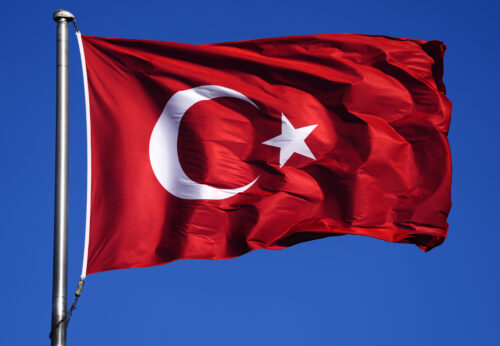
    After a decade of post-Arab Spring isolation, Turkey’s leaders have recognized that their ambition to position the country as an agenda-setter on the world stage requires active engagement in all directions. President Recep Tayyip Erdoğan’s consolidation of executive authority has centralized foreign policy decision-making and tied it to his domestic political priorities, transforming the country’s revisionist approach to one shaped primarily by personal and pragmatic interests.

    April 23, 2026

    Western Sahara: Why the conflict still matters
  • Video
  • Western Sahara: Why the conflict still matters

    As the Western Sahara conflict reaches its fifth decade, the territorial dispute remains unresolved and largely unknown. MEI’s Intissar Fakir unpacks the Western Sahara’s complex history and the rival claims by Morocco and the Sahrawi Arab Democratic Republic. She examines recent developments, such as President Trump’s recognition of Moroccan sovereignty over the territory and the collapse of a 30-year cease-fire, as well as the core questions that remain unanswered after half a century.

    August 7, 2025

    Podcasts

    Middle East Focus

    MEI’s flagship weekly podcast on US foreign policy and contemporary political and social issues in the Middle East.

    Taking the Edge Off the Middle East

    MEI Senior Fellow Brian Katulis engages friends, colleagues, and policy experts in casual conversations on the most important happenings in the Middle East. 

    Rethinking Democracy

    MEI Senior Fellow Gonul Tol hosts leading scholars and thought leaders on global democracy trends and the state of the liberal international order. 

    Filter by
    8748 Results
    Morsi was No Role Model for Islamic Democrats
  • Analysis
  • Morsi was No Role Model for Islamic Democrats

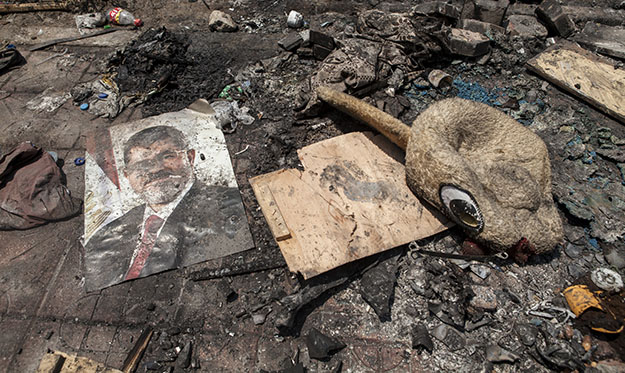
    Before 3 July 2013 enters the annals of U.S.-backed anti-Islamist coups[1] it is worth noting that Mohamed Morsi’s ill-fated presidency differs from prior cases. Whereas the Islamic Salvation Front (FIS) and Hamas posed a threat (however chimeric) to Washington, Morsi quickly won plaudits from U.S. officials. Meanwhile, he menaced the domestic opposition with an autocratic panache. When Morsi exceeded his elected mandate and refused to share power, secularists and Salafists rose against him—while the U.S.

    July 17, 2013

    Bassem Youssef
    Middle East Institute
  • Video
  • Bassem Youssef

    Former Egyptian President Mohamed Morsi addressing violence in Egypt's streets, followed by reaction from political satirist Bassem Youssef. January, 2013.

    July 17, 2013

    Bassem Youssef
    Middle East Institute
  • Video
  • Bassem Youssef

    Egyptian political satirist Bassem Youssef on the Muslim Brotherhood's "special relationship" with America.

    July 17, 2013

    Mona Makram-Ebeid on Egypt's Political Future
    Middle East Institute
  • Video
  • Mona Makram-Ebeid on Egypt's Political Future

    The Middle East Institute is proud to host Dr. Mona Makram-Ebeid for a discussion about the state of affairs in Egypt in the wake of the overthrow of Muslim Brotherhood President Mohamed Morsi. Dr. Makram-Ebeid is a prominent Egyptian academic and former member of the Shura Council, who recently resigned in support of the Tamarod movement. She will provide a first-hand perspective on the challenges ahead for Egypt following the recent military takeover of the government and the ensuing violence and unrest.

    July 17, 2013

    Announcement: Paul Salem Joining as Vice President of Middle East Institute to Lead Initiative on Arab Transitions
    Middle East Institute
  • Analysis
  • Announcement: Paul Salem Joining as Vice President of Middle East Institute to Lead Initiative on Arab Transitions

    WASHINGTON, D.C. – The Middle East Institute (MEI) is pleased to announce that Paul Salem will join the Institute as a vice president in October to direct the Arab Transitions initiative. Dr. Salem comes to MEI after having served as the founding director of the Carnegie Middle East Center in Beirut, Lebanon since 2006. 

    July 16, 2013

    Demography and Violence in Lebanon
    Middle East Institute
  • Analysis
  • Demography and Violence in Lebanon

    The sun is beating down and it isn’t even midday. Clutching the all-important paperwork that will get them coveted UN food vouchers, Syrian refugees look harried. The women pull at their children to hurry through the litter-filled yard of the sports club in the town of Bar Elias that serves as a distribution center for the UN’s hard-pressed World Food Program (WFP). Unlike their men, who head for the shade to smoke and exchange news, the women don’t dally, making for the snaking lines into a crowded hall where they will be called in groups by registration numbers.

    July 15, 2013

    Egypt's Kazeboon: Countering State Narrative
  • Analysis
  • Egypt's Kazeboon: Countering State Narrative

    A white bed sheet had been strung between two trees on a median just opposite the Sayeda Aisha mosque in a working class area of Cairo. Everything had been arranged by volunteers under the protection of Ahmed, a well-known personality in the neighborhood. He helped them pick a spot to set up the projector, screen, and speakers. All that was missing was a functioning street lamp to power the equipment, but those nearby had been disconnected. A generator that was usually rented out to street vendors was used instead.  

    July 12, 2013

    Mona Makram-Ebeid on Egypt's Political Future
    Middle East Institute
  • Podcast
  • Mona Makram-Ebeid on Egypt's Political Future

    The Middle East Institute is proud to host Dr. Mona Makram-Ebeid for a discussion about the state of affairs in Egypt in the wake of the overthrow of Muslim Brotherhood President Mohamed Morsi.  Dr. Makram-Ebeid is a prominent Egyptian academic and former member of the Shura Council, who recently resigned in support of the Tamarod movement.  She will provide a first-hand perspective on the challenges ahead for Egypt following the recent military takeover of the government and the ensuing violence and unrest.Bios:Dr.

    July 12, 2013

    Mona Makram-Ebeid on Egypt's Political Future
    Middle East Institute
  • Podcast
  • Mona Makram-Ebeid on Egypt's Political Future

    The Middle East Institute is proud to host Dr. Mona Makram-Ebeid for a discussion about the state of affairs in Egypt in the wake of the overthrow of Muslim Brotherhood President Mohamed Morsi.  Dr. Makram-Ebeid is a prominent Egyptian academic and former member of the Shura Council, who recently resigned in support of the Tamarod movement.  She will provide a first-hand perspective on the challenges ahead for Egypt following the recent military takeover of the government and the ensuing violence and unrest.Bios:Dr.

    July 12, 2013

    Mona Makram-Ebeid on Egypt's Political Future
    Middle East Institute
  • Podcast
  • Mona Makram-Ebeid on Egypt's Political Future

    The Middle East Institute is proud to host Dr. Mona Makram-Ebeid for a discussion about the state of affairs in Egypt in the wake of the overthrow of Muslim Brotherhood President Mohamed Morsi.  Dr. Makram-Ebeid is a prominent Egyptian academic and former member of the Shura Council, who recently resigned in support of the Tamarod movement.  She will provide a first-hand perspective on the challenges ahead for Egypt following the recent military takeover of the government and the ensuing violence and unrest.Bios:Dr.

    July 12, 2013

    Mona Makram-Ebeid on Egypt's Political Future
    Middle East Institute
  • Podcast
  • Mona Makram-Ebeid on Egypt's Political Future

    The Middle East Institute is proud to host Dr. Mona Makram-Ebeid for a discussion about the state of affairs in Egypt in the wake of the overthrow of Muslim Brotherhood President Mohamed Morsi.  Dr. Makram-Ebeid is a prominent Egyptian academic and former member of the Shura Council, who recently resigned in support of the Tamarod movement.  She will provide a first-hand perspective on the challenges ahead for Egypt following the recent military takeover of the government and the ensuing violence and unrest.Bios:Dr.

    July 12, 2013

    Mona Makram-Ebeid on Egypt's Political Future
    Middle East Institute
  • Podcast
  • Mona Makram-Ebeid on Egypt's Political Future

    The Middle East Institute is proud to host Dr. Mona Makram-Ebeid for a discussion about the state of affairs in Egypt in the wake of the overthrow of Muslim Brotherhood President Mohamed Morsi.  Dr. Makram-Ebeid is a prominent Egyptian academic and former member of the Shura Council, who recently resigned in support of the Tamarod movement.  She will provide a first-hand perspective on the challenges ahead for Egypt following the recent military takeover of the government and the ensuing violence and unrest.Bios:Dr.

    July 12, 2013

    The U.S. Needs to Walk the Walk on Egypt's Human Rights
  • Analysis
  • The U.S. Needs to Walk the Walk on Egypt's Human Rights

    Originally published July 10, 2013 in U.S. News and World Report

    Assertions and opinions in this publication are solely those of the above-mentioned author(s) and do not necessarily reflect the views of the Middle East Institute, which expressly does not take positions on Middle East policy.

    July 10, 2013

    Read the Middle East Journal

    The oldest peer-reviewed publication dedicated to the study of the modern Middle East, MEI’s flagship journal covers politics, society, and culture in the region.