Skip to Content

Research & Commentary

Read in-depth research, analysis, and commentary from MEI’s fellows and experts on the Middle East. 

Trump’s Family Business Deals Risk Further Undermining the Credibility of US Middle East Policy
  • Analysis
  • Trump’s Family Business Deals Risk Further Undermining the Credibility of US Middle East Policy

    President Trump’s family businesses are once again in the spotlight as a new financial disclosure showed they earned $2 billion in income in 2025 — a dramatic increase on the year before, with much of it coming from Gulf entities, raising emoluments concerns. Mounting perceptions of corruption, combined with unresolved crises in Iran and Israel-Palestine, are eroding trust among key partners in the Middle East. With the 2026 midterms approaching, these entanglements could represent a major political vulnerability and further undermine America’s already-strained standing in the region.

    Do the Gulf States Need a New Playbook?
  • Podcast
  • Do the Gulf States Need a New Playbook?

    After the US-Israel-Iran war — and the strikes that followed the cease-fire — the Gulf states find themselves dangerously exposed. Host Alistair Taylor is joined by MEI Associate Fellow Gregory Gause to discuss the war’s impact on the Gulf, their partnership with the United States, and whether the turmoil of recent months will push Gulf leaders to reassess their alliances and international engagement.

    July 2, 2026

    Additional Research & Commentary

    Backgrounders

    The Houthis
  • Backgrounder
  • The Houthis

    The Houthis are a political-military faction and Zaydi religious movement founded in northwestern Yemen in the 1980s. A key member of Iran’s Axis of Resistance with links to other militant organizations in the Arabian Peninsula and the Horn of Africa, the group has continued to pose a threat to Western interests on a global scale.

    May 15, 2026

    The Abraham Accords
    Photo by Alex Wong/Getty Images
  • Backgrounder
  • The Abraham Accords

    This backgrounder provides an overview of how the Abraham Accords came about, the US interests involved, their economic and strategic consequences, and the prospects for further enlargement going forward.

    November 17, 2025

    Turkish Foreign Policy
  • Backgrounder
  • Turkish Foreign Policy

    After a decade of post-Arab Spring isolation, Turkey’s leaders have recognized that their ambition to position the country as an agenda-setter on the world stage requires active engagement in all directions. President Recep Tayyip Erdoğan’s consolidation of executive authority has centralized foreign policy decision-making and tied it to his domestic political priorities, transforming the country’s revisionist approach to one shaped primarily by personal and pragmatic interests.

    April 23, 2026

    Western Sahara: Why the conflict still matters
  • Video
  • Western Sahara: Why the conflict still matters

    As the Western Sahara conflict reaches its fifth decade, the territorial dispute remains unresolved and largely unknown. MEI’s Intissar Fakir unpacks the Western Sahara’s complex history and the rival claims by Morocco and the Sahrawi Arab Democratic Republic. She examines recent developments, such as President Trump’s recognition of Moroccan sovereignty over the territory and the collapse of a 30-year cease-fire, as well as the core questions that remain unanswered after half a century.

    August 7, 2025

    Podcasts

    Middle East Focus

    MEI’s flagship weekly podcast on US foreign policy and contemporary political and social issues in the Middle East.

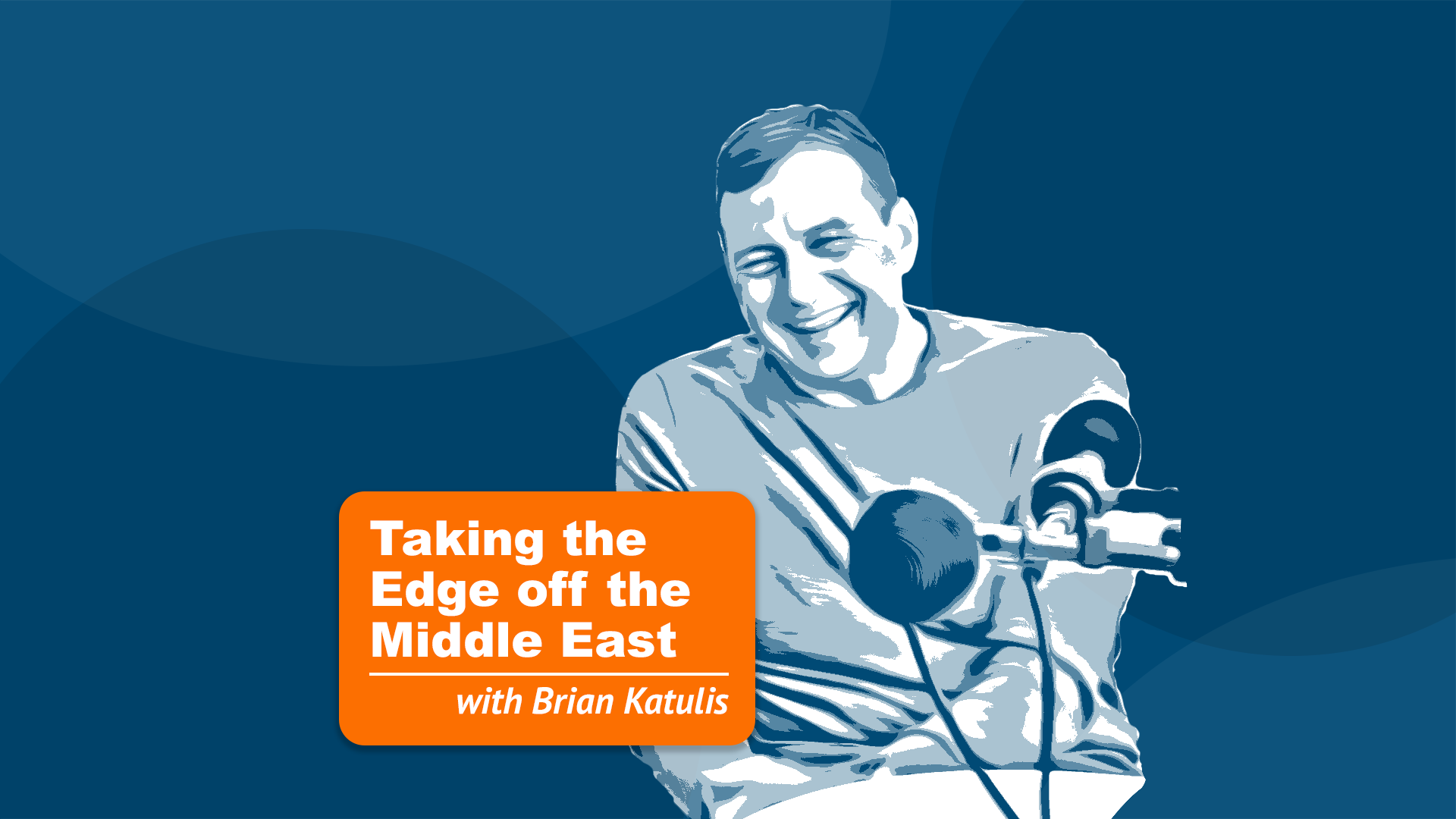
    Taking the Edge Off the Middle East

    MEI Senior Fellow Brian Katulis engages friends, colleagues, and policy experts in casual conversations on the most important happenings in the Middle East. 

    Rethinking Democracy

    MEI Senior Fellow Gonul Tol hosts leading scholars and thought leaders on global democracy trends and the state of the liberal international order. 

    Filter by
    8748 Results
    The Iranian Diaspora in Malaysia: Emergent Pluralism
  • Analysis
  • The Iranian Diaspora in Malaysia: Emergent Pluralism

    The Iranian diaspora in Malaysia is incredibly diverse. Supporters of the Green Movement, students, individuals who fast and pray and those who do not know the direction of the qibla, clerics who promote secularism and those who promote the authority of the vilayat-i faqih, Iranian Kurds, Turks, and Arabs, journalists, artists, and environmentalists: all these—and more—constitute the community of Iranians who have fled or quietly moved to Malaysia.

    July 10, 2013

    Post Morsi: Egypt, Israel, and Hamas
    Middle East Institute
  • Analysis
  • Post Morsi: Egypt, Israel, and Hamas

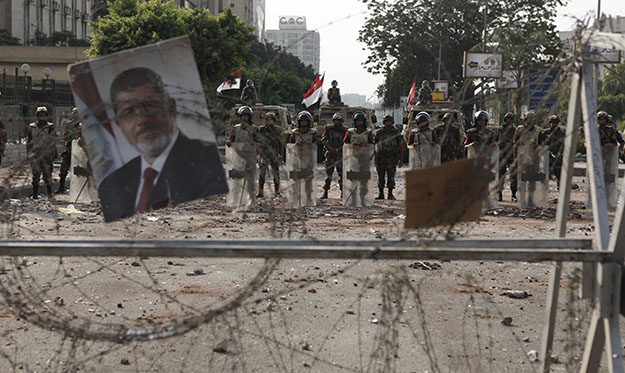
    The dramatic events of July 3, which saw the unseating of Egypt’s first and only democratically-elected government by a military coup stimulated by enormous popular demonstrations, has created a huge question mark as to the future governance of the Arab world’s largest and most important country. The ramifications and repercussions will be playing out for months and years, whatever steps are taken in the next days and weeks. However, two parties acutely affected by these events are watching with particular concern.

    July 10, 2013

    Sexual Assault and the Fall of Morsi
  • Analysis
  • Sexual Assault and the Fall of Morsi

    Amid last week’s uproar, now deposed Egyptian President Mohamed Morsi issued a statement in English via top aide and advisor on foreign relations Essam el-Haddad, citing cases of sexual assault in or around Tahrir Square as evidence that “Tahrir crowds are out of control.”[1] Essam el-Haddad’s son, Gehad, took to Twitter, also in English, to stand up for the “protection of women.” With these moves, the Muslim Brotherhood sunk to a new low in its propaganda war against its detractors.

    July 8, 2013

    Obama and Egypt's Crisis
    Middle East Institute
  • Analysis
  • Obama and Egypt's Crisis

    Over the past two days, millions of Egyptians have taken to the streets, most of them calling for early presidential elections with the aim of ousting Mohamed Morsi. June 30 marked Morsi’s one-year anniversary as president, and while he was elected democratically in 2012, his actions since have been more in the authoritarian style of a Mubarak than a reformer with the demands of the Egyptian street in mind.

    July 2, 2013

    Egypt's Crisis: The Day After
  • Analysis
  • Egypt's Crisis: The Day After

    In the wake of yesterday’s outbreak of what has been called the largest protest ever, against Egyptian president Mohamed Morsi, observers are left with one question: What comes next? None of the major players appear to have a practical answer to this question. For instance, no one has produced a politically sound “exit strategy” beyond the loud demand to remove Morsi and to hold a new presidential election.

    July 1, 2013

    Collection Spotlight: The Arab Awakening
    Middle East Institute
  • Analysis
  • Collection Spotlight: The Arab Awakening

    The Arab Awakening: America and the Transformation of the Middle East, by Kenneth Pollack and Daniel Byman et al., 2011

    July 1, 2013

    Hezbollah's Plunge into the Syrian Abyss
  • Video
  • Hezbollah's Plunge into the Syrian Abyss

    Randa Slim, MEI Scholar and adjunct research fellow at the New America Foundation, discusses the implications of Hezbollah's growing role in Syria for Lebanese politics and Lebanon's Shiite community.

    June 28, 2013

    Hezbollah's Plunge into the Syrian Abyss
    Middle East Institute
  • Podcast
  • Hezbollah's Plunge into the Syrian Abyss

    The Middle East Institute is pleased to welcome MEI Scholar Randa Slim for a discussion on the implications of Hezbollah’s growing role in Syria for Lebanese politics and Lebanon’s Shiite community. Recently returned from a trip to the region, Slim will examine Hezbollah’s potential end game in Syria, and whether Lebanon will be able to resist being drawn into the conflict following Hezbollah’s plunge into the Syrian abyss.

    June 28, 2013

    Hezbollah's Plunge into the Syrian Abyss
    Middle East Institute
  • Podcast
  • Hezbollah's Plunge into the Syrian Abyss

    The Middle East Institute is pleased to welcome MEI Scholar Randa Slim for a discussion on the implications of Hezbollah’s growing role in Syria for Lebanese politics and Lebanon’s Shiite community. Recently returned from a trip to the region, Slim will examine Hezbollah’s potential end game in Syria, and whether Lebanon will be able to resist being drawn into the conflict following Hezbollah’s plunge into the Syrian abyss.

    June 28, 2013

    Hezbollah's Plunge into the Syrian Abyss
    Middle East Institute
  • Podcast
  • Hezbollah's Plunge into the Syrian Abyss

    The Middle East Institute is pleased to welcome MEI Scholar Randa Slim for a discussion on the implications of Hezbollah’s growing role in Syria for Lebanese politics and Lebanon’s Shiite community. Recently returned from a trip to the region, Slim will examine Hezbollah’s potential end game in Syria, and whether Lebanon will be able to resist being drawn into the conflict following Hezbollah’s plunge into the Syrian abyss.

    June 28, 2013

    Hezbollah's Plunge into the Syrian Abyss
    Middle East Institute
  • Podcast
  • Hezbollah's Plunge into the Syrian Abyss

    The Middle East Institute is pleased to welcome MEI Scholar Randa Slim for a discussion on the implications of Hezbollah’s growing role in Syria for Lebanese politics and Lebanon’s Shiite community. Recently returned from a trip to the region, Slim will examine Hezbollah’s potential end game in Syria, and whether Lebanon will be able to resist being drawn into the conflict following Hezbollah’s plunge into the Syrian abyss.

    June 28, 2013

    Egypt & the IMF: Conditions As Usual
    Middle East Institute
  • Analysis
  • Egypt & the IMF: Conditions As Usual

    The negotiations for a potential loan from the International Monetary Fund (IMF) to Egypt have been one of the most contested issues in the country since the January 2011 revolution.

    June 27, 2013

    June 30: Tamarod and Its Opponents
    Middle East Institute
  • Analysis
  • June 30: Tamarod and Its Opponents

    Everyone in Egypt is bracing for June 30. Demonstrations against President Mohamed Morsi on the day marking his first year in office were always expected, but a grassroots campaign has reinvigorated a waning street movement and has provided an initiative embraced by most of the country’s opposition.

    June 26, 2013

    Tamarod: The Organization of a Rebellion
  • Video
  • Tamarod: The Organization of a Rebellion

    Mahmoud Badr, one of Tamarod's five founders and the movement's official spokesperson sits down with MEI to discuss Tamarod's origin, aims, and roadmap for political transition. Badr delves into the current pitfalls of Morsi's regime, his expectations for June 30th, and the reform he sees as central to Egypt's future. A journalist and broadcast media producer by trade, Badr is also a coordinator for the opposition movement Kefaya and was part of Dr. Mohamed El Baradei's "Bid for Change" campaign. Video by Dina Hussein.

    June 26, 2013

    Obama, Guantanamo, and the Devil in the Details
    Middle East Institute
  • Analysis
  • Obama, Guantanamo, and the Devil in the Details

    In a speech on 23 May 2013, President Obama declared the war on terror over. “We must define our effort not as a boundless ‘global war on terror,’” he said, “but rather as a series of persistent, targeted efforts to dismantle specific networks of violent extremists that threaten America.”[1] He argued that al-Qa`ida is on the run in Afghanistan and Pakistan and no longer threatens the U.S. homeland.

    June 25, 2013

    Read the Middle East Journal

    The oldest peer-reviewed publication dedicated to the study of the modern Middle East, MEI’s flagship journal covers politics, society, and culture in the region.