تمت ترجمة هذا النص بواسطة الذكاء الاصطناعي وقد يحتوي على أخطاء.
تخطي إلى المحتوى

الأبحاث والتعليقات

اقرأ الأبحاث والتحليلات والتعليقات المتعمقة من زملاء وخبراء معهد الشرق الأوسط عن الشرق الأوسط. 

Trump’s South Caucasus Peacemaking Is His Most Successful, but It Remains Unfinished
  • تعليق
  • Trump’s South Caucasus Peacemaking Is His Most Successful, but It Remains Unfinished

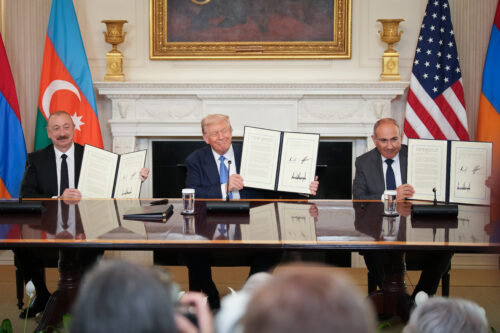
    Of all the fronts in President Trump’s peacemaking agenda, the South Caucasus has delivered the most concrete results. The August 2025 Washington Declaration, signed between Armenia and Azerbaijan and witnessed by Trump, marked an important step toward peace in the region. The two sides initialed a peace agreement and advanced plans to unblock regional connectivity, including through the establishment of the Trump Route for International Peace and Prosperity (TRIPP), which would connect Azerbaijan to its Nakhijevan exclave through southern Armenia. Implementation of TRIPP has since made notable progress, but construction has yet to start. A breakthrough on those two tracks would, in turn, unlock Armenia–Türkiye normalization, transforming a long-fractured region into an area of trade and interdependence.
    The Iran War Was Always About Regime Change
  • تعليق
  • The Iran War Was Always About Regime Change

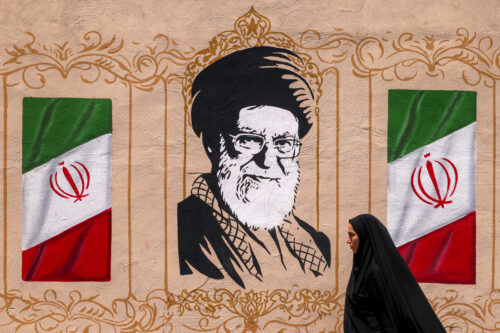
    Wars don’t just end. They get interpreted, reinterpreted, and turned into strategic doctrine. That is what happened after the Iran-Iraq War of the 1980s, a conflict that saw the United States back Tehran’s Iraqi adversaries. The war taught Tehran three lessons it never unlearned: that Washington wants the Islamic Republic gone, that Iran stands essentially alone in the world, and that it cannot survive a direct, overt fight with the U.S. and Israel.

    Iran’s New War Cabinet Is Really an Old One
  • التحليل
  • Iran’s New War Cabinet Is Really an Old One

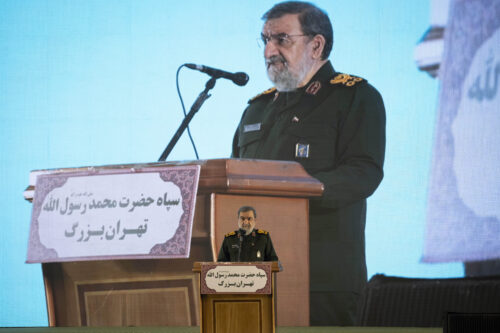
    Within 48 hours this week, Iran filled six of the most important posts in its battered military and security establishment. Read together with the biographies and mandates behind them, the appointments show how Tehran is drawing lessons from successive wars and preparing for a prolonged period of insecurity, without proving it has abandoned negotiation.

    Additional Research & Commentary

    معلومات أساسية

    Israeli Settlements in the West Bank
  • معلومات أساسية
  • Israeli Settlements in the West Bank

    Since 1967, Israeli settlements in the West Bank have been a contested feature of the Israeli-Palestinian conflict. The ultimate disposition of the settlements and ongoing activity related to their growth have repeatedly defied agreement in negotiations over a resolution to the conflict.

    June 9, 2026

    The Houthis
  • معلومات أساسية
  • The Houthis

    The Houthis are a political-military faction and Zaydi religious movement founded in northwestern Yemen in the 1980s. A key member of Iran’s Axis of Resistance with links to other militant organizations in the Arabian Peninsula and the Horn of Africa, the group has continued to pose a threat to Western interests on a global scale.

    May 15, 2026

    The India-Middle East-Europe Economic Corridor
  • معلومات أساسية
  • The India-Middle East-Europe Economic Corridor

    The India-Middle East-Europe Economic Corridor (IMEC) is a proposed multinational infrastructure initiative aimed at upgrading connectivity between the three regions through integrated trade, energy, and digital networks. Announced at the G20 summit in New Delhi in September 2023, IMEC is envisioned partially as a counterweight to China’s international infrastructure project, the Belt and Road Initiative.

    June 3, 2026

    Turkish Foreign Policy
  • معلومات أساسية
  • Turkish Foreign Policy

    After a decade of post-Arab Spring isolation, Turkey’s leaders have recognized that their ambition to position the country as an agenda-setter on the world stage requires active engagement in all directions. President Recep Tayyip Erdoğan’s consolidation of executive authority has centralized foreign policy decision-making and tied it to his domestic political priorities, transforming the country’s revisionist approach to one shaped primarily by personal and pragmatic interests.

    April 23, 2026

    المدونات الصوتية

    التركيز على الشرق الأوسط

    البودكاست الأسبوعي الرائد لمعهد الشرق الأوسط حول السياسة الخارجية الأمريكية والقضايا السياسية والاجتماعية المعاصرة في الشرق الأوسط.

    إزالة الحافة من الشرق الأوسط

    براين كاتوليس، زميل أول في معهد الشرق الأوسط كاتوليس يشارك الأصدقاء والزملاء وخبراء السياسة في محادثات غير رسمية حول أهم الأحداث في الشرق الأوسط. 

    إعادة التفكير في الديمقراطية

    زميل أول في معهد الشرق الأوسط غونول تول تستضيف كبار العلماء وقادة الفكر حول اتجاهات الديمقراطية العالمية وحالة النظام الدولي الليبرالي. 

    تصفية حسب
    8783 Results
    The Future of Political Islam in Egypt Post-Morsi
    معهد الشرق الأوسط
  • Podcast
  • The Future of Political Islam in Egypt Post-Morsi

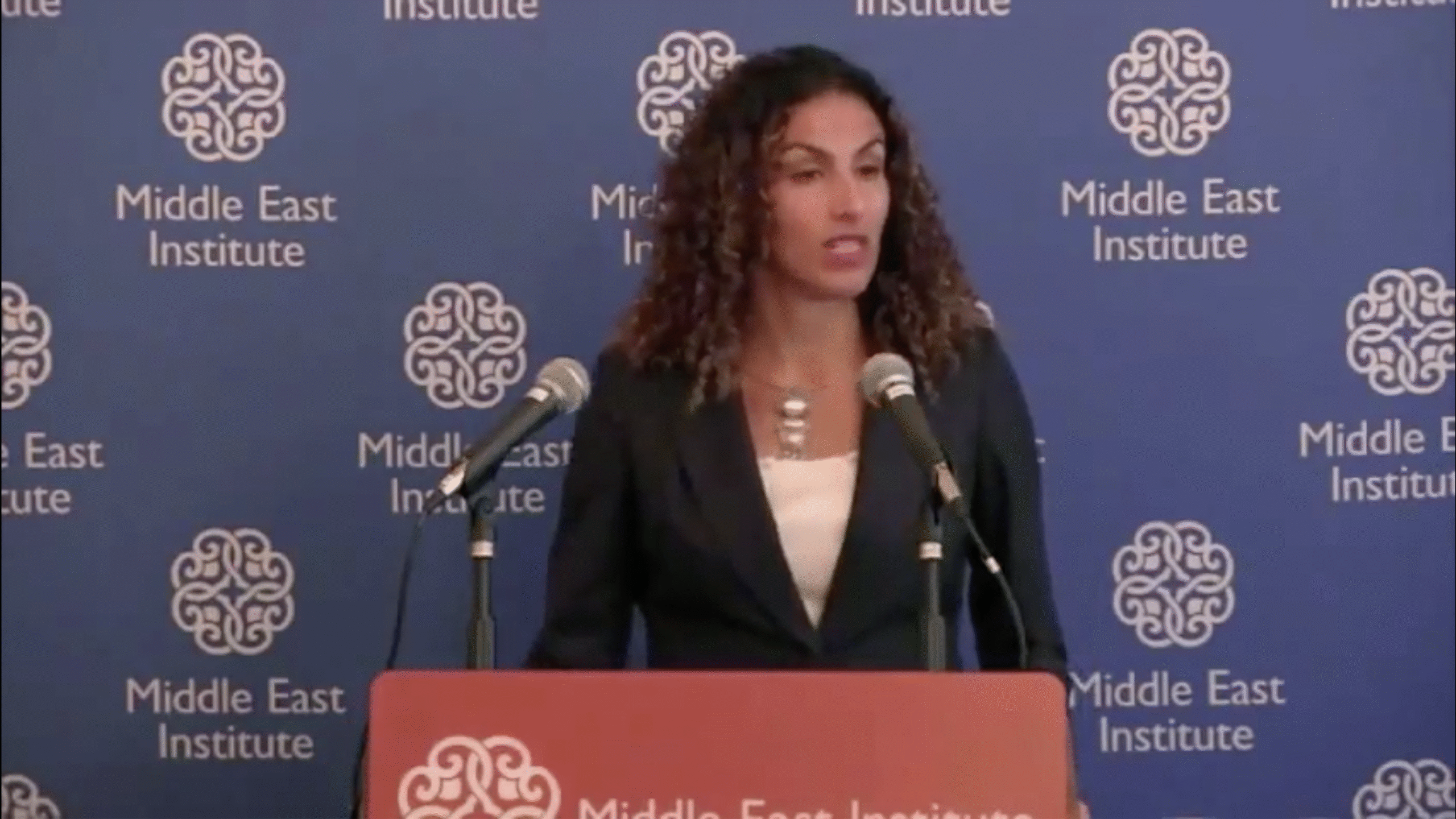
    The Middle East Institute, in conjunction with the Conflict Management Program at SAIS, is pleased to welcome Dr. Ahmad Atif Ahmad, Professor of Religious Studies at the University of California, Santa Barbara, and Dr. Jonathan A. Brown, Associate Professor of Islam and Muslim-Christian Understanding at the Edmund A. Walsh School of Foreign Service, for a discussion about the thinking and strategy of Islamist actors in Egypt in the wake of Egyptian president Mohamed Morsi’s ouster.

    August 6, 2013

    The Future of Political Islam in Egypt Post-Morsi
    معهد الشرق الأوسط
  • Podcast
  • The Future of Political Islam in Egypt Post-Morsi

    The Middle East Institute, in conjunction with the Conflict Management Program at SAIS, is pleased to welcome Dr. Ahmad Atif Ahmad, Professor of Religious Studies at the University of California, Santa Barbara, and Dr. Jonathan A. Brown, Associate Professor of Islam and Muslim-Christian Understanding at the Edmund A. Walsh School of Foreign Service, for a discussion about the thinking and strategy of Islamist actors in Egypt in the wake of Egyptian president Mohamed Morsi’s ouster.

    August 6, 2013

    The Future of Political Islam in Egypt Post-Morsi
    معهد الشرق الأوسط
  • Podcast
  • The Future of Political Islam in Egypt Post-Morsi

    The Middle East Institute, in conjunction with the Conflict Management Program at SAIS, is pleased to welcome Dr. Ahmad Atif Ahmad, Professor of Religious Studies at the University of California, Santa Barbara, and Dr. Jonathan A. Brown, Associate Professor of Islam and Muslim-Christian Understanding at the Edmund A. Walsh School of Foreign Service, for a discussion about the thinking and strategy of Islamist actors in Egypt in the wake of Egyptian president Mohamed Morsi’s ouster.

    August 6, 2013

    Al-Qa'ida: Time to Engage the Deep Battle
    معهد الشرق الأوسط
  • التحليل
  • Al-Qa'ida: Time to Engage the Deep Battle

    Al-Qa’ida is not simply the terrorist organization responsible for the 9/11 attacks; it is a violent manifestation of a social movement that rejects the current international order.

    August 2, 2013

    U.S. Foreign Aid and Morsi's Ouster
    معهد الشرق الأوسط
  • التحليل
  • U.S. Foreign Aid and Morsi's Ouster

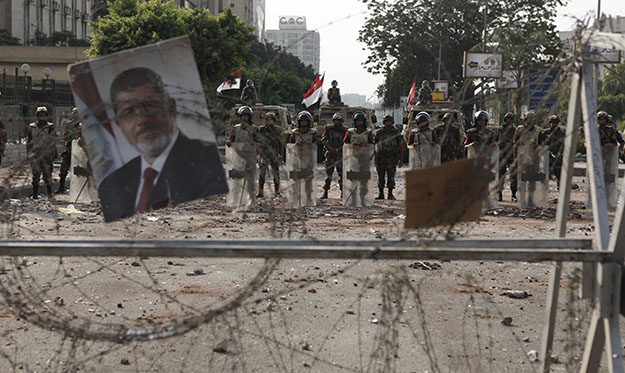
    The United States government announced last week that it would not, after all, make a determination as to whether the ouster of Egypt’s Mohamed Morsi constituted a “coup.”[1] This decision has both important strategic and financial implications for the United States. By not designating Morsi’s expulsion as a military coup, U.S. law allows the United States to continue its $1.5 billion in annual aid to Egypt.

    July 31, 2013

    Iranians in Malaysia: Artist Asghar Yaghoubi and His "Journey Within"
    معهد الشرق الأوسط
  • التحليل
  • Iranians in Malaysia: Artist Asghar Yaghoubi and His "Journey Within"

    Artist Asghar Yaghoubi, who was born in Shiraz, Iran, moved to Malaysia in 2008. An accomplished painter and sculptor, he also teaches art at the Cube Gallery, of which he is the founder and director. The gallery is the first and only art gallery in Southeast Asia owned by an Iranian.

    July 26, 2013

    Transitional Justice: Egypt's Way Forward
  • التحليل
  • Transitional Justice: Egypt's Way Forward

    Earlier this month, Interim President Adli Mansour appointed Judge Mohamed Amin el-Mahdi as Egypt’s first-ever Minister of Transitional Justice and National Reconciliation. It’s an encouraging move for a country that has, for decades, endured an oppressive environment of fear due to successive regimes’ use of power and the security apparatus to suppress and torture dissidents. After Hosni Mubarak’s ouster in 2011, many Egyptians hoped that their long list of abused rights could find justice, but until now very little has been accomplished.  

    July 26, 2013

    The Future of Democracy in Egypt: Notes from the Ground
    معهد الشرق الأوسط
  • Podcast
  • The Future of Democracy in Egypt: Notes from the Ground

    The Middle East Institute is proud to host Sahar F. Aziz, associate professor of Law at Texas Wesleyan University, and Mirette F. Mabrouk, deputy director for Regional Programs at the Atlantic Council’s Rafik Hariri Center for the Middle East, for a discussion about the impact and implications of the ouster of President Mohamed Morsi. Mirette Mabrouk will provide a macro-perspective of the current situation and discuss some of the key turning points that precipitated the recent crisis.

    July 26, 2013

    The Future of Democracy in Egypt: Notes from the Ground
    معهد الشرق الأوسط
  • Podcast
  • The Future of Democracy in Egypt: Notes from the Ground

    The Middle East Institute is proud to host Sahar F. Aziz, associate professor of Law at Texas Wesleyan University, and Mirette F. Mabrouk, deputy director for Regional Programs at the Atlantic Council’s Rafik Hariri Center for the Middle East, for a discussion about the impact and implications of the ouster of President Mohamed Morsi. Mirette Mabrouk will provide a macro-perspective of the current situation and discuss some of the key turning points that precipitated the recent crisis.

    July 26, 2013

    The Future of Democracy in Egypt: Notes from the Ground
    معهد الشرق الأوسط
  • Podcast
  • The Future of Democracy in Egypt: Notes from the Ground

    The Middle East Institute is proud to host Sahar F. Aziz, associate professor of Law at Texas Wesleyan University, and Mirette F. Mabrouk, deputy director for Regional Programs at the Atlantic Council’s Rafik Hariri Center for the Middle East, for a discussion about the impact and implications of the ouster of President Mohamed Morsi. Mirette Mabrouk will provide a macro-perspective of the current situation and discuss some of the key turning points that precipitated the recent crisis.

    July 26, 2013

    The Future of Democracy in Egypt: Notes from the Ground
    معهد الشرق الأوسط
  • Podcast
  • The Future of Democracy in Egypt: Notes from the Ground

    The Middle East Institute is proud to host Sahar F. Aziz, associate professor of Law at Texas Wesleyan University, and Mirette F. Mabrouk, deputy director for Regional Programs at the Atlantic Council’s Rafik Hariri Center for the Middle East, for a discussion about the impact and implications of the ouster of President Mohamed Morsi. Mirette Mabrouk will provide a macro-perspective of the current situation and discuss some of the key turning points that precipitated the recent crisis.

    July 26, 2013

    The Future of Democracy in Egypt: Notes from the Ground
    معهد الشرق الأوسط
  • Podcast
  • The Future of Democracy in Egypt: Notes from the Ground

    The Middle East Institute is proud to host Sahar F. Aziz, associate professor of Law at Texas Wesleyan University, and Mirette F. Mabrouk, deputy director for Regional Programs at the Atlantic Council’s Rafik Hariri Center for the Middle East, for a discussion about the impact and implications of the ouster of President Mohamed Morsi. Mirette Mabrouk will provide a macro-perspective of the current situation and discuss some of the key turning points that precipitated the recent crisis.

    July 26, 2013

    El-Sisi’s Call to “Confront Terrorism”
  • التحليل
  • El-Sisi’s Call to “Confront Terrorism”

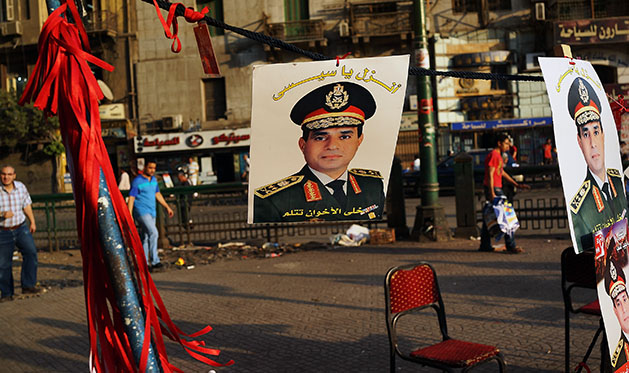
    Yesterday, General Abdul Fattah el-Sisi, Egypt’s Minister of Defense and head of the military, called for Egyptians to take to the streets in protest on Friday to “confront terrorism.” Such a call amounts to a public relations one-upmanship vis-à-vis continued Islamist protests since Morsi’s ouster.  Clearly, the Egyptian military is in no need of popular protests to confront credible national security threats or armed militias that threaten the security of citizens.

    July 25, 2013

    The Future of U.S. Military Aid to Egypt
  • التحليل
  • The Future of U.S. Military Aid to Egypt

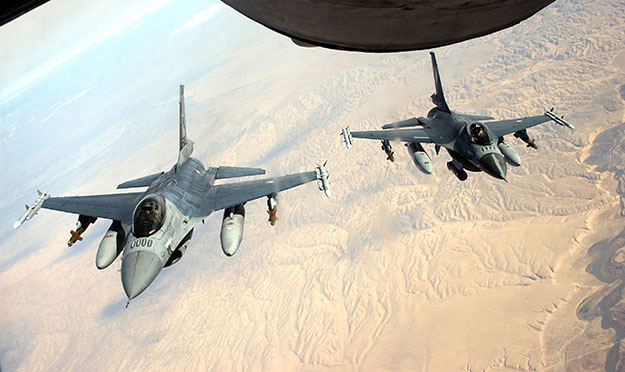
    Yesterday, the United States announced that it would delay the delivery of four F-16 fighter jets to Egypt.[1] While such a move might appear to signal a block in U.S. military aid to the country, most Egyptians believe that the United States will, as it always does, provide Egypt with military funding.

    July 25, 2013

    اقرأ مجلة الشرق الأوسط

    تُعد المجلة الرئيسية لمعهد الشرق الأوسط أقدم مطبوعة محكّمة مكرّسة لدراسة الشرق الأوسط الحديث، وتغطي المجلة الرئيسية في المعهد السياسة والمجتمع والثقافة في المنطقة.