Skip to Content

Research & Commentary

Read in-depth research, analysis, and commentary from MEI’s fellows and experts on the Middle East. 

Trump’s South Caucasus Peacemaking Is His Most Successful, but It Remains Unfinished
  • Commentary
  • Trump’s South Caucasus Peacemaking Is His Most Successful, but It Remains Unfinished

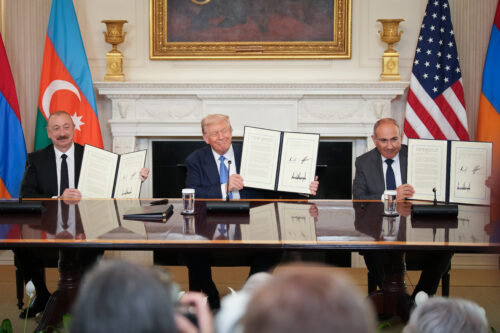
    Of all the fronts in President Trump’s peacemaking agenda, the South Caucasus has delivered the most concrete results. The August 2025 Washington Declaration, signed between Armenia and Azerbaijan and witnessed by Trump, marked an important step toward peace in the region. The two sides initialed a peace agreement and advanced plans to unblock regional connectivity, including through the establishment of the Trump Route for International Peace and Prosperity (TRIPP), which would connect Azerbaijan to its Nakhijevan exclave through southern Armenia. Implementation of TRIPP has since made notable progress, but construction has yet to start. A breakthrough on those two tracks would, in turn, unlock Armenia–Türkiye normalization, transforming a long-fractured region into an area of trade and interdependence.
    The Iran War Was Always About Regime Change
  • Commentary
  • The Iran War Was Always About Regime Change

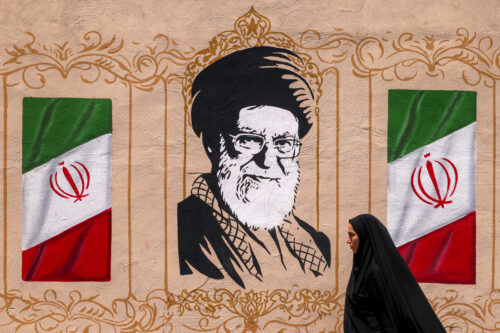
    Wars don’t just end. They get interpreted, reinterpreted, and turned into strategic doctrine. That is what happened after the Iran-Iraq War of the 1980s, a conflict that saw the United States back Tehran’s Iraqi adversaries. The war taught Tehran three lessons it never unlearned: that Washington wants the Islamic Republic gone, that Iran stands essentially alone in the world, and that it cannot survive a direct, overt fight with the U.S. and Israel.

    Iran’s New War Cabinet Is Really an Old One
  • Analysis
  • Iran’s New War Cabinet Is Really an Old One

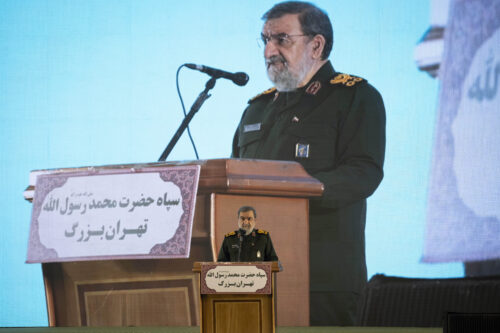
    Within 48 hours this week, Iran filled six of the most important posts in its battered military and security establishment. Read together with the biographies and mandates behind them, the appointments show how Tehran is drawing lessons from successive wars and preparing for a prolonged period of insecurity, without proving it has abandoned negotiation.

    Additional Research & Commentary

    Backgrounders

    Israeli Settlements in the West Bank
  • Backgrounder
  • Israeli Settlements in the West Bank

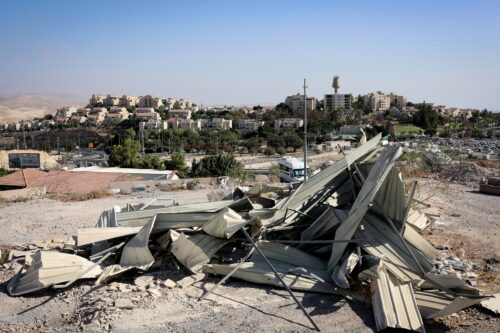
    Since 1967, Israeli settlements in the West Bank have been a contested feature of the Israeli-Palestinian conflict. The ultimate disposition of the settlements and ongoing activity related to their growth have repeatedly defied agreement in negotiations over a resolution to the conflict.

    June 9, 2026

    The Houthis
  • Backgrounder
  • The Houthis

    The Houthis are a political-military faction and Zaydi religious movement founded in northwestern Yemen in the 1980s. A key member of Iran’s Axis of Resistance with links to other militant organizations in the Arabian Peninsula and the Horn of Africa, the group has continued to pose a threat to Western interests on a global scale.

    May 15, 2026

    The India-Middle East-Europe Economic Corridor
  • Backgrounder
  • The India-Middle East-Europe Economic Corridor

    The India-Middle East-Europe Economic Corridor (IMEC) is a proposed multinational infrastructure initiative aimed at upgrading connectivity between the three regions through integrated trade, energy, and digital networks. Announced at the G20 summit in New Delhi in September 2023, IMEC is envisioned partially as a counterweight to China’s international infrastructure project, the Belt and Road Initiative.

    June 3, 2026

    Turkish Foreign Policy
  • Backgrounder
  • Turkish Foreign Policy

    After a decade of post-Arab Spring isolation, Turkey’s leaders have recognized that their ambition to position the country as an agenda-setter on the world stage requires active engagement in all directions. President Recep Tayyip Erdoğan’s consolidation of executive authority has centralized foreign policy decision-making and tied it to his domestic political priorities, transforming the country’s revisionist approach to one shaped primarily by personal and pragmatic interests.

    April 23, 2026

    Podcasts

    Middle East Focus

    MEI’s flagship weekly podcast on US foreign policy and contemporary political and social issues in the Middle East.

    Taking the Edge Off the Middle East

    MEI Senior Fellow Brian Katulis engages friends, colleagues, and policy experts in casual conversations on the most important happenings in the Middle East. 

    Rethinking Democracy

    MEI Senior Fellow Gonul Tol hosts leading scholars and thought leaders on global democracy trends and the state of the liberal international order. 

    Filter by
    8783 Results
    Strikes Over Iran
  • Analysis
  • Strikes Over Iran

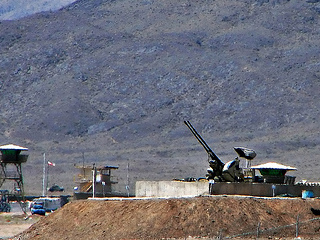
    Let us assume that nobody will bomb Iran’s nuclear facilities, at least for quite a while. There is no Iranian nuclear test in the offing. Until now, the inspections of the International Atomic Energy Agency (IAEA) have uncovered no diversion of declared stocks of uranium for use in a nuclear explosive device. Of course, clandestine activities could always take place in some remote stretch of the vast Iranian territory, unknown to the inspectors of the Vienna Agency.

    March 27, 2012

    A View From the Gulf: A Discussion of Gulf Politics and Security
  • Video
  • A View From the Gulf: A Discussion of Gulf Politics and Security

    The Middle East Institute is proud to host Gulf Research Center experts Abdulaziz Sager, Mustafa Alani, and Christian Koch for an examination of recent developments in the Gulf in the wake of the Arab Spring. The speakers will address the crises in Yemen and Bahrain, US-Gulf relations and the question of reform in the region.

    March 26, 2012

    Iran and the West at a Crossroad: Will Recent Elections Make or Break a Deal on Iran's Nuclear Program?
  • Video
  • Iran and the West at a Crossroad: Will Recent Elections Make or Break a Deal on Iran's Nuclear Program?

    U.S. Secretary of State Hillary Clinton has described upcoming talks with Iran over its nuclear program as "the last chance to resolve the crisis." Yet as the final hour approaches for an opportunity to avert a military attack, there are few apparent signs Iran will make compromises. Recent parliamentary elections have only strengthened the power of Supreme Leader Ali Khamenei and the hardliners in his inner circle who aspire to make the Islamic republic a regional superpower.

    March 23, 2012

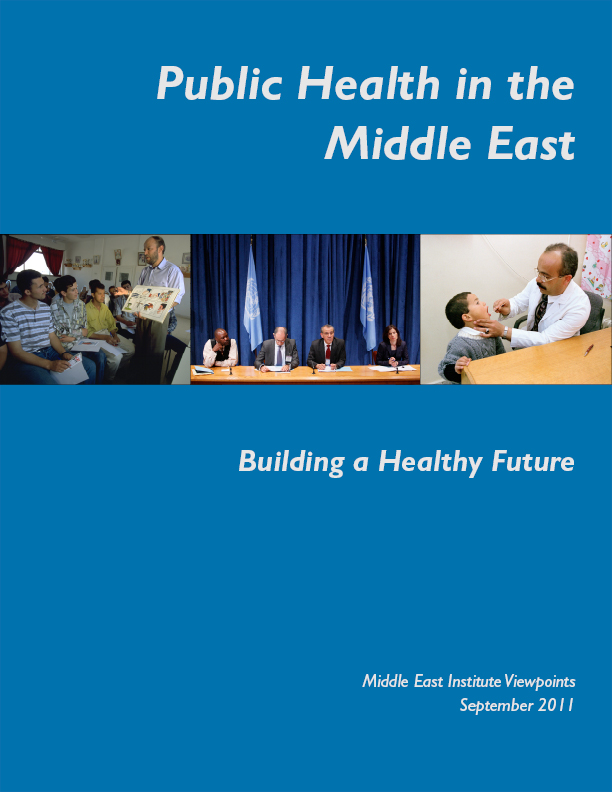
    Introduction to Public Health in the Middle East: Building a Healthy Future
  • Analysis
  • Introduction to Public Health in the Middle East: Building a Healthy Future

    Originally posted September, 2011

    The flow of ideas, people, and commerce across national boundaries has been occurring with breathtaking rapidity in the broader Middle East, as elsewhere. These increasingly dense exchanges have generated new threats and vulnerabilities that have tended to impact women, children, and the poorest members of society disproportionately. They also have given people more resources and opportunities with which to shape their lives and their futures.

    March 22, 2012

    Peace-Building through Health in the Israeli-Palestinian Conflict: The Six-Year Experience of Healing Across the Divides
    Middle East Institute
  • Analysis
  • Peace-Building through Health in the Israeli-Palestinian Conflict: The Six-Year Experience of Healing Across the Divides

    Originally posted September 2011

    Approximately six months ago, I asked an astute long-time American observer of the Israeli-Palestinian conflict whether we had come to the end of the road for a two-state solution. He replied that we had come to the end of that road in 1967. Putting it differently, Zhou Enlai, the premier of the People’s Republic of China under Mao Zedong, when asked what he thought of the French Revolution, reportedly replied that it was too early to tell.

    March 22, 2012

    Is Reconciliation in Bahrain Possible?
    Middle East Institute
  • Analysis
  • Is Reconciliation in Bahrain Possible?

    The total number of Bahraini citizens is reported to be about 570,000 nationals, less than half of a total population of over 1.2 million.[1] Nevertheless, this very small number makes up an amazingly complex society comprised of groups and subgroups with different interests and agendas. A short unpacking of Bahraini society may shed some light on the problems facing the Kingdom in 2012, and perhaps guide us through possible steps toward reconciliation.

    March 20, 2012

    Why Does Russia Support the Assad Regime?
  • Video
  • Why Does Russia Support the Assad Regime?

    Russia's relations with Syria – even under the Assad regime – have been more troubled than current press accounts of Moscow-Damascus ties indicate. But despite the internal and external opposition to the Assad regime that has risen up over the past year, the Russian government has defended it staunchly via its Security Council veto and other means. In his talk, Mark Katz will discuss why Moscow supports the Assad regime so strongly as well as why it is willing to incur the costs of doing so.

    March 20, 2012

    Israel's Gift to Iran
    Middle East Institute
  • Analysis
  • Israel's Gift to Iran

    Are Iran’s leaders rational actors? This question matters when justifying any decision by Israel to preempt Iran’s acquisition of nuclear weapons. An Iranian regime seen as driven to destroy the Jewish state has to be dealt with differently than one whose objectives are mediated by calculations of costs and benefits. Deterrents that would be normally expected to restrain a state would not work with an irrational Iran.

    Read the Middle East Journal

    The oldest peer-reviewed publication dedicated to the study of the modern Middle East, MEI’s flagship journal covers politics, society, and culture in the region.