Skip to Content

Research & Commentary

Read in-depth research, analysis, and commentary from MEI’s fellows and experts on the Middle East. 

Trump’s South Caucasus Peacemaking Is His Most Successful, but It Remains Unfinished
  • Commentary
  • Trump’s South Caucasus Peacemaking Is His Most Successful, but It Remains Unfinished

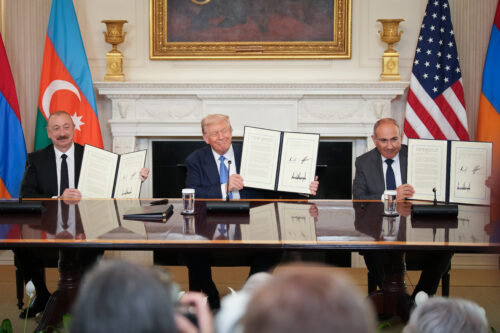
    Of all the fronts in President Trump’s peacemaking agenda, the South Caucasus has delivered the most concrete results. The August 2025 Washington Declaration, signed between Armenia and Azerbaijan and witnessed by Trump, marked an important step toward peace in the region. The two sides initialed a peace agreement and advanced plans to unblock regional connectivity, including through the establishment of the Trump Route for International Peace and Prosperity (TRIPP), which would connect Azerbaijan to its Nakhijevan exclave through southern Armenia. Implementation of TRIPP has since made notable progress, but construction has yet to start. A breakthrough on those two tracks would, in turn, unlock Armenia–Türkiye normalization, transforming a long-fractured region into an area of trade and interdependence.
    The Iran War Was Always About Regime Change
  • Commentary
  • The Iran War Was Always About Regime Change

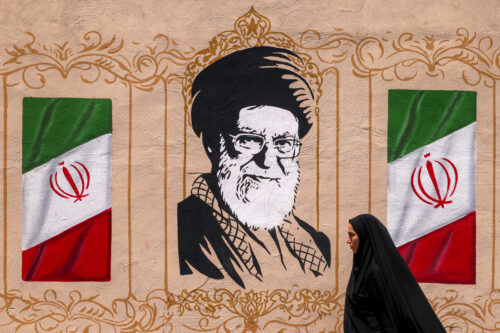
    Wars don’t just end. They get interpreted, reinterpreted, and turned into strategic doctrine. That is what happened after the Iran-Iraq War of the 1980s, a conflict that saw the United States back Tehran’s Iraqi adversaries. The war taught Tehran three lessons it never unlearned: that Washington wants the Islamic Republic gone, that Iran stands essentially alone in the world, and that it cannot survive a direct, overt fight with the U.S. and Israel.

    Iran’s New War Cabinet Is Really an Old One
  • Analysis
  • Iran’s New War Cabinet Is Really an Old One

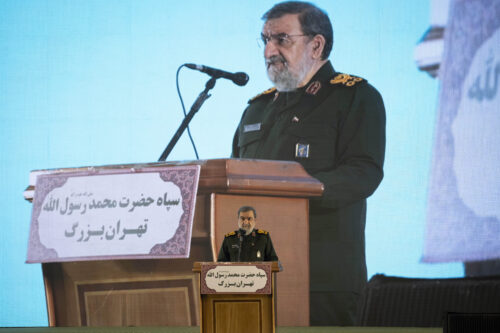
    Within 48 hours this week, Iran filled six of the most important posts in its battered military and security establishment. Read together with the biographies and mandates behind them, the appointments show how Tehran is drawing lessons from successive wars and preparing for a prolonged period of insecurity, without proving it has abandoned negotiation.

    Additional Research & Commentary

    Backgrounders

    Israeli Settlements in the West Bank
  • Backgrounder
  • Israeli Settlements in the West Bank

    Since 1967, Israeli settlements in the West Bank have been a contested feature of the Israeli-Palestinian conflict. The ultimate disposition of the settlements and ongoing activity related to their growth have repeatedly defied agreement in negotiations over a resolution to the conflict.

    June 9, 2026

    The Houthis
  • Backgrounder
  • The Houthis

    The Houthis are a political-military faction and Zaydi religious movement founded in northwestern Yemen in the 1980s. A key member of Iran’s Axis of Resistance with links to other militant organizations in the Arabian Peninsula and the Horn of Africa, the group has continued to pose a threat to Western interests on a global scale.

    May 15, 2026

    The India-Middle East-Europe Economic Corridor
  • Backgrounder
  • The India-Middle East-Europe Economic Corridor

    The India-Middle East-Europe Economic Corridor (IMEC) is a proposed multinational infrastructure initiative aimed at upgrading connectivity between the three regions through integrated trade, energy, and digital networks. Announced at the G20 summit in New Delhi in September 2023, IMEC is envisioned partially as a counterweight to China’s international infrastructure project, the Belt and Road Initiative.

    June 3, 2026

    Turkish Foreign Policy
  • Backgrounder
  • Turkish Foreign Policy

    After a decade of post-Arab Spring isolation, Turkey’s leaders have recognized that their ambition to position the country as an agenda-setter on the world stage requires active engagement in all directions. President Recep Tayyip Erdoğan’s consolidation of executive authority has centralized foreign policy decision-making and tied it to his domestic political priorities, transforming the country’s revisionist approach to one shaped primarily by personal and pragmatic interests.

    April 23, 2026

    Podcasts

    Middle East Focus

    MEI’s flagship weekly podcast on US foreign policy and contemporary political and social issues in the Middle East.

    Taking the Edge Off the Middle East

    MEI Senior Fellow Brian Katulis engages friends, colleagues, and policy experts in casual conversations on the most important happenings in the Middle East. 

    Rethinking Democracy

    MEI Senior Fellow Gonul Tol hosts leading scholars and thought leaders on global democracy trends and the state of the liberal international order. 

    Filter by
    8783 Results
    Syria: Bashar Doesn’t Know 2012 is not 1982
    Middle East Institute
  • Analysis
  • Syria: Bashar Doesn’t Know 2012 is not 1982

    Bashar al-Assad and his top regime cronies appear to be operating under a deeply flawed assumption: the relatively broad-based opposition it now faces is similar to the narrower Muslim Brotherhood challenge it defeated back in 1982 by killing more than 10,000 Syrians in Hama. Much the same way it did 30 years ago, the regime keeps pounding away at the resistance. But unlike the Hama massacre, a few severe blows will not put an end to this latest uprising. Instead, Assad’s brutish tactics will only escalate the bloodshed and resistance.

    February 10, 2012

    Kurdish Consensus at Home Can Serve Ankara Abroad
    Middle East Institute
  • Analysis
  • Kurdish Consensus at Home Can Serve Ankara Abroad

    This Opinion first appeared in The National on February 10, 2012

    Despite his popularity at home and abroad, it’s not all roses for Turkish Prime Minister Recep Tayyip Erdogan. Far from having zero problems with neighbors, Turkey these days is virtually surrounded by neighbors with problems – Greece’s imploding economy, Syria’s civil war, Iraq’s tenuous stability and Iran’s troublesome nuclear program.

    The Israeli Peace Initiative
  • Video
  • The Israeli Peace Initiative

    The Israeli Peace Initiative (IPI) calls upon the Israeli government to
    present a framework for the conclusion of the Israeli-Arab conflict as
    a comprehensive response to the 2002 Arab Peace Initiative.

    February 9, 2012

    The Israeli Peace Initiative: A Regional Perspective
    Middle East Institute
  • Podcast
  • The Israeli Peace Initiative: A Regional Perspective

    The Israeli Peace Initiative (IPI) calls upon the Israeli government to present a framework for the conclusion of the Israeli-Arab conflict as a comprehensive response to the 2002 Arab Peace Initiative. Israeli Peace Initiative signatories include former Israeli Defense Forces chiefs of staff Amnon Lipkin-Shahak and Amram Mitzna; former Shin Bet directors Jacob Perry and Ami Ayalon; Ha'aretz correspondent Akiva Eldar; Members of the Knesset (MKs) Dalia Rabin and Colette Avital; and many other distinguished Israelis. Mr.

    February 8, 2012

    Vetoes Leave Syria Headed for a Bloody Stalemate
    Middle East Institute
  • Analysis
  • Vetoes Leave Syria Headed for a Bloody Stalemate

    This Opinion was first published on CNN.com on February 6, 2012

    The double veto cast by Russia and China at the United Nations Security Council on Saturday represents a clarifying moment in the Syrian uprisings.

    At the 2012 Munich Security Conference, U.S. Secretary of State Hillary Clinton noted, "We don't know what the endgame will be until we start the game." Well, fasten your seatbelt — the game over Syria has started.

    February 8, 2012

    Israel's Palestinians: The Conflict Within
  • Video
  • Israel's Palestinians: The Conflict Within

    Ilan Peleg and Dov Waxman, authors of the book Israel's Palestinians:The Conflict Within (Cambridge, 2011), discuss their findings. One in five citizens of Israel are Palestinian. Often overlooked by outside observers, the challenges facing the Palestinian minority in Israel are an inseparable part of the Israeli-Palestinian conflict. Resolving this conflict – a central concern of U.S. foreign policy and current international diplomacy – requires more than the establishment of a Palestinian state. The demands of Palestinian citizens of Israel must also be addressed.

    February 7, 2012

    America's War on Terror
  • Video
  • America's War on Terror

    Mark N. Katz, examines the impact of the current and future US withdrawals from Iraq and Afghanistan on Islamic radicals. Katz argues that the US withdrawals from both countries will lead radicals to conclude they have defeated the US in the "War on Terror" and that US regional strength is on the decline. This, he argues, will spur Islamic radicals to seek further gains elsewhere. But regardless of the boost to their cause that the withdrawals from Iraq and Afghanistan may provide, they will likely meet three key obstacles in their pursuit of increased power and influence.

    February 7, 2012

    Afghanistan: Looking Ahead to the Next Fighting Season
  • Video
  • Afghanistan: Looking Ahead to the Next Fighting Season

    Andrew Exum, Fellow at the Center for A New American Security, assesses the possibility of a new Taliban insurgency in Afghanistan and its ramifications for U.S. strategy there. The past six months have seen some remarkable successes in southern Afghanistan. But if hard-won security gains collapse in the face of a renewed Taliban offensive in 2011, the NATO strategy to secure Afghanistan will be in grave danger. Andrew Exum will discuss the situation in southern Afghanistan as well as how the American public can know whether the strategy is succeeding or failing this summer.

    February 7, 2012

    Syria on the Verge: Implications for a Nation in Revolt
  • Video
  • Syria on the Verge: Implications for a Nation in Revolt

    International response has been growing to the violent crackdowns in Syria, yet the government remains mostly unresponsive. Radwan Ziadeh, Ausama Monajed, Amb. Theodore Kattouf, and Andrew Tabler discuss the domestic and regional implications of the ongoing political unrest and violence in Syria.

    February 7, 2012

    Crisis in the Yemen Economy
  • Video
  • Crisis in the Yemen Economy

    How Yemen can use their most valuable resource of human labor to respond to their economic difficulties through increased institution-building.

    February 3, 2012

    The Artesh Navy: Iran's Strategic Force
    Middle East Institute
  • Analysis
  • The Artesh Navy: Iran's Strategic Force

    Iran has two independent naval forces: the Islamic Republic of Iran Navy (IRIN), whose existence predates Iran’s 1979 Revolution, and the Islamic Revolutionary Guard Corps Navy (IRGCN), which evolved separately in midst of the Iran-Iraq war (1985).

    January 31, 2012

    Hamas Out in the Cold?
    Middle East Institute
  • Analysis
  • Hamas Out in the Cold?

    One of the most enduring epithets for Hamas, right up there with “terrorist,” is “proxy.” If you Google “Hamas Iran proxy,” you get 1,750,000 hits. The idea that the relationship between Sunni Hamas, the Gaza affiliate of the Muslim Brotherhood, and Shia Iran was merely a marriage of convenience and not a true love match is rejected by those who forget that most enduring maxim of Middle East politics: “The enemy of my enemy is my friend.” And implicit in that maxim are two more words: “for now.”

    January 30, 2012

    Ayatollah Khamenei's Advances Toward the Artesh
    Middle East Institute
  • Analysis
  • Ayatollah Khamenei's Advances Toward the Artesh

    To truly appreciate the political standing of Iran’s regular armed forces in today’s Islamic Republic, the key is to take into account the impact of the ongoing and unparalleled internal feud in the top ranks of the regime. The feud, pitching the factions of Supreme Leader Ayatollah ‘Ali Khamenei and President Mahmud Ahmadinejad against one another in a bitter contest for power, has turned the Artesh into an inescapable entity that neither faction can afford to ignore.

    Read the Middle East Journal

    The oldest peer-reviewed publication dedicated to the study of the modern Middle East, MEI’s flagship journal covers politics, society, and culture in the region.