Skip to Content

Research & Commentary

Read in-depth research, analysis, and commentary from MEI’s fellows and experts on the Middle East. 

Trump’s South Caucasus Peacemaking Is His Most Successful, but It Remains Unfinished
  • Commentary
  • Trump’s South Caucasus Peacemaking Is His Most Successful, but It Remains Unfinished

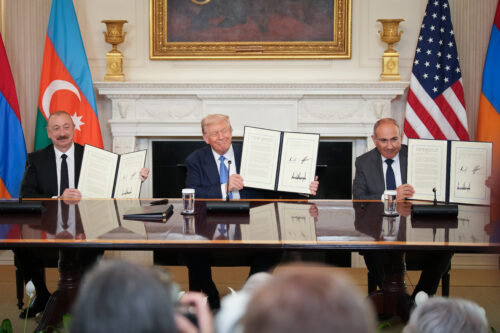
    Of all the fronts in President Trump’s peacemaking agenda, the South Caucasus has delivered the most concrete results. The August 2025 Washington Declaration, signed between Armenia and Azerbaijan and witnessed by Trump, marked an important step toward peace in the region. The two sides initialed a peace agreement and advanced plans to unblock regional connectivity, including through the establishment of the Trump Route for International Peace and Prosperity (TRIPP), which would connect Azerbaijan to its Nakhijevan exclave through southern Armenia. Implementation of TRIPP has since made notable progress, but construction has yet to start. A breakthrough on those two tracks would, in turn, unlock Armenia–Türkiye normalization, transforming a long-fractured region into an area of trade and interdependence.
    The Iran War Was Always About Regime Change
  • Commentary
  • The Iran War Was Always About Regime Change

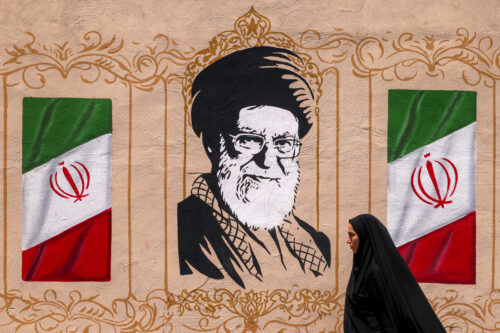
    Wars don’t just end. They get interpreted, reinterpreted, and turned into strategic doctrine. That is what happened after the Iran-Iraq War of the 1980s, a conflict that saw the United States back Tehran’s Iraqi adversaries. The war taught Tehran three lessons it never unlearned: that Washington wants the Islamic Republic gone, that Iran stands essentially alone in the world, and that it cannot survive a direct, overt fight with the U.S. and Israel.

    Iran’s New War Cabinet Is Really an Old One
  • Analysis
  • Iran’s New War Cabinet Is Really an Old One

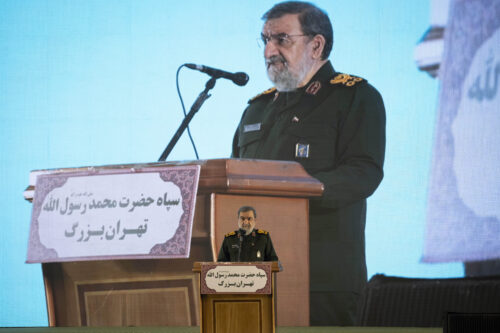
    Within 48 hours this week, Iran filled six of the most important posts in its battered military and security establishment. Read together with the biographies and mandates behind them, the appointments show how Tehran is drawing lessons from successive wars and preparing for a prolonged period of insecurity, without proving it has abandoned negotiation.

    Additional Research & Commentary

    Backgrounders

    Israeli Settlements in the West Bank
  • Backgrounder
  • Israeli Settlements in the West Bank

    Since 1967, Israeli settlements in the West Bank have been a contested feature of the Israeli-Palestinian conflict. The ultimate disposition of the settlements and ongoing activity related to their growth have repeatedly defied agreement in negotiations over a resolution to the conflict.

    June 9, 2026

    The Houthis
  • Backgrounder
  • The Houthis

    The Houthis are a political-military faction and Zaydi religious movement founded in northwestern Yemen in the 1980s. A key member of Iran’s Axis of Resistance with links to other militant organizations in the Arabian Peninsula and the Horn of Africa, the group has continued to pose a threat to Western interests on a global scale.

    May 15, 2026

    The India-Middle East-Europe Economic Corridor
  • Backgrounder
  • The India-Middle East-Europe Economic Corridor

    The India-Middle East-Europe Economic Corridor (IMEC) is a proposed multinational infrastructure initiative aimed at upgrading connectivity between the three regions through integrated trade, energy, and digital networks. Announced at the G20 summit in New Delhi in September 2023, IMEC is envisioned partially as a counterweight to China’s international infrastructure project, the Belt and Road Initiative.

    June 3, 2026

    Turkish Foreign Policy
  • Backgrounder
  • Turkish Foreign Policy

    After a decade of post-Arab Spring isolation, Turkey’s leaders have recognized that their ambition to position the country as an agenda-setter on the world stage requires active engagement in all directions. President Recep Tayyip Erdoğan’s consolidation of executive authority has centralized foreign policy decision-making and tied it to his domestic political priorities, transforming the country’s revisionist approach to one shaped primarily by personal and pragmatic interests.

    April 23, 2026

    Podcasts

    Middle East Focus

    MEI’s flagship weekly podcast on US foreign policy and contemporary political and social issues in the Middle East.

    Taking the Edge Off the Middle East

    MEI Senior Fellow Brian Katulis engages friends, colleagues, and policy experts in casual conversations on the most important happenings in the Middle East. 

    Rethinking Democracy

    MEI Senior Fellow Gonul Tol hosts leading scholars and thought leaders on global democracy trends and the state of the liberal international order. 

    Filter by
    8783 Results
    Egypt's Brothers Rise
    Middle East Institute
  • Analysis
  • Egypt's Brothers Rise

    *Co-written by James P. Farwell. This article originally appeared in the National Interest online on June 9, 2011

    Informed observers are increasingly raising the fear that new elections will put the Muslim Brotherhood in control of Egypt’s parliament and the presidency. Of course it will try. Senior Brotherhood leader Sobhi Saleh, who helped write Egypt’s interim constitution, said in a recent video that he expects the new government to be Islamist.

    Inside Pakistan's ISI
    Middle East Institute
  • Podcast
  • Inside Pakistan's ISI

    Critical attention is increasingly directed toward Pakistan's Inter-Service Intelligence (ISI) for its alleged involvement in a series of recent high profile terrorist attacks inside Pakistan as well as earlier in India and Afghanistan. The panelists will examine the scope of the ISI's activities and its composition. They will discuss its place within the military establishment and whether it ever operates as a rogue organization. Panelists will also consider to what extent the ISI's relationship with US intelligence is cooperative or competitive.

    June 13, 2011

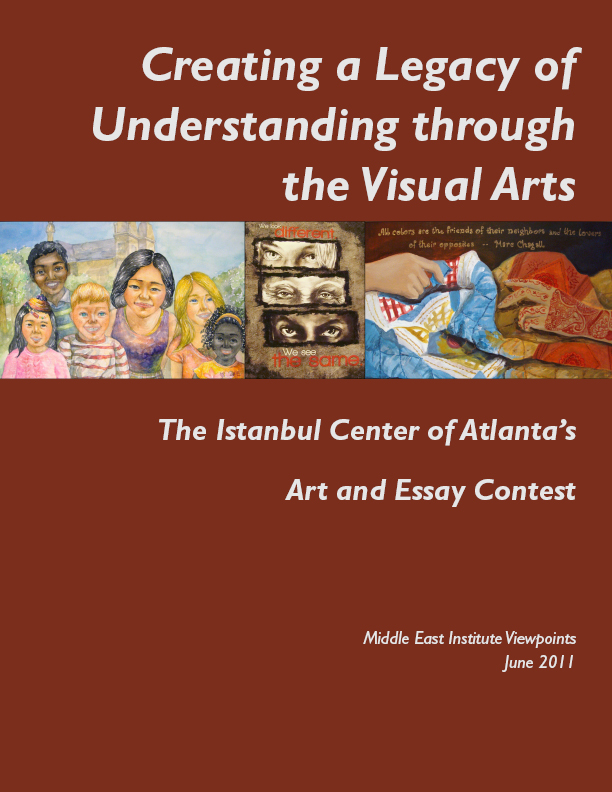
    Creating a Legacy of Understanding through the Visual Arts: The Istanbul Center of Atlanta's Art and Essay Contest
  • Analysis
  • Creating a Legacy of Understanding through the Visual Arts: The Istanbul Center of Atlanta's Art and Essay Contest

    This volume has been prepared for the Middle East Institute’s Viewpoints collection. Several stakeholders in the Istanbul Center of Atlanta’s Annual Art and Essay Contest have been involved in the composition of this text. Our goal is to provide a history of this successful program, as well as to define a model for the recreation of such an outreach project for other regions.

    June 8, 2011

    After Bin Laden: Al Qaeda Strategy in Yemen
    Middle East Institute
  • Analysis
  • After Bin Laden: Al Qaeda Strategy in Yemen

    *This article first appeared in the Jamestown Foundation's Terrorism Monitor, Volume 9, Issue 20- May 20, 2011.

    June 7, 2011

    Egypt: The Revolution is Incomplete
    Middle East Institute
  • Analysis
  • Egypt: The Revolution is Incomplete

    A version of this article appeared first in the interest review AmericanDiplomacy.org on May 30, 2011

    June 6, 2011

    Roots: A Dialogue
    Middle East Institute
  • Analysis
  • Roots: A Dialogue

    Originally posted June 2011

    June 1, 2011

    The Making of Stars
    Middle East Institute
  • Analysis
  • The Making of Stars

    Originally posted June 2011

    In the early 1970s, I taught art classes in three elementary schools in Phoenix, New York. After enduring long snowy and cold winters for ten years, I moved to the Atlanta, Georgia area where the sun shines almost every day. There, I re-entered the field of education, teaching art for Cobb County Schools for 17. During this time, I shared original programs and curriculum in workshops and lectures held at international, national, and state conferences.

    June 1, 2011

    Cooperation over Nile Waters: Needed More under Climate Change, More Attainable after the "Arab Spring"?
    Middle East Institute
  • Analysis
  • Cooperation over Nile Waters: Needed More under Climate Change, More Attainable after the "Arab Spring"?

    2011 marks the beginning of a new era for both Egypt and Sudan, opening new possibilities to overcome the decade-old Nile water conflict. After the revolution in Egypt, many hope for a reorientation of the country’s foreign policy towards Africa and a potential new approach to negotiations on allocation of the Nile waters.

    June 1, 2011

    Environment and Sustainable Development in the Maghreb
    Middle East Institute
  • Analysis
  • Environment and Sustainable Development in the Maghreb

    The Maghreb extends about 2,000 kilometers on either side of the Greenwich meridian (-13° West from Cabo Jubi and 11.08° East to Kelibia) and is located on the same longitude as Europe. Although the Maghreb forms a single climatologic and geographical unit, it is a diverse landscape of mountains, fertile areas, and steppes. Nevertheless, the similarity of climate, geography, and culture in the Maghreb provides a solid foundation for developing a common environmental strategy.

    Elaboration of a Sustainable Development Strategy

    June 1, 2011

    Middle East Revolutions: An Environmental Perspective
    Middle East Institute
  • Analysis
  • Middle East Revolutions: An Environmental Perspective

    Most of the numerous articles written about the ongoing revolutions in the Middle East have focused on their political and/or economic causes and likely consequences. However, environmental and natural resource-related issues, which are also at the center of these revolutions, have received little or no attention.

    June 1, 2011

    Read the Middle East Journal

    The oldest peer-reviewed publication dedicated to the study of the modern Middle East, MEI’s flagship journal covers politics, society, and culture in the region.