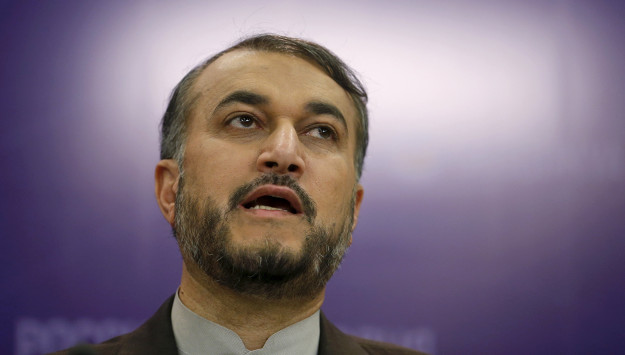
After decades of political setbacks, Iran’s former Revolutionary Guards commander has returned to the center of power. Is he an incidental beneficiary of war, or have observers underestimated him all along?
The Unavoidable Neighbor: Managing Iran Beyond the War
Gulf states and their partners are increasingly looking beyond their most immediate interests of containing the war with Iran. While recent talks between Saudi Arabia, Turkey, Pakistan, and Iran have kept de-escalation on the agenda, a broader regional security framework and non-aggression pact has also emerged, envisioning a longer-lasting solution to regional conflicts. The talks have yet to produce a settlement, but they reflect a growing recognition that Gulf security cannot depend entirely on Washington. Iran will still be there, and its neighbors will have to find ways of living with it.
Recent Elections and What They May Mean for the Middle East
Recent elections for the Israeli Knesset and American Congress may make less of a difference in the Middle East than some people think. Elections are significant indicators of national political trends, but do not always translate into changes in national security strategies. That is likely the case now in both nations.
Iran-Backed Iraqi Group Calls for American Troops to Leave Iraq
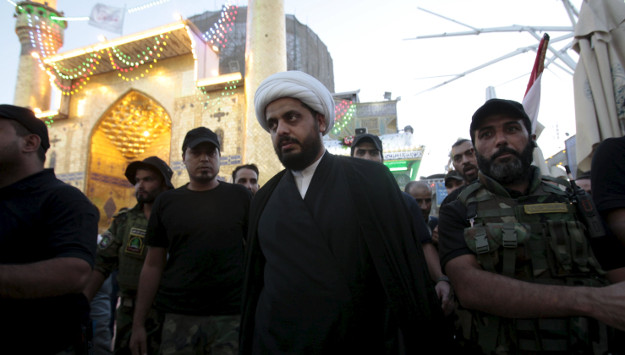
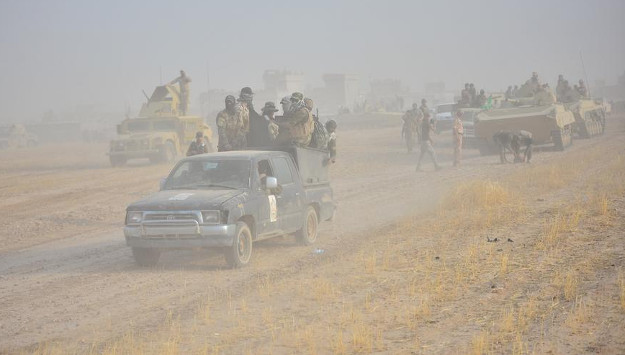
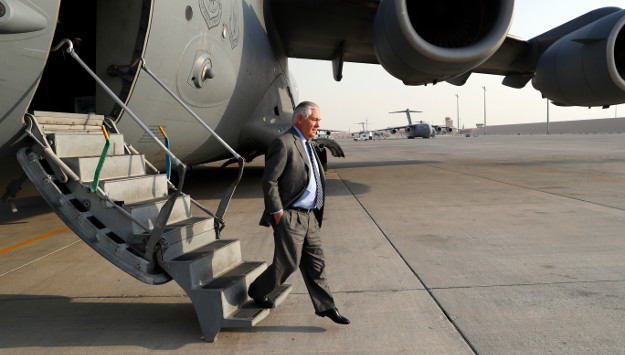
U.S. Secretary of State Rex Tillerson’s call for Iranian-sponsored militia forces in Iraq to be disbanded drew angry reactions from leaders of Popular Mobilization Forces (P.M.F.). Qais al-Khazali, the head of Asa’ib Ahl al-Haq, said Washington should immediately withdraw its troops from the Arab country as soon as the fight against the Islamic State is over.
Hojjatoleslam Mohammad Mohammadi Golpaigani, the head of Supreme Leader Ali Khamenei’s office, credited the Iranian leadership for preventing the establishment of a “second Israel” in northern Iraq. “America and Israel had planned to create a second Israel in the Iraqi Kurdistan region. And it is a shame that the Israeli flag was hoisted there,” Golpaigani said at the inauguration ceremony of 200 mosques and a cultural center today.
Tillerson Promotes Stronger Saudi-Iraq Ties | Monday Briefing
In this week’s Monday Briefing, MEI experts Gerald Feierstein, Marvin G. Weinbaum, Randa Slim, Paul Salem, and Gonul Tol provide analysis on recent and upcoming events including Secretary Tillerson’s visit to Riyadh and Doha as well as his visit to India and Pakistan, Abadi’s regional tour to promote positive relations with neighbors, Sisi’s visit to Paris to boost Egypt-France relations , and German Chancellor Merkel’s threat to cut European Union funding to Turkey due to its crackdown on democratic institutions.
The Growing Conflict between Iran’s Intelligence Agencies
Competition between parallel government institutions with overlapping fields of responsibility is hardly a novelty in Iran. It predates the Islamic Republic and has traditionally helped Iranian rulers to play different power centers against each other and maintain control. Under Supreme Leader Ali Khamenei, however, the conflict between the country’s intelligence agencies has reached an unprecedented level, which undermines public confidence not only in the government but also in Khamenei’s competence.
Iran Warns Europe against Siding with U.S. in Missile Dispute
The head of Iran’s powerful Judiciary ruled out any negotiations with the United States and other world powers over the country’s controversial missile program, and warned European countries not to side with Washington in the latest U.S.-Tehran standoff. “The Europeans should understand that if they cooperate with America, we will stand up against them the same way we have confronted the United States,” Ayatollah Sadegh Amoli Larijani said at a gathering of senior Iranian Judiciary officials.
Iran Seeks Closer Economic Ties with Africa to Minimize U.S. Sanctions
On Monday, Iran’s Foreign Minister Javad Zarif participated in the 13th Iran-South Africa Business Forum held in Pretoria, the Iranian media reported. Speaking at the event, the Iranian foreign minister called for expansion of economic and trade ties between the two countries and urged the South African government to resume banking relations with Iran.
Hamas: Tehran Visit “Practical Response” to Israeli Anger
The visit by the Hamas delegation to Tehran was a “practical response” to the Israeli government’s demand that Hamas cut its ties with Tehran, a senior spokesman for the Palestinian Hamas group said in an
Iran’s Double-Edged Track Record in Fighting Drug Trafficking
A senior Iranian officials claimed today that the country’s counter-narcotics police forces have captured more than 400 tons of illicit drugs in the past six months.
Iraqi Kurdish, Turkmen Leaders Accuse Iran-backed Group of Looting in Kirkuk
Asa’ib Ahl al-Haq (A.A.H.), an Iranian-backed Iraqi militia group, continues to play a role in political and security developments in the disputed province of Kirkuk. While the group is cultivating close relations with some leaders of the Patriotic Union of Kurdistan (P.U.K.), other Kurdish leaders and Kurdish residents of the disputed Kirkuk province accuse the militia group of looting government buildings in Kirkuk and promoting a sectarian agenda there.
Hamas Delegation Arrives in Tehran for High-Level Talks
A delegation of senior Hamas officials arrived in Tehran today to discuss bilateral issues as well as the latest Israeli-Palestinian developments, the Iranian media reported. Saleh al-Arouri, the deputy head of Hamas’ political bureau and a U.S.-designated founder of the group’s military wing, is heading the delegation. The two sides are also expected to discuss the implications of the latest reconciliation pact between Hamas and Fatah and the way forward. On Thursday, Yahya Sinwar, who was earlier this year appointed to lead Hamas in Gaza, said the group will not cut its ties with Iran.
Iran, Russia Discuss Ways to Boost Military Cooperation
Iranian and Russian defense ministers discussed ways to further enhance military cooperation between the two countries in a telephone conversation on Thursday, the Iranian media reported.
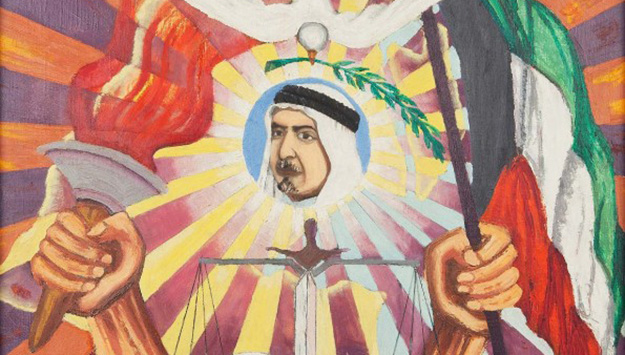
Remembering the Father of Democracy in the Gulf—Sheikh Abdullah al-Salem
It was the age of nationalism and strong men. Egypt’s Gamal Abdel Nasser had just enacted a new charter that guaranteed his hold on power, unelected and unopposed. Iraq’s revolutionary government was overthrown by Baathists, who had also assumed power in neighboring Syria, while Iran’s Mohammad Reza Pahlavi was entrenching his family’s legitimacy through the so-called White Revolution. The lower Gulf emirates were under British “protectorism,” while Saudi Arabia’s King Faisal was wrestling power from his half-brother Saud.
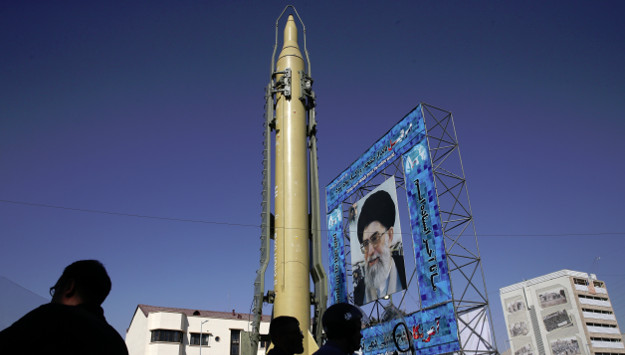
Iran Says Will Accelerate Missile Activity in Defiance of Trump
Iran’s Islamic Revolution Guards Corps (I.R.G.C.) announced today that Iran will defy U.S. pressure and further enhance the country’s controversial missile program.
Hossein Amir-Abdollahian, a foreign policy advisor to Iran’s Parliamentary Speaker Ali Larijani, has cautioned against counting on European powers in Iran’s nuclear standoff with the United States. In an interview with Fars News Agency, an outlet affiliated with the Islamic Revolution Guards Corps (I.R.G.C.), he said there is some convergence of interests between European countries and the United States and they would be willing to counter Iran’s regional ambitions, particularly to protect Israel.
The oldest peer-reviewed publication dedicated to the study of the modern Middle East, MEI’s flagship journal covers politics, society, and culture in the region.