Skip to Content

Research & Commentary Results

Filter by
426 Results
Venezuela’s Shadow Over MENA: Perceptions and Precedents
  • Podcast
  • Venezuela’s Shadow Over MENA: Perceptions and Precedents

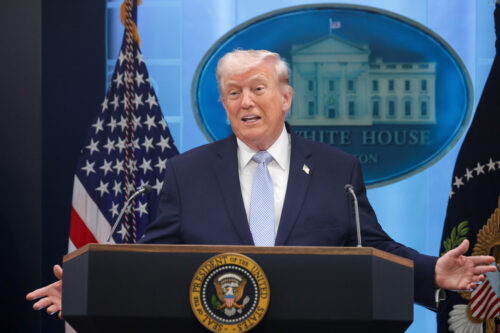
    MEI Vice President for Policy Ken Pollack joins hosts Alistair Taylor and Matthew Czekaj to explore what the precedent set by the Trump administration’s military capture of Venezuelan President Nicolás Maduro could mean for US policy in the Middle East — particularly in light of ongoing anti-regime protests in Iran. The conversation unpacks the reverberations of Operation Absolute Resolve, Washington’s options for and potential consequences of responding to the Iranian regime’s brutal crackdown, regional perceptions of recent US actions and stated objectives, and broader questions around the direction of the Trump administration’s evolving grand strategy.

    January 15, 2026

    Khamenei did this to himself. The US can help — without another Middle East quagmire
  • Commentary
  • Khamenei did this to himself. The US can help — without another Middle East quagmire

    Last week, Iran’s Supreme Leader Ali Khamenei effectively greenlit mass killing to save his regime. His message was blunt: blood would be spilled to preserve the system. His security forces followed through, unleashing a level of violence against protesters that even by the Islamic Republic’s grim standards marks a dangerous escalation.

    Can Iran’s Regime Survive This?
  • Podcast
  • Can Iran’s Regime Survive This?

    Iran is facing the largest demonstrations since 2022, when the death of Mahsa Amini in police custody ignited a nationwide uprising. This time, the unrest comes as the Islamic Republic is unusually exposed—still reeling from a bruising 12-day war with Israel last summer. What does this moment mean for the regime’s survival? How is this wave of protests different from those that came before? And is there anything the outside world can do to support Iran’s pro-democracy movement without backfiring?
    How Damascus and the SDF came to blows in Aleppo — and what might come next
  • Analysis
  • How Damascus and the SDF came to blows in Aleppo — and what might come next

    After months of building tensions, full-blown hostilities erupted between Syria’s transitional government and militia fighters linked to the Syrian Democratic Forces (SDF) in Aleppo on January 6. Through four days of fighting, government forces have now assumed full control of Syria’s second city, after expelling SDF-linked forces from its northwestern districts.

    Trump, Maduro, and Iran
  • Commentary
  • Trump, Maduro, and Iran

    America’s dramatic capture of Venezuelan dictator Nicolas Maduro has set the stage for the conduct of America’s national security strategy in 2026.  It has also raised questions.

    Bonus Episode: Tehran’s Brewing Troubles
  • Podcast
  • Bonus Episode: Tehran’s Brewing Troubles

    This bonus episode of Middle East Focus features a conversation from MEI’s Virtual Briefing Series. Director of Communications Zeina Al-Shaib is joined by Distinguished Diplomatic Fellow Alan Eyre and Senior Fellow Alex Vatanka to discuss the ongoing protests in Iran. The street demonstrations, sparked by the country’s economic nosedive and at times turning violent, are the largest in three years. As regime arrests and killings of protesters have intensified, US President Donald Trump has threatened to intervene, his remarks potentially taking on a more vivid significance in light of the American military extraction over the weekend of Venezuela’s President Nicolás Maduro, an ally of Tehran. Eyre and Vatanka discuss what these latest developments mean for an Iranian regime already under intense internal and international pressure; the political impact of President Trump’s threats; the limits of Iranian President Masoud Pezeshkian’s power to de-escalate the situation at home; and how the instability inside Iran may affect the wider region.

    January 8, 2026

    Iran’s Axis of Resistance after the 12-day war: Adaptation, restructuring, and reconstitution
    Photo by Kaveh Kazemi/Getty Images
  • Analysis
  • Iran’s Axis of Resistance after the 12-day war: Adaptation, restructuring, and reconstitution

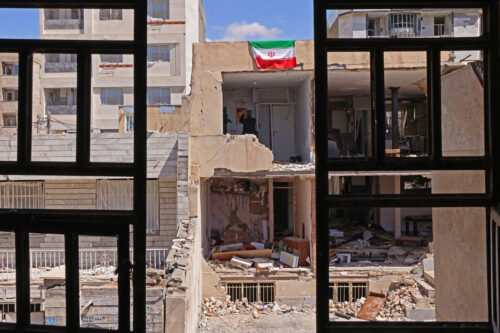
    Since Israel’s 12-day war against Iran, Tehran and its network of regional proxies and non-state allies, the so-called Axis of Resistance, have entered a phase of strategic dormancy — an outward calm concealing rearmament, financial adaptation, and ideological renewal.

    December 19, 2025

    Moral compass lost: US foreign policy in 2025
    Photo by Andrew Harnik/Getty Images
  • Analysis
  • Moral compass lost: US foreign policy in 2025

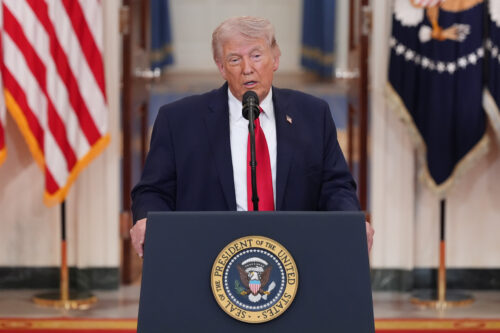
    US President Donald Trump is scheduled to deliver a prime time address to the nation this evening at a moment when public support for his second term has hit new lows. No matter the topic Trump chooses to frame the national conversation as America heads into the holiday season, it is worth taking a step back and reflecting on the bigger story of what has occurred in the United States in 2025 and how these dynamics affect America’s relations with the rest of the world, including the Middle East.

    Unfinished business will drive the Mideast agenda in 2026
  • Brief
  • Unfinished business will drive the Mideast agenda in 2026

    Following another year of pivotal developments and transformational change, the Middle East could be poised to turn the page on many of its long-running conflicts and sources of instability. But lasting fruits of the processes begun in 2025 will require a determined, intentional focus by regional actors and the United States. Given current trends, MEI experts weigh in on where the region may be headed in 2026.

    Rob Malley Argues Two States Is an Illusion
  • Podcast
  • Rob Malley Argues Two States Is an Illusion

    Brian sits down with Robert Malley, a former US official best known for his role as the lead negotiator of the 2015 Joint Comprehensive Plan of Action. Malley discusses the motivations behind his new book, Tomorrow Is Yesterday: Life, Death, and the Pursuit of Peace in Israel/Palestine, and offers his assessment of American perspectives on the war in Gaza. The conversation also explores his personal background as the son​ of an Egyptian Jewish father and an American Jewish mother—both outspoken on the political left—and how that upbringing shaped his worldview, alongside a career spanning the Clinton, Obama, and Biden administrations.


    When the World’s Oldest Democracy Goes Illiberal
  • Podcast
  • When the World’s Oldest Democracy Goes Illiberal

    The Trump administration has released its new National Security Strategy—and analysts say it signals a decisive break from America’s role as the leader of the free world. Instead, the document advances an openly illiberal, strongman-centered vision of power. One former U.S. official goes further, arguing the strategy doesn’t merely abandon democracy promotion—it puts Washington in the business of promoting autocracy.

    What does Trump’s new National Security Strategy mean for the Middle East?
  • Podcast
  • What does Trump’s new National Security Strategy mean for the Middle East?

    In this episode, MEI Distinguished Diplomatic Fellow Ambassador David Hale joins host Alistair Taylor to unpack the Trump administration’s new National Security Strategy (NSS). Released on December 4, the document outlines the administration’s foreign policy vision, priorities, and approach to global challenges. Ambassador Hale analyzes the new NSS and how it compares to previous US strategy documents. The conversation focuses on what the NSS means for the future of US policy in the Middle East, and how it is likely to be received by regional actors.

    December 11, 2025

    Soft Power in Hard Times: Pope Leo XIV’s Visit to Lebanon
  • Podcast
  • Soft Power in Hard Times: Pope Leo XIV’s Visit to Lebanon

    MEI Senior Fellow Fadi Nicholas Nassar joins host Matthew Czekaj to share expert insights and personal reflections on Pope Leo XIV’s trip to Lebanon from November 30 to December 2. Nassar unpacks the significance of the visit, part of the pontiff’s first overseas tour since assuming office, and its potential impact on Lebanon’s untenable status quo. The conversation explores key questions, including the ability of spiritual and moral authority to compensate for the shortcomings of political leadership as well as whether Lebanon’s government will be able to capitalize on the momentum generated by this visit as the possible return of conflict looms on the horizon.

    December 4, 2025