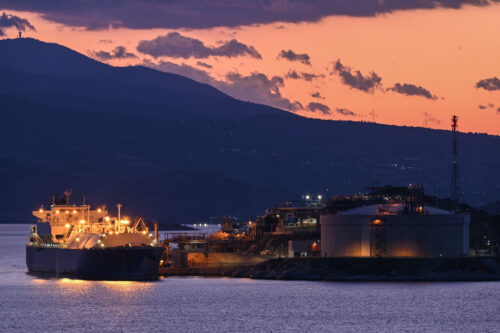
In less than two decades, a string of offshore discoveries has turned the Eastern Mediterranean into a significant gas-producing region, making Israel an exporter, twice lifting Egypt into the ranks of liquefied natural gas (LNG) exporters, and giving Cyprus finds it has yet to bring to market. This backgrounder explores the potential and challenges of exploiting and managing LNG resources in the region.
How Lebanon can be Trump’s first success in a troubled region
The Trump administration has done more than any of its predecessors to restore sovereignty for a much traumatized nation, Lebanon. The Israel Defense Forces’ operations in 2024 against Hezbollah decimated that organization, long the “A Team” in global terror.
Kim Ghattas on a Murder That Explains the Middle East
Brian sits down with author and Emmy Award-winning journalist Kim Ghattas to talk about her new book, The Best Kind of American, which tells the story of the 1984 assassination of Malcolm Kerr, then president of the American University of Beirut. They discuss her inspiration for the project, what Kerr’s murder revealed about the Middle East at the time, and why his story still resonates four decades later.
This article is part of a collection of short essays written by the Fellows of the Middle East Institute to explore aspects of the ongoing war with Iran. The intent of the collection is to help readers see new and unexpected elements of the dynamics and impact of the ongoing hostilities and to think harder, deeper, and broader about the implications of the conflict.
Lebanon: Where the Axis of Resistance Breaks First
The war with Iran has not yet resolved the contest between Tehran and Washington, but it has already begun to reshape the Middle East — and nowhere as clearly in the United States’ favor as in Lebanon. The challenges in Lebanon have presented the US with a defining test: whether Washington and its partners have the determination to convert Iran’s material losses into lasting strategic change.
Consolidating Sovereignty, Security and Peace: Time to Step up the Game
Although it has been a frustrating summer, Lebanon remains on the right track. My observation after a ten-day visit to Beirut and Jerusalem this month is that leaders in both capitals remain strongly committed to a shared objective.
Brian is joined by Hisham Melhem, a prominent journalist known for his interviews with Presidents George W. Bush and Barack Obama and his role as an honest intermediary between Americans and the people of the Middle East. He reflects on his journey from growing up in Lebanon to building a life in America, discusses how the region has transformed over his lifetime, and offers a candid take on where US foreign policy stands today.
United States Central Command (CENTCOM), one of the US Department of Defense’s (DoD) six geographical combatant commands, is responsible for countering threats, responding to crises, and strengthening regional stability in the Middle East, Central Asia, and parts of South Asia.
Lebanon is America’s next foreign policy win — if Washington acts now. The US has committed blood and treasure to neutralize Iran’s ability to project power and destabilize the Middle East. Lebanon is now the clearest opening to convert those investments into strategic gains and permanently dislodge the Islamic Republic from its most important regional foothold. Securing a sovereign Lebanon, achieving a lasting Israel-Lebanon peace, and dismantling Hizballah — the blueprint of Iran’s proxy model — would irreversibly weaken Tehran’s threat and consolidate a new regional order led by America’s partners before Iran has a chance to reverse its losses.
This report outlines an actionable US roadmap to win in Lebanon, comprising eight chapters of specific policy interventions across the security, economic, and political dimensions needed to secure a sovereign Lebanon, lock in US gains against Iran, and permanently end the Israel-Lebanon conflict.
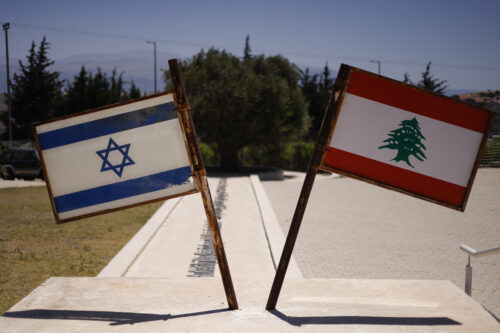
Achieving a Permanent End to the Israel-Lebanon Conflict
As part of a report outlining an actionable US roadmap to win in Lebanon, this article posits a successful outcome will require more than just negotiations: sustained pressure on Hizballah and Iran, internal reforms in Lebanon, Arab state help, and more proactive American support — not just money, but advice — for the Lebanese army.
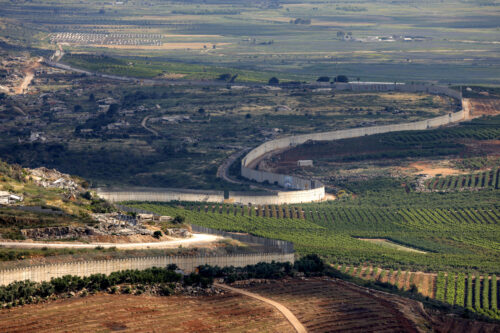
Lebanon-Israel Border Disputes: A Guide for American Mediation
As part of a report outlining an actionable US roadmap to win in Lebanon, this paper examines how the United States might mediate the settlement of Israel-Lebanon differences over the line that divides them into separate jurisdictions.
As part of a report outlining an actionable US roadmap to win in Lebanon, the author discusses options for American military assistance to the Lebanese Army in the effort to disarm Hizballah and regain Lebanese sovereignty.