This article is part of a collection of short essays written by the Fellows of the Middle East Institute to explore aspects of the ongoing war with Iran. The intent of the collection is to help readers see new and unexpected elements of the dynamics and impact of the ongoing hostilities and to think harder, deeper, and broader about the implications of the conflict.
Yemen: The Houthis’ Role in the Next Evolution of the Axis of Resistance
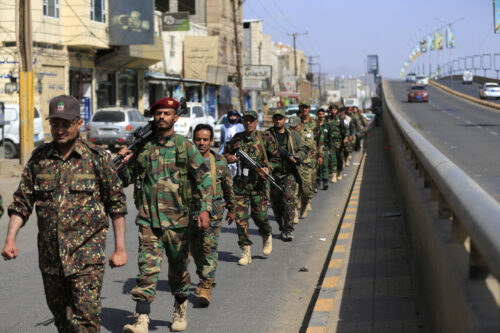
The outbreak of the war with Iran demonstrated the strategic value of maritime chokepoints in the Islamic Republic’s confrontation with the United States. But as Tehran’s strategy of using the Strait of Hormuz to pressure Washington seems to be backfiring, Iran is working with the Houthis to strengthen its leverage over another strategic chokepoint: the Bab el-Mandeb. The recent escalation in Yemen should be viewed within this context.
US Regional Foreign Policy: Unforced Diplomatic Errors Risk Accelerating American Retrenchment
As the summer draws to a close, the storyline for the 2026 Iran war remains incomplete and the United States’ broader Middle East policy direction highly uncertain. None of the major issues that have long headlined Washington’s Iran portfolio appear any closer to resolution, and new problems have emerged that did not exist before.
US Regional Defense Policy: Strategic Prioritization and the Promotion of Collective Defense
A war that the White House initially hoped would be brief has now dragged on for more than six months, with prospects for a resolution frustratingly remote, and the Trump administration’s credibility among friend and foe alike is nearly exhausted. Focusing on defense and security, there are multiple lessons from the Iran war that should shape US strategic thinking.
Gulf Political Economy: The Cost of Accommodating Iran
There may be no near-term resolution to the conflict between the United States, Israel, and Iran. The cease-fire and memorandum of understanding (MoU) signed on June 18 have broken down, there is little diplomatic engagement, and new flare-ups in early September indicate a further round of escalation. Gulf states may have no choice but to protect their assets and populations while trying to deter Iran by finding mechanisms of both containment and accommodation.
Gulf Energy Markets: The Region’s Edge Will Survive — At a Price
Across the Gulf, views differ widely on how the Iran war can and should end, and what the region will look like once it does. Yet on the crisis over the closure of the Strait of Hormuz, the view is near-unanimous that a repeat is not only possible but likely. That expectation, more than any single incident over the past year, is becoming a major driver of decision-making in industry and policy circles alike.
Gulf AI: The War as a Catalyst for Deepening Regional-US Strategic Tech Cooperation
When Iranian drones struck two Amazon Web Services data centers in the UAE on March 1, 2026, and damaged a third in Bahrain the same morning, many thought this could spell the end of the Gulf’s AI ambitions. Whatever the intent, the attacks highlighted the new reality that data centers have now become targets in inter-state wars.
Gulf: The War Has Shaken Relations With Washington
When President Donald Trump ordered US forces into war against Iran, the administration’s ambitions reached well beyond Tehran’s nuclear program. Trump openly encouraged Iranians to topple their government. Israeli leaders spoke of reshaping the Middle East. The war’s architects got their wish — only not in the way they intended.
Egypt: How the Iran War Has Affected Egypt’s Calculations
Egypt, which is not party to the war on Iran, has become a target as well as an intermediary in the conflict. As a result, the war has affected Egypt’s future calculations, particularly in three major areas: its economy, its security, and its regional alliances.
The Houthis: Iran’s Bargaining Chip With Washington
As Washington scrambled to contain the consequences of the Houthis’ dramatic advance along Yemen’s Red Sea coast last week, US Vice President JD Vance confirmed US media reports that the Trump administration was “engaged in direct conversations with the Houthis.”
Algeria and Morocco have long been at odds, but recent diplomatic moves may signal a widening geopolitical split in North Africa. Hosts Alistair Taylor and Matthew Czekaj are joined by MEI Senior Fellow Intissar Fakir to unpack Algeria’s decision to sever diplomatic ties with the United Arab Emirates and Morocco’s warming relations with both the UAE and Israel. They also explore linkages between these diplomatic shifts and the Western Sahara conflict, Moroccan domestic concerns, particularly in light of this week’s elections, as well as broader regional stability.
Unlocking the Levant: Why the United States and Syria Must Pursue a Bilateral Trade and Investment Agreement
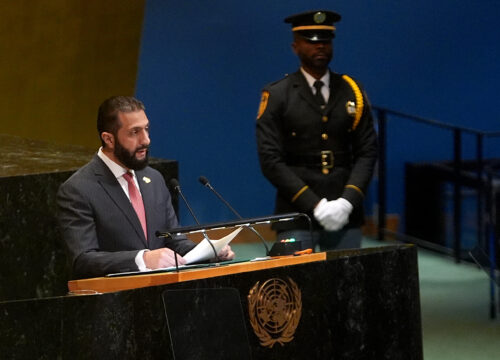
Apart from the brief honeymoon period between 1961 and 1963 under President John F. Kennedy and President Nazim al-Qudsi, US-Syria relations have never held such optimistic potential as they do today. Today, following the fall of Bashar al-Assad regime and the rise of a new government under President Ahmad al-Sharaa at the end of 2024, a new geopolitical window has opened.
Over the past several weeks, the Houthis have seized the port city of Mokha, Yemen’s western coastline, and several islands in the Bab el-Mandeb Strait, and they are now massing around Marib and Taiz in the first major frontline shift since 2022. MEI Associate Fellow Nadwa Al-Dawsari joins host Matthew Czekaj to unpack the latest developments. Together, they discuss what has allowed the Houthis to advance against Yemeni government forces, the role the militant group plays in Iran’s regional strategy, and what it will take to contain the threat.
Brian is joined by Hisham Melhem, a prominent journalist known for his interviews with Presidents George W. Bush and Barack Obama and his role as an honest intermediary between Americans and the people of the Middle East. He reflects on his journey from growing up in Lebanon to building a life in America, discusses how the region has transformed over his lifetime, and offers a candid take on where US foreign policy stands today.
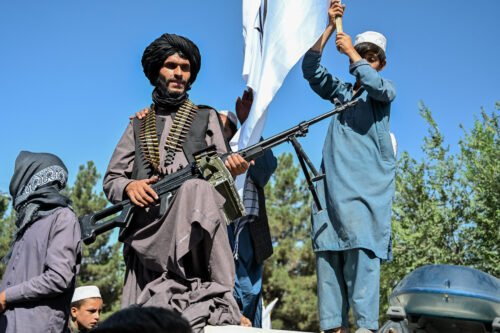
I was a teenage Afghan refugee in Pakistan’s tribal areas when the Twin Towers fell. Almost nobody around us understood the politics of what had happened, but we knew that something had changed for good. Afghanistan, which until then had been our private tragedy and our first exile from Taliban rule, had suddenly become the world’s concern, with the United States leading the response.