Skip to Content

Research & Commentary

Read in-depth research, analysis, and commentary from MEI’s fellows and experts on the Middle East. 

Trump’s Family Business Deals Risk Further Undermining the Credibility of US Middle East Policy
  • Analysis
  • Trump’s Family Business Deals Risk Further Undermining the Credibility of US Middle East Policy

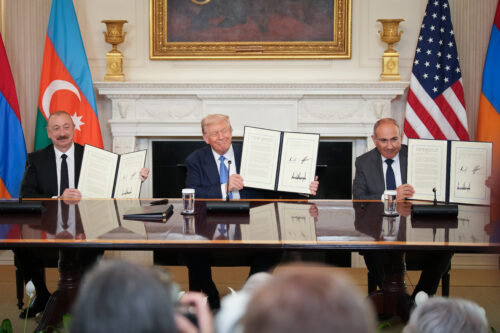
    President Trump’s family businesses are once again in the spotlight as a new financial disclosure showed they earned $2 billion in income in 2025 — a dramatic increase on the year before, with much of it coming from Gulf entities, raising emoluments concerns. Mounting perceptions of corruption, combined with unresolved crises in Iran and Israel-Palestine, are eroding trust among key partners in the Middle East. With the 2026 midterms approaching, these entanglements could represent a major political vulnerability and further undermine America’s already-strained standing in the region.

    Do the Gulf States Need a New Playbook?
  • Podcast
  • Do the Gulf States Need a New Playbook?

    After the US-Israel-Iran war — and the strikes that followed the cease-fire — the Gulf states find themselves dangerously exposed. Host Alistair Taylor is joined by MEI Associate Fellow Gregory Gause to discuss the war’s impact on the Gulf, their partnership with the United States, and whether the turmoil of recent months will push Gulf leaders to reassess their alliances and international engagement.

    July 2, 2026

    Additional Research & Commentary

    Backgrounders

    The Houthis
  • Backgrounder
  • The Houthis

    The Houthis are a political-military faction and Zaydi religious movement founded in northwestern Yemen in the 1980s. A key member of Iran’s Axis of Resistance with links to other militant organizations in the Arabian Peninsula and the Horn of Africa, the group has continued to pose a threat to Western interests on a global scale.

    May 15, 2026

    The Abraham Accords
    Photo by Alex Wong/Getty Images
  • Backgrounder
  • The Abraham Accords

    This backgrounder provides an overview of how the Abraham Accords came about, the US interests involved, their economic and strategic consequences, and the prospects for further enlargement going forward.

    November 17, 2025

    Turkish Foreign Policy
  • Backgrounder
  • Turkish Foreign Policy

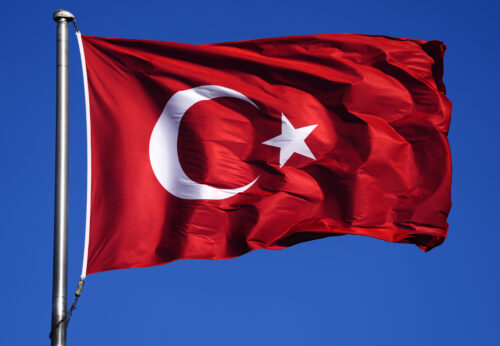
    After a decade of post-Arab Spring isolation, Turkey’s leaders have recognized that their ambition to position the country as an agenda-setter on the world stage requires active engagement in all directions. President Recep Tayyip Erdoğan’s consolidation of executive authority has centralized foreign policy decision-making and tied it to his domestic political priorities, transforming the country’s revisionist approach to one shaped primarily by personal and pragmatic interests.

    April 23, 2026

    Western Sahara: Why the conflict still matters
  • Video
  • Western Sahara: Why the conflict still matters

    As the Western Sahara conflict reaches its fifth decade, the territorial dispute remains unresolved and largely unknown. MEI’s Intissar Fakir unpacks the Western Sahara’s complex history and the rival claims by Morocco and the Sahrawi Arab Democratic Republic. She examines recent developments, such as President Trump’s recognition of Moroccan sovereignty over the territory and the collapse of a 30-year cease-fire, as well as the core questions that remain unanswered after half a century.

    August 7, 2025

    Podcasts

    Middle East Focus

    MEI’s flagship weekly podcast on US foreign policy and contemporary political and social issues in the Middle East.

    Taking the Edge Off the Middle East

    MEI Senior Fellow Brian Katulis engages friends, colleagues, and policy experts in casual conversations on the most important happenings in the Middle East. 

    Rethinking Democracy

    MEI Senior Fellow Gonul Tol hosts leading scholars and thought leaders on global democracy trends and the state of the liberal international order. 

    Filter by
    8748 Results
    The Pillaging of Syria's Cultural Heritage
  • Analysis
  • The Pillaging of Syria's Cultural Heritage

    Since March 2011 Syria has gone through a traumatic process that has strained the ethnic, sectarian, and social fabric of the country—almost all that makes Syria a unified state with a people who share a common history, goals, and aspirations—to beyond the breaking point. Much of the country lies in ruins today, and its cultural heritage has been a deliberate casualty of the conflict from its earliest days.

    May 22, 2015

    Beyond Sanctions: The Factional Nuclear Split in Tehran
  • Analysis
  • Beyond Sanctions: The Factional Nuclear Split in Tehran

    As the world awaits the outcome of the June 30 deadline for a deal between Tehran and the P5+1, the Iranians continue to weigh their options. While the nature of the nuclear debate in Tehran is not as rowdy as the one in Washington, it still features competition between two distinct worldviews about Iran’s place in the world, namely whether the deal should ultimately result in closer relations with the United States.

    Saudi Arabia’s Succession Shakeup and the Rise of Mohammed bin Salman
  • Analysis
  • Saudi Arabia’s Succession Shakeup and the Rise of Mohammed bin Salman

    King Salman’s reign of four months has brought dramatic changes to Saudi Arabia’s succession framework. Prince Muqrin was appointed as heir before being relieved of his duties in favor of Prince Mohammed bin Nayef, and Prince Mohammed bin Salman (MBS) was designated as heir to the heir. A son of the monarch, MBS carries a variety of additional portfolios, including that of minister of defense and chairman of the Council of Economic and Development Affairs (CEDA), which makes policy on non-security matters.

    May 20, 2015

    The “One Belt, One Road” Strategy and China’s Energy Policy in the Middle East
  • Analysis
  • The “One Belt, One Road” Strategy and China’s Energy Policy in the Middle East

    The genesis of the “One Belt, One Road” strategy—also known as the Belt and Road Initiative—can be traced to three noteworthy public events that occurred in rapid succession in the latter part of 2013. On September 7, in a speech delivered at Kazakhstan’s Nazarbayev University, Chinese President Xi Jinping proposed building the Silk Road Economic Belt. Addressing the Indonesian parliament on October 3, he recommended that China and Southeast Asian countries work together to revive the Maritime Silk Road. On October 24-25, at a work forum on “periphery diplomacy” held by the Chinese Communist Party (CCP) in Beijing, Xi stressed that China is committed to forging amicable and mutually beneficial relations with its neighbors, such that they will benefit from Chinese development and China will benefit from a prosperous neighborhood. In this way, the president conceptually linked the notion of the “Chinese dream” to regional development. This conference marked the official birth of China’s “Silk Road strategy.”

    May 20, 2015

    The United States, the GCC, and Iran: The Crisis that Wasn’t
    Middle East Institute
  • Analysis
  • The United States, the GCC, and Iran: The Crisis that Wasn’t

    Whatever eventually comes of the security agreements and mutual pledges of support made at last week’s summit conference between President Obama and leaders of the Arab Gulf monarchies, one result is clear: Saudi Arabia and the others may not be enthusiastic about the pending nuclear agreement with Iran, but they will not actively oppose it.

    May 19, 2015

    Countries Sign Declaration to Prevent Antiquities Looting in the Middle East
  • Analysis
  • Countries Sign Declaration to Prevent Antiquities Looting in the Middle East

    TEN MIDDLE EAST AND NORTH AFRICAN COUNTRIES ANNOUNCE CAIRO DECLARATION, TAKE STEPS TO PREVENT THE WAR CRIME OF LOOTING AND THE DESTRUCTION OF HERITAGE

    JOINT EFFORT TO STOP TERRORIST FUNDING AND CULTURAL DESTRUCTION

    May 14, 2015

    The Alawi Community and the Syria Crisis
  • Analysis
  • The Alawi Community and the Syria Crisis

    “Alawis to the grave and Christians to Beirut!” This troubling slogan was chanted during demonstrations against the Assad regime in spring 2011, and who was behind the chanting remains a controversial question. The Syrian opposition claimed that the slogan’s authors were members of the intelligence services who had infiltrated the demonstrations. According to this view, Syrian government agents were seeking to portray the opposition as primarily motivated by sectarianism and dominated by Salafis in order to frighten minorities and those wishing to live in a secular Syria.

    May 14, 2015

    Reforming Religious Discourse in Egypt
    Middle East Institute
  • Analysis
  • Reforming Religious Discourse in Egypt

    Egyptian President Abdel Fattah el-Sisi has earned numerous accolades, domestic and international, for his repeated calls for religious discourse away from extremism. Sisi has expressed the conviction that the proclivity to radicalism and conflict is not inherent to Islam, but is the product of the sacralization of texts and the uncritical acceptance of early scholars.

    May 14, 2015

    Egypt: Between Chaos, Authoritarianism, and Democracy
  • Analysis
  • Egypt: Between Chaos, Authoritarianism, and Democracy

    The literature on democratic transitions from the last 50 years has emphasized the process of transforming an authoritarian state into a democracy. Much has been written about negotiations between ancien regimes and democratic forces, particularly the bridges that must be made between elements of old and new regimes. Most studies on democratic transitions also examine the competency or democratic nature of such countries’ institutions.

    May 13, 2015

    U.S.-Russian Cooperation on Syria: The Fear Factor
  • Analysis
  • U.S.-Russian Cooperation on Syria: The Fear Factor

    The announcement of a meeting between Vladimir Putin and John Kerry related to Syria, as well as the subsequent visit to Moscow of Daniel Rubinstein of the State Department’s Near East Bureau, may have stunned some pundits on the outside, but for those who have been following the evolution of leadership opinions on Syria in both countries, the surprise is that these official meetings have not come sooner.

    May 13, 2015

    Turkey’s Pro-Kurdish People’s Democratic Party: Gaining Ground but Facing Challenges
  • Analysis
  • Turkey’s Pro-Kurdish People’s Democratic Party: Gaining Ground but Facing Challenges

    With an ongoing peace process with the Kurds and a stumbling democracy, the stakes for Turkey’s parliamentary elections next month have not been higher. The opposition parties—the People’s Democratic Party (HDP), the Republican People’s Party (CHP), and the Nationalist Movement Party (MHP)—need all the help they can get to deny an outright victory to the Justice and Development Party (AKP), which has ruled Turkey since 2002. The growing popularity of the pro-Kurdish HDP, along with signs of declining support for the AKP, point to the possibility of a significant shift in Turkish politics.

    Stability in Yemen: A Matter of Gulf Collaboration
  • Analysis
  • Stability in Yemen: A Matter of Gulf Collaboration

    Yemen, like many other states in the region, has never conformed to the norms of an integral nation state; it has been in a state of crisis since at least the 1990s due to constant competition between the ruling state authority and various clans, tribal groups, transnational movements, and secessionists. In addition to these layers of conflict, regional players have tried to exploit domestic instability to further their own interests.

    May 8, 2015

    Read the Middle East Journal

    The oldest peer-reviewed publication dedicated to the study of the modern Middle East, MEI’s flagship journal covers politics, society, and culture in the region.