Skip to Content

Research & Commentary

Read in-depth research, analysis, and commentary from MEI’s fellows and experts on the Middle East. 

Trump’s Family Business Deals Risk Further Undermining the Credibility of US Middle East Policy
  • Analysis
  • Trump’s Family Business Deals Risk Further Undermining the Credibility of US Middle East Policy

    President Trump’s family businesses are once again in the spotlight as a new financial disclosure showed they earned $2 billion in income in 2025 — a dramatic increase on the year before, with much of it coming from Gulf entities, raising emoluments concerns. Mounting perceptions of corruption, combined with unresolved crises in Iran and Israel-Palestine, are eroding trust among key partners in the Middle East. With the 2026 midterms approaching, these entanglements could represent a major political vulnerability and further undermine America’s already-strained standing in the region.

    Do the Gulf States Need a New Playbook?
  • Podcast
  • Do the Gulf States Need a New Playbook?

    After the US-Israel-Iran war — and the strikes that followed the cease-fire — the Gulf states find themselves dangerously exposed. Host Alistair Taylor is joined by MEI Associate Fellow Gregory Gause to discuss the war’s impact on the Gulf, their partnership with the United States, and whether the turmoil of recent months will push Gulf leaders to reassess their alliances and international engagement.

    July 2, 2026

    Additional Research & Commentary

    Backgrounders

    The Houthis
  • Backgrounder
  • The Houthis

    The Houthis are a political-military faction and Zaydi religious movement founded in northwestern Yemen in the 1980s. A key member of Iran’s Axis of Resistance with links to other militant organizations in the Arabian Peninsula and the Horn of Africa, the group has continued to pose a threat to Western interests on a global scale.

    May 15, 2026

    The Abraham Accords
    Photo by Alex Wong/Getty Images
  • Backgrounder
  • The Abraham Accords

    This backgrounder provides an overview of how the Abraham Accords came about, the US interests involved, their economic and strategic consequences, and the prospects for further enlargement going forward.

    November 17, 2025

    Turkish Foreign Policy
  • Backgrounder
  • Turkish Foreign Policy

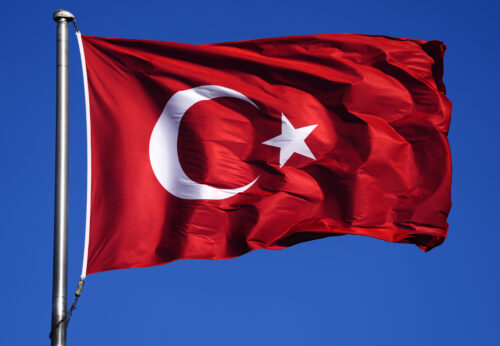
    After a decade of post-Arab Spring isolation, Turkey’s leaders have recognized that their ambition to position the country as an agenda-setter on the world stage requires active engagement in all directions. President Recep Tayyip Erdoğan’s consolidation of executive authority has centralized foreign policy decision-making and tied it to his domestic political priorities, transforming the country’s revisionist approach to one shaped primarily by personal and pragmatic interests.

    April 23, 2026

    Western Sahara: Why the conflict still matters
  • Video
  • Western Sahara: Why the conflict still matters

    As the Western Sahara conflict reaches its fifth decade, the territorial dispute remains unresolved and largely unknown. MEI’s Intissar Fakir unpacks the Western Sahara’s complex history and the rival claims by Morocco and the Sahrawi Arab Democratic Republic. She examines recent developments, such as President Trump’s recognition of Moroccan sovereignty over the territory and the collapse of a 30-year cease-fire, as well as the core questions that remain unanswered after half a century.

    August 7, 2025

    Podcasts

    Middle East Focus

    MEI’s flagship weekly podcast on US foreign policy and contemporary political and social issues in the Middle East.

    Taking the Edge Off the Middle East

    MEI Senior Fellow Brian Katulis engages friends, colleagues, and policy experts in casual conversations on the most important happenings in the Middle East. 

    Rethinking Democracy

    MEI Senior Fellow Gonul Tol hosts leading scholars and thought leaders on global democracy trends and the state of the liberal international order. 

    Filter by
    8748 Results
    Decoding Al-Qaeda's Strategy: The Deep Battle Against America
    Middle East Institute
  • Podcast
  • Decoding Al-Qaeda's Strategy: The Deep Battle Against America

    The Middle East Institute is proud to host author and MEI adjunct scholar Michael W. S. Ryan for a discussion of his book, Decoding Al-Qaeda’s Strategy: The Deep Battle Against America (Columbia University Press, 2013). In his latest book, Dr. Ryan draws on extensive research of al-Qaeda’s Salafist roots and of the work of lesser-known al-Qaeda theoreticians, ultimately determining that jihadist terrorism strategy more closely resembles Maoist guerrilla warfare than mainstream Islam.

    December 7, 2013

    South Korea: Reflecting on 25 Years of Transitional Justice
    Middle East Institute
  • Analysis
  • South Korea: Reflecting on 25 Years of Transitional Justice

    Prior to its first democratically elected government taking office in 1988, the Republic of Korea endured a peculiarly harsh twentieth century. The first decade saw Korea’s last dynasty struggle futilely to modernize amidst the specter of growing Japanese interference. From 1910 until 1945, the nation suffered through the traumatic and humiliating period of Japanese colonization, emerging upon Japan’s defeat in World War II only to face the division of the country into North and South Korea and the incredibly destructive Korean War of 1950-1953. The post-Korean War period was characterized by political divisions, human rights abuses, and economic growth, presided over by a series of authoritarian rulers.

    December 6, 2013

    Toward Victim-centered Transitional Justice: Nepal and Timor-Leste
    Middle East Institute
  • Analysis
  • Toward Victim-centered Transitional Justice: Nepal and Timor-Leste

    The first decade of the twenty-first century has been characterized by the emergence of a new politics of human rights that has become the defining agenda of much national and international politics. This universalist discourse of rights has gained unprecedented leverage in global debate, propelled by narratives that rarely pause to question the evidence or ideology that underlies it. This is nowhere more true than in the practice of human rights after conflict or political violence, in which transitional justice has become a dominant approach to addressing legacies of violations, backed by an industry of practitioners and donors.

    December 4, 2013

    A Q&A on Egypt's New Draft Constitution
  • Analysis
  • A Q&A on Egypt's New Draft Constitution

    On December 1, a 50-member panel given the task of amending Egypt’s constitution approved a draft of the document. It now goes to Interim President Adly Mansour for his approval and will then go to the public in a referendum. MEI spoke with its Senior Fellow, Khalil al-Anani, about the draft, how it differs from the 2012 constitution passed under Mohamed Morsi, and how the Muslim Brotherhood has reacted to it.

    In general, what has changed in this new draft?

    December 4, 2013

    GCC-Vietnam Relations: Hidden Potential
  • Analysis
  • GCC-Vietnam Relations: Hidden Potential

    During the 1970s the Communist Party dominated almost all walks of life in Vietnam. This strict control, especially in regard to the economy, failed to achieve sustainable development. Vietnamese authorities then began to pursue a policy of openness to the outside world, and the Doi Moi, or “renovation,” was launched in 1986. As a result of this and other gradual reforms, Vietnam has become one of the fastest-growing economies in Asia, with annual GDP growth averaging 7.1 percent between 2000 and 2012—a rate that the country is expected to sustain over the next decade. In this context, Gulf Cooperation Council (GCC)-Vietnam relations are promising and may develop steadily over the coming years.

    December 2, 2013

    Iran’s Hardliners and the Nuclear Deal
    Middle East Institute
  • Analysis
  • Iran’s Hardliners and the Nuclear Deal

    Earlier this week, Iran and world powers reached a deal in which Iran will curb its nuclear program for six months in exchange for a drop in some sanctions. MEI spoke with one of its experts, Alex Vatanka, to gain an understanding of how hardliners in Iran are reacting to the deal as well as other internal dynamics in the Islamic Republic.

    How have hardliners in Iran, such as the Revolutionary Guards, responded to the news of the interim agreement?

    Turkey’s Search for a “Zero Problem” Policy
  • Analysis
  • Turkey’s Search for a “Zero Problem” Policy

    Turkish Foreign Minister Ahmet Davutoglu’s visit to Washington, D.C. last week came on the heels of a year of soul searching for Turkish foreign policy. After the Arab uprisings shook Turkey’s guiding principle of “zero problems with neighbors,” the country now seems intent on resuming the leadership role it enjoyed in the pre-Arab Spring Middle East.

    Turkey-Pakistan Security Relations since the 1950s
    Middle East Institute
  • Analysis
  • Turkey-Pakistan Security Relations since the 1950s

    The initial impulse for Pakistan and Turkey to pursue security cooperation stemmed from their common opposition to Communism in the 1950s. Over the past decade, Pakistan and Turkey have once again sought to cooperate in the security sphere, this time in countering terrorism and ensuring stability in Afghanistan.

    November 25, 2013

    The Iran Nuclear Deal: Risks and Opportunities for the Region
  • Analysis
  • The Iran Nuclear Deal: Risks and Opportunities for the Region

    The nuclear deal with Iran, though still temporary and tentative, is ushering in a historic shift in the patterns of power, conflict, and diplomacy in the region. Like all historic shifts, it is laden with uncertainty and risk of new conflicts, but also carries with it potential opportunities for further diplomacy and finding common ground. Given the precedent of conflict and mistrust in the region, it is no surprise that the deal has raised concerns among many of America’s allies.

    November 25, 2013

    The Tortuous Route of the U.S.-Afghan Security Pact
  • Analysis
  • The Tortuous Route of the U.S.-Afghan Security Pact

    Yesterday, the United States and Afghanistan completed a bilateral security pact ensuring that U.S. troops will remain in the country. It now goes to a council of elders—the loya jirga—for authorization. MEI spoke with Scholar-in-Residence Marvin Weinbaum about the pact’s sticking points, next steps for its approval, and what each country gains from the agreement.

    What does the U.S.-Afghan security pact stipulate?

    MEI 67th Annual Conference – In Search of Coherence: US Policy in the Arab World
    Middle East Institute
  • Podcast
  • MEI 67th Annual Conference – In Search of Coherence: US Policy in the Arab World

    Moderator: Michael Hudson, National University of SingaporeAaron David Miller, The Woodrow Wilson CenterFred Hof, Rafik Hariri Center at the Atlantic CouncilRoula Khalaf, Financial TimesSteven Simon, International Institute for Strategic Studies 

    November 20, 2013

    Read the Middle East Journal

    The oldest peer-reviewed publication dedicated to the study of the modern Middle East, MEI’s flagship journal covers politics, society, and culture in the region.