Over the past several weeks, the Houthis have seized the port city of Mokha, Yemen’s western coastline, and several islands in the Bab el-Mandeb Strait, and they are now massing around Marib and Taiz in the first major frontline shift since 2022. MEI Associate Fellow Nadwa Al-Dawsari joins host Matthew Czekaj to unpack the latest developments. Together, they discuss what has allowed the Houthis to advance against Yemeni government forces, the role the militant group plays in Iran’s regional strategy, and what it will take to contain the threat.
I was a teenage Afghan refugee in Pakistan’s tribal areas when the Twin Towers fell. Almost nobody around us understood the politics of what had happened, but we knew that something had changed for good. Afghanistan, which until then had been our private tragedy and our first exile from Taliban rule, had suddenly become the world’s concern, with the United States leading the response.
Though it has fallen out of the headlines because of the Iran war, Syria has had a dramatically consequential summer. Hosts Alistair Taylor and Matthew Czekaj are joined by MEI Senior Fellow Charles Lister to take stock of recent developments: the dissolution of the Kurdish-led Syrian Democratic Forces, Israeli strikes and the friction with Turkey they have exposed, the standoff in Sweida, as well as Damascus’s bid to turn Syria into a trade corridor between the Mediterranean and the Gulf. Is the transition consolidating or fragmenting nearly two years after the fall of the Assad regime?
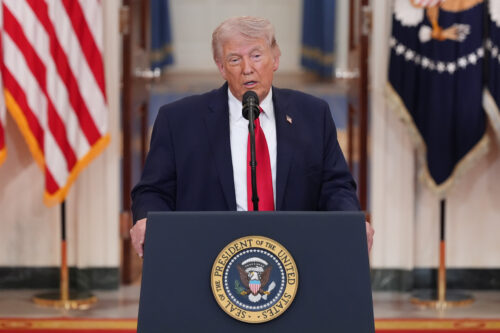
Iran’s leadership did not take long to respond to President Donald Trump’s latest address on the war. Regime-linked media dismissed the April 1 White House speech as a repetition of earlier claims, while officials and commentators close to the Iranian government framed it as further evidence that Washington remains uncertain about its own course. In the battle over messaging, Trump’s ambiguity is giving Iran’s narrative the edge.
Diplomacy or Escalation? The Next Phase of the Iran Conflict
The Middle East Institute invites you to a discussion of what negotiations may or should be taking place, Washington’s and Tehran’s calculations, as well as what a US ground invasion of Iran could entail if talks fail to arrest the war.
This special episode of Middle East Focus features a conversation from MEI’s Virtual Briefing Series. Host Alistair Taylor is joined by former National Security Council Senior Director Stephen Flanagan and MEI Senior Fellow Iulia-Sabina Joja to discuss the impacts of the Iran war on US-European relations. The conflict has hit Europe’s economy hard and created deep divisions across the continent, even as some European countries play a quiet supporting role to the US. President Donald Trump has called for NATO member states to help secure shipping through the Iranian-blocked Strait of Hormuz, a critical chokepoint for international maritime trade. Flanagan and Joja explore the prospects for stepped-up European military involvement, the knock-on effects on the war in Ukraine, and the potential longer-term impact on the future of the US-European alliance.
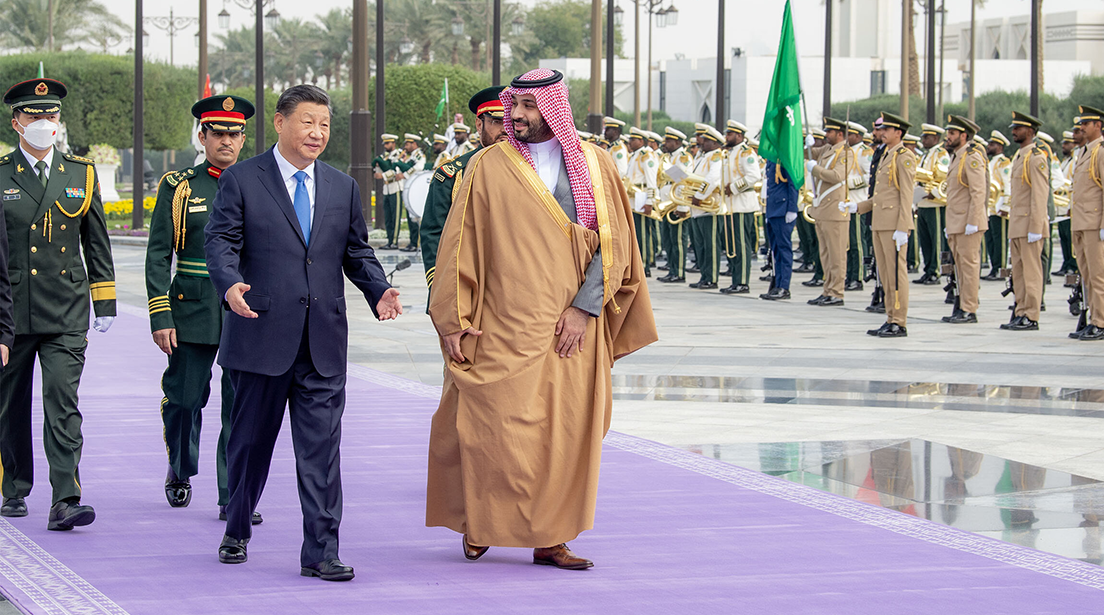
China’s Model of Power Projection in the Middle East
China’s expanding role in the Middle East is often framed as geopolitical rivalry with other global powers, including the United States, Russia, India, and others; but this lens obscures the strategic subtlety of Beijing’s approach.
Strikes (and Now Boots?) Without Strategy as Iran War Escalates
“Tactics without strategy is the noise before defeat” is a well-known axiom attributed to the ancient Chinese military general and strategist, Sun Tzu. With the Iran war now at the one-month mark, it is evident that the Trump administration failed to outline a clear end state or devise a workable war termination strategy before initiating Operation Epic Fury on February 28.
The decision U.S. President Donald Trump made to attack Iran was a high-stakes gamble. The gamble is not really in the military campaign itself. It is whether a massive air campaign can trigger a popular rebellion that takes down the regime in Tehran. This could pay off brilliantly, but it could also fail miserably.
The Kurdish Card: Can Iranian Kurds Shape the War’s Endgame?
The war against Iran has entered its third week with no clear endgame—and no clear strategy from Washington.
At one point President Trump appeared to encourage Iranian Kurdish groups to rise up against the regime, before quickly walking it back. Meanwhile, some exiled Kurdish opposition figures say they already have an invasion plan and only need US air cover.
The Kurdish question is once again at the center of regional politics. In this episode, we examine the role of Iranian Kurds in the opposition—and what this moment could mean for their future.
The oldest peer-reviewed publication dedicated to the study of the modern Middle East, MEI’s flagship journal covers politics, society, and culture in the region.