Attiya Ahmad is Georgetown University’s 2009-10 Center for International and Regional Studies Post-Doctoral Fellow. She recently completed her PhD in Cultural Anthropology at Duke University. Dr. Ahmad’s work brings together scholarship on Islamic studies, globalization, diaspora and migration studies, economic anthropology, and political economy.
The Latest from Attiya Ahmad

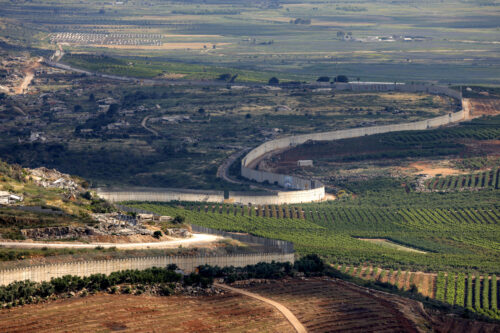
Lebanon-Israel Border Disputes: A Guide for American Mediation
As part of a report outlining an actionable US roadmap to win in Lebanon, this paper examines how the United States might mediate the settlement of Israel-Lebanon differences over the line that divides them into separate jurisdictions.
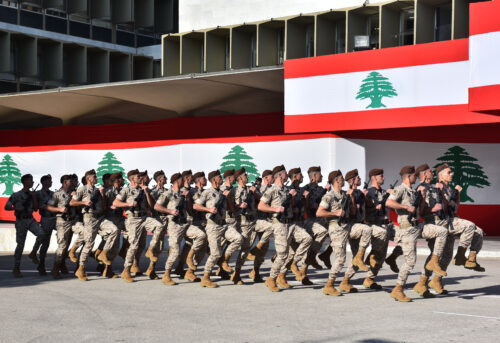
Setting the Lebanese Armed Forces Up for Success
As part of a report outlining an actionable US roadmap to win in Lebanon, the author discusses options for American military assistance to the Lebanese Army in the effort to disarm Hizballah and regain Lebanese sovereignty.
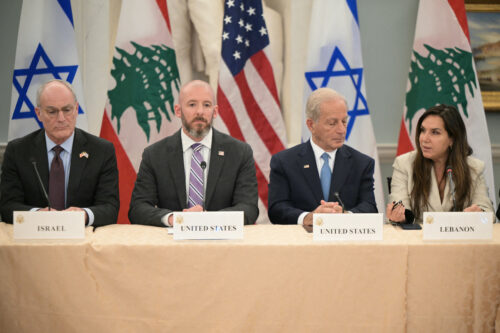
Operationalizing the Trilateral Framework Agreement
As part of a report outlining an actionable US roadmap to win in Lebanon, this article analyzes the Tripartite Framework Agreement signed by representatives of the United States, Israel, and Lebanon, and compares previous US-led peacekeeping mechanisms.
Lebanon Is Washington’s Next Win
As part of a report outlining an actionable US roadmap to win in Lebanon, this article discusses the role of the United States in defeating Hizballah and achieving a permanent end to the conflict between Lebanon and Israel.
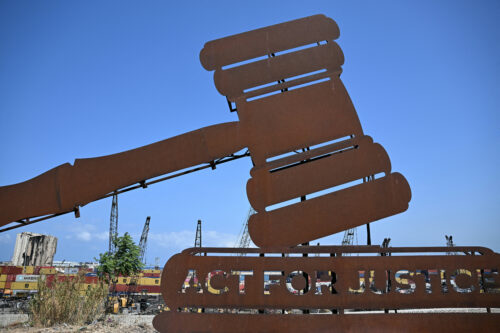
Hizballah’s Deep State: The Real Challenge of Disarmament in Lebanon
As part of a report outlining an actionable US roadmap to win in Lebanon, this article argues that to strengthen the Lebanese state, accelerate economic recovery, and permanently reduce Iran’s influence, the United States should support efforts to dismantle Hizballah’s financial networks, political influence, and parallel institutions as well as reform the judicial system.

From Player to Referee: Dismantling the Culture of Entitlement and Cartelization in Lebanon
As part of a report outlining an actionable US roadmap to win in Lebanon, this article calls on the international community to focus on helping Lebanon transition from a market participant to a neutral Referee, strictly enforcing competition and the rule of law across both the public and private sectors.
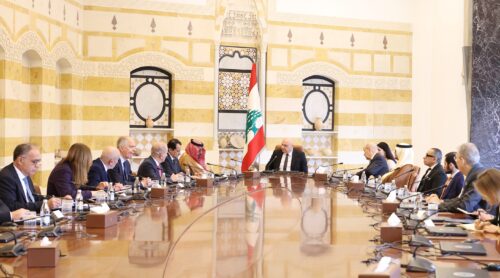
Owning the Recovery: Supporting Lebanese-Led Reconstruction Without Repeating the Past
As part of a report outlining an actionable US roadmap to win in Lebanon, the author analyzes previous international donor strategies in Iraq, Lebanon, and Ukraine as Washington and its Gulf partners consider how to assist the new Lebanese government in crafting and implementing a national recovery plan.

What the Gulf (and America) Can Learn from Ukraine
This past June, I had the opportunity to visit Ukraine and see a bit of a war I heretofore had only read about. The contrasts with the Middle Eastern wars I had experienced were stunning, as was, in particular, the juxtaposition with the current Iran conflict and the ongoing threat to our Gulf allies. There are lessons to be learned about commitment, intensity, self-reliance, and the importance of alliances. They could serve our allies and ourselves well in both theaters.
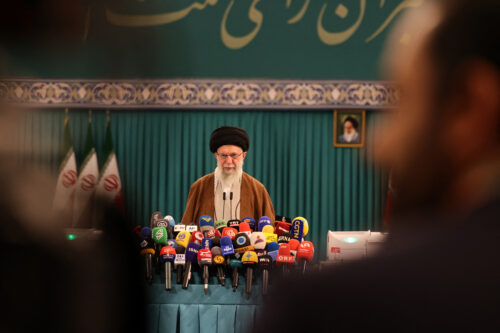
After Khamenei: The Security State He Built, and the Son Who Inherits It

Do You Love Me – Film Screening

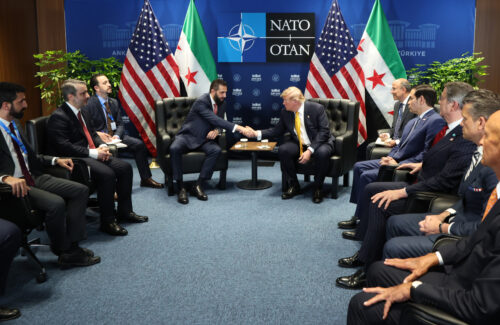
Trump, Syria, and the Hizballah Question
US President Donald Trump recently proposed that Syria intervene militarily against Hizballah in Lebanon. Is that a good idea? This episode of Middle East Focus features a recent MEI Virtual Briefing. Director of Communications Zeina Al-Shaib is joined by Ambassador David Hale, MEI Distinguished Diplomatic Fellow and Charles Lister, MEI Senior Fellow. Together they examine the prospects and implications of renewed Syrian involvement in Lebanon, the potential impact on US relations with both countries, and how evolving dynamics in Lebanon and Syria could reshape the regional balance of power and affect countries such as Turkey and Israel.

The ‘navalization’ of economic warfare sees trade routes become zones of force rather than rules
With more than 80% of global trade by volume being transported by sea, maritime shipping lanes are indispensable to the world economy. That fact was starkly illustrated by the war in Iran, which saw Tehran effectively close the Strait of Hormuz to commercial traffic and Washington respond with a blockade of Iranian ports.
Trump’s Family Business Deals Risk Further Undermining the Credibility of US Middle East Policy
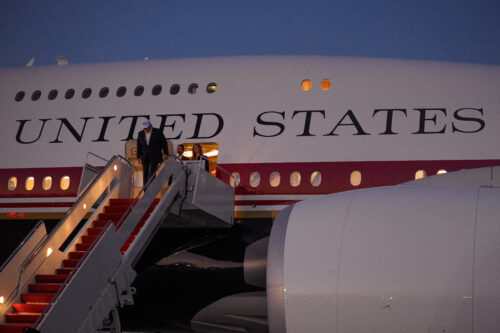
President Trump’s family businesses are once again in the spotlight as a new financial disclosure showed they earned $2 billion in income in 2025 — a dramatic increase on the year before, with much of it coming from Gulf entities, raising emoluments concerns. Mounting perceptions of corruption, combined with unresolved crises in Iran and Israel-Palestine, are eroding trust among key partners in the Middle East. With the 2026 midterms approaching, these entanglements could represent a major political vulnerability and further undermine America’s already-strained standing in the region.



