This individual is a guest contributor. MEI is not able to assist with contact requests.
Jean-Pierre Cassarino holds a professorship at the Robert Schuman Center for Advanced Studies (RSCAS/European University Institute, Florence) where he directs the Return migration and Development Platform (http://rsc.eui.eu/RDP/). He is also research associate at the Tunis-based Institut de Recherche sur le Maghreb Contemporain (IRMC). Since the mid-1990s, he has published extensively on international migration, particularly on return migration and has carried out numerous field surveys investigating returnees’ manifold patterns of reintegration. Selected publications include: (ed.) Unbalanced Reciprocities: Cooperation on Readmission in the Euro-Mediterranean Area, The Middle East Institute Press, Washington, 2010; (ed.) “Conditions of Modern Return Migrants”, International Journal on Multicultural Societies, Vol. 10, Issue 2, UNESCO, Paris, 2008; (ed.) Return Migrants to the Maghreb Countries: Reintegration and development challenges, RSCAS, European University Institute, Florence, 2008; Tunisian New Entrepreneurs and their Past Experiences of Migration in Europe: Networks, Resource Mobilisation, and Hidden Disaffection. Ashgate Publishers, Aldershot, 2000. Email: [email protected]
Join us to see our latest exhibition, Beyond the Weave: Contemporary Dialogues with AlSadu, at the upcoming First Friday Open House as part of Art Walk Dupont.
Violence, Settlements, and Creeping Annexation in the West Bank
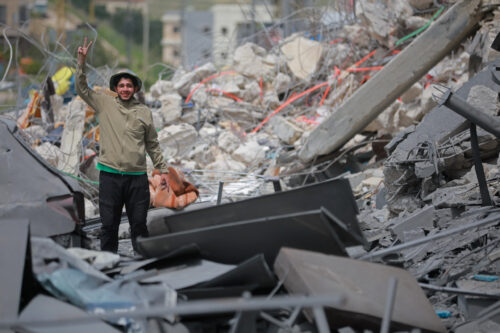
As international attention remains fixed on the fallout from the Iran war, conditions in the West Bank continue to deteriorate. Hosts Alistair Taylor and Matthew Czekaj speak with MEI Senior Fellow Lucy Kurtzer-Ellenbogen about the sharp rise in settler violence, expanding settlement activity, and growing Palestinian displacement across the territory. They examine how recent Israeli legal and administrative measures are reshaping realities on the ground, the implications for Israeli-Palestinian relations, and what the United States should do to play a constructive mediator role.
Why Iran’s Oil Pain Does Not Guarantee Capitulation
President Donald Trump now appears to share a view gaining traction in some policy circles: that sustained pressure on Iran’s oil sector could inflict lasting damage on its production and eventually force Tehran to compromise. The thesis is appealingly simple, yet dangerously incomplete.
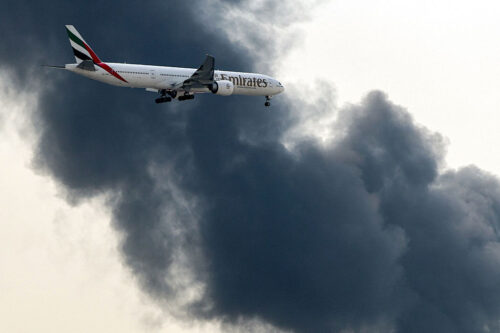
Syria is in the midst of a fragile transition. Many observers see positive momentum, with new humanitarian initiatives underway and fresh funding beginning to flow. But the risks remain serious: regional spillover, deep humanitarian needs, funding shortfalls, Israeli strikes, sectarian tensions, stalled political tracks, and continued reports of abuses by multiple actors.
America Cannot Afford to Miss This Opening in Lebanon
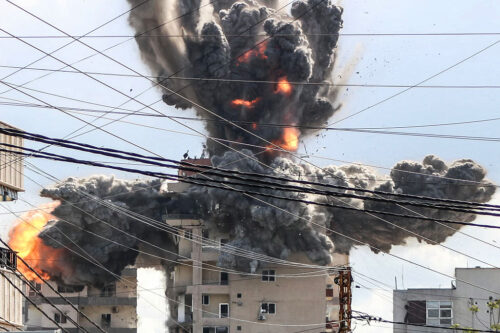
President Donald Trump has an opportunity to do something no American president has managed in nearly half a century: end the war between Israel and Lebanon for good.
In the Trump administration’s diplomatic track with Tehran, one crucial variable is missing: steady US engagement with its Arab partners, particularly in the Gulf, on what the strategic endgame with Iran looks like.
Test of Wills: Iran’s Ability to Outlast the US Blockade
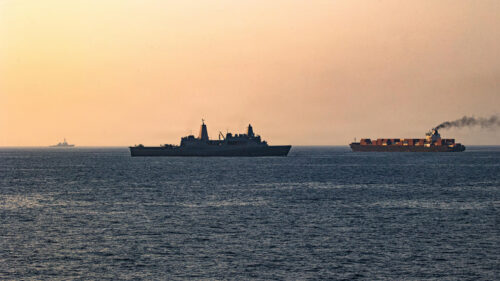
The standoff in the Hormuz is not simply a question of whether Tehran can survive economic pressure, but whether Washington can sustain the pressure at an acceptable cost.
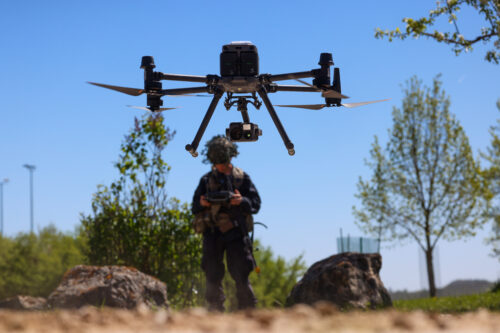
For two decades, US drones hunting terrorists across the mountains of South Asia were the symbol of American military power: precise, lethal, and unmatched. That era is now over. Drones are no longer exquisite tools of counterterrorism and have evolved into something far more common and destabilizing: cheap, expendable, and mass-produced tools of attrition.
Nearly two months into the Iran war, US President Donald Trump has announced an indefinite extension of the cease-fire between Washington and Tehran, even as control of the Strait of Hormuz remains contested. Hosts Alistair Taylor and Matthew Czekaj are joined by MEI Senior Fellow Alex Vatanka to explore where the conflict may be headed and unpack the factors at play. They discuss how Iran’s internal power structures have shifted since February 28, the prospects for a deal between Washington and Tehran, and what form a resumption of hostilities could take.
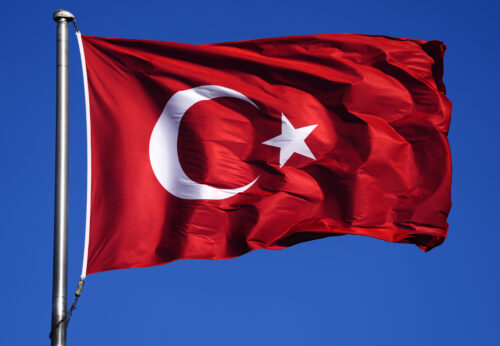
After a decade of post-Arab Spring isolation, Turkey’s leaders have recognized that their ambition to position the country as an agenda-setter on the world stage requires active engagement in all directions. President Recep Tayyip Erdoğan’s consolidation of executive authority has centralized foreign policy decision-making and tied it to his domestic political priorities, transforming the country’s revisionist approach to one shaped primarily by personal and pragmatic interests.
The opposition in Congress is attempting to force a war powers vote on the Trump administration’s Iran operation, with an eye toward the 60-day deadline on military action legally imposed on the executive branch; and key defense-spending measures are also on the immediate horizon. These actions on Capitol Hill could shape the trajectory of how the US moves forward in Iran and the region — and influence Americans’ overall appetite for long-term engagement in the Middle East.