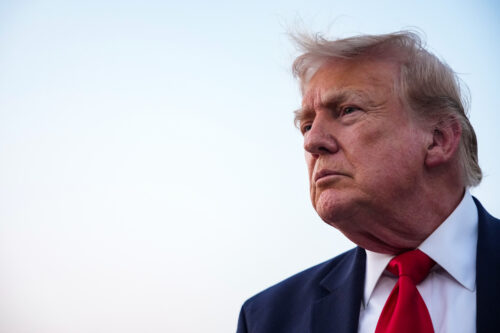
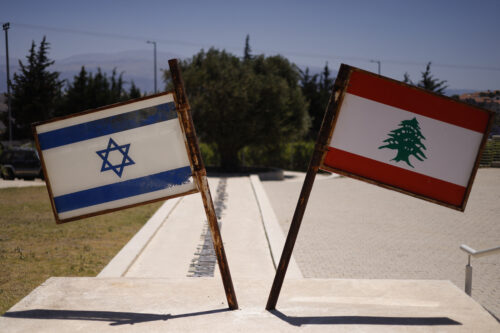
Lebanon is America’s next foreign policy win — if Washington acts now. The US has committed blood and treasure to neutralize Iran’s ability to project power and destabilize the Middle East. Lebanon is now the clearest opening to convert those investments into strategic gains and permanently dislodge the Islamic Republic from its most important regional foothold. Securing a sovereign Lebanon, achieving a lasting Israel-Lebanon peace, and dismantling Hizballah — the blueprint of Iran’s proxy model — would irreversibly weaken Tehran’s threat and consolidate a new regional order led by America’s partners before Iran has a chance to reverse its losses.
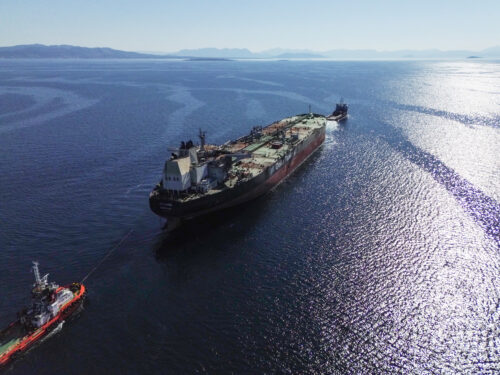
Buying certainty: How Hormuz is redefining global shipping
At the recent Lianhe Zaobao Singapore-China Forum 2026 in Singapore, Professor Joseph Liow, dean of the Lee Kuan Yew School of Public Policy and chairman of the Middle East Institute at the National University of Singapore, suggested that the Strait of Hormuz (SOH) may be entering a “new normal”, one in which Iran — and perhaps Oman — could justify charging vessels fees for transiting one of the world’s most important waterways.
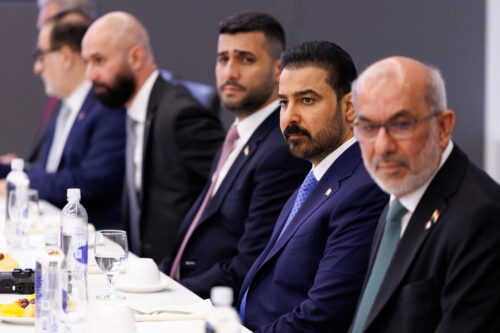
Iraq is emerging as the Middle East’s strategic connector – but can it turn foreign competition into advantage?
Iraqi Prime Minister Ali al-Zaidi is on something of a diplomatic roll at the moment. Having concluded a weeklong visit to the United States on July 19, 2026, during which he charmed President Donald Trump, al-Zaidi is now expected to head to Tehran to do the same with Iran’s new leaders. Trips to Qatar, Saudi Arabia, Turkey and Syria all figure on his itinerary, too.
At the recent NATO summit in Ankara, renewed US-Iran strikes and Turkey’s push to rejoin the F-35 stealth fighter program overshadowed the Alliance’s message of unity and a strong European pillar. MEI Senior Fellow Iulia Joja joins host Alistair Taylor to unpack the summit — what it achieved, what got left off the agenda, and why the roads out of Ankara run through the Middle East.
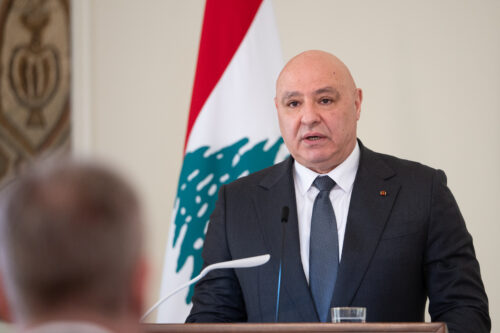
This report outlines an actionable US roadmap to win in Lebanon, comprising eight chapters of specific policy interventions across the security, economic, and political dimensions needed to secure a sovereign Lebanon, lock in US gains against Iran, and permanently end the Israel-Lebanon conflict.
Achieving a Permanent End to the Israel-Lebanon Conflict
As part of a report outlining an actionable US roadmap to win in Lebanon, this article posits a successful outcome will require more than just negotiations: sustained pressure on Hizballah and Iran, internal reforms in Lebanon, Arab state help, and more proactive American support — not just money, but advice — for the Lebanese army.
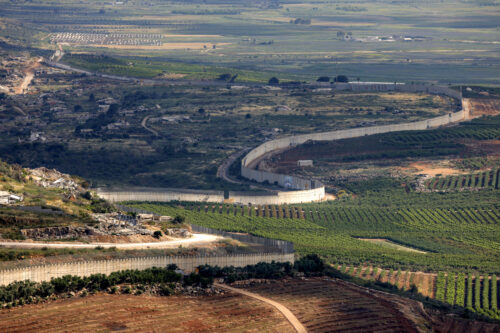
Lebanon-Israel Border Disputes: A Guide for American Mediation
As part of a report outlining an actionable US roadmap to win in Lebanon, this paper examines how the United States might mediate the settlement of Israel-Lebanon differences over the line that divides them into separate jurisdictions.
As part of a report outlining an actionable US roadmap to win in Lebanon, the author discusses options for American military assistance to the Lebanese Army in the effort to disarm Hizballah and regain Lebanese sovereignty.
Operationalizing the Trilateral Framework Agreement
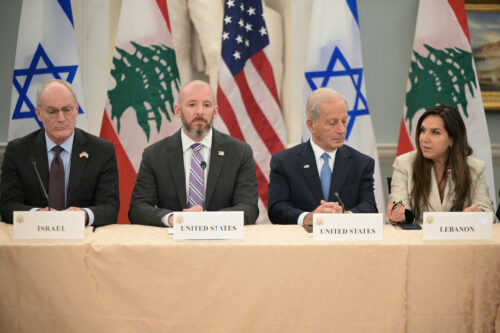
As part of a report outlining an actionable US roadmap to win in Lebanon, this article analyzes the Tripartite Framework Agreement signed by representatives of the United States, Israel, and Lebanon, and compares previous US-led peacekeeping mechanisms.