The Coming Debate Over the US Military Presence in the Gulf
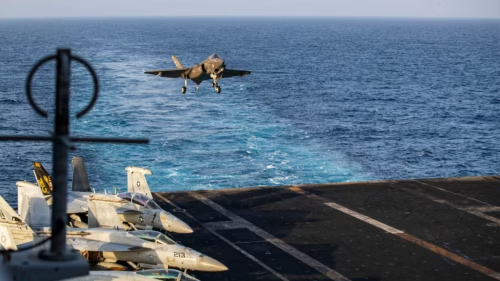
The war with Iran is hardly over, but the debate over the shape and nature of the post-conflict American posture in the Gulf region is just beginning. Undoubtedly, how the war ends will affect how the United States adjusts its role. While this debate is still in its early stages, something of a conventional wisdom is already developing in policy circles that could seriously compromise American influence in the Middle East.
Curb Your Enthusiasm: Why the Midterms Might Not Change Much in US Middle East Policy
With less than a week before the midterm elections in the United States, the spotlight is on the economy and cultural divides. US foreign policy remains mostly on the sidelines, but this year’s inconclusive Iran war and its effect on America’s economy have shaped the broader political environment in this electoral cycle.
The Multiple Costs of the US–Iran War – From Hormuz to Europe and South Asia: The Widening Economic and Political Geography of the Conflict
Wars are decided by those who hold military power, but their costs are increasingly borne by those who have little or no voice in the decisions that start them. The US–Iran war shows this imbalance very clearly. Its economic consequences have gone far beyond the battlefield and have disrupted energy markets, trade routes, food supplies, public finances and investment in the Gulf, Europe, Africa and Asia. The most striking feature of the conflict, however, is not only the size of the damage but its very unequal distribution.
American Bases in the Gulf: Targets or Deterrents?
Did the presence of American military bases in the Gulf monarchies draw those states into the American-Israeli war against Iran, a war they had no say in initiating and no voice in prosecuting? That is certainly the feeling among some citizens of those states.
Nazanin Boniadi: How the World Can Help Iran’s Democratic Struggle
Just weeks before President Trump’s war began, Iran was in the midst of a powerful wave of anti-regime protests spreading across the country. But once the war started, that momentum largely came to a halt. The conflict shifted the focus from dissent to survival and gave the regime an opening to crack down harder. With tighter controls, heightened fear, and everyday life suddenly more precarious, people pulled back from the streets. The protests may have paused, but the resentments that fueled them haven’t gone anywhere.
The Long Tail of Operation Epic Fury: Structural Disorder After the Guns Fall Silent
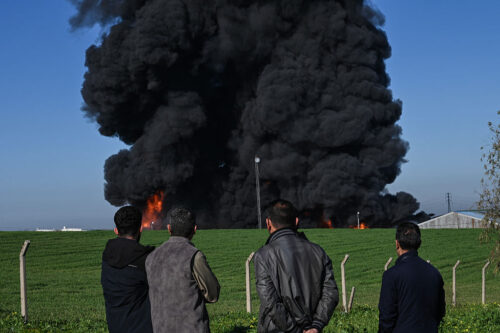
The central failure of Operation Epic Fury is strategic. Five weeks in, neither of its declared objectives – regime change as framed by U.S. President Donald Trump, nor the elimination of an existential threat as framed by Israeli Prime Minister Benjamin Netanyahu – is within reach. The Strait of Hormuz remains effectively closed. Iran’s leadership has reconstituted under Mojtaba Khamenei. The diplomatic track that might have constrained escalation has been shattered.
China’s quiet harvest: As America fights, Asia turns to Beijing
More than a month into the US-Israeli war with Iran, the central question is no longer whether China can avoid the costs. It cannot. The more important question is whether others will emerge even less able to bear them.
Now Would Be a Great Time to Send US Ambassadors to the Middle East
As a fragile cease-fire takes hold in the Middle East, countries are jockeying to shape the peace. But one group remains largely absent: US ambassadors.
Hosts Alistair Taylor and Matthew Czekaj are joined by MEI Distinguished Diplomatic Fellow Amb. (ret.) Robert S. Ford to examine what is at stake for Iraq in the Iran war. The only country to have been hit by both sides, Iraq is caught in the middle of a regional conflict, with the local Iranian-backed Popular Mobilization Forces (PMF) carrying out attacks on American interests and personnel — and the US responding. This escalation comes at a period of internal political transition in Iraq, which has been locked in negotiations to form a new government since the November 2025 elections. Ford, who served as Deputy and later Acting Ambassador in Baghdad from 2008 until 2010, unpacks how Iraq is navigating the current moment, how the Kurdistan region fits into this equation, and what this all means for the future of US-Iraqi relations.
The oldest peer-reviewed publication dedicated to the study of the modern Middle East, MEI’s flagship journal covers politics, society, and culture in the region.