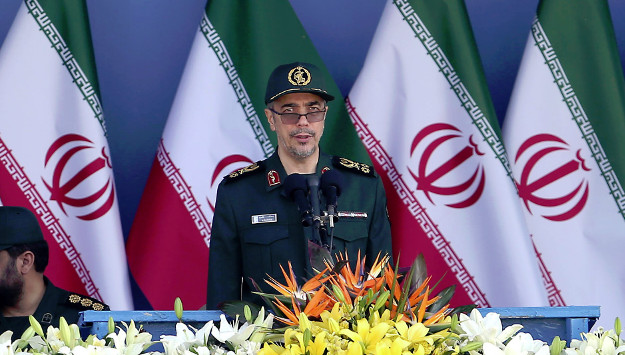
After decades of political setbacks, Iran’s former Revolutionary Guards commander has returned to the center of power. Is he an incidental beneficiary of war, or have observers underestimated him all along?
The Unavoidable Neighbor: Managing Iran Beyond the War
Gulf states and their partners are increasingly looking beyond their most immediate interests of containing the war with Iran. While recent talks between Saudi Arabia, Turkey, Pakistan, and Iran have kept de-escalation on the agenda, a broader regional security framework and non-aggression pact has also emerged, envisioning a longer-lasting solution to regional conflicts. The talks have yet to produce a settlement, but they reflect a growing recognition that Gulf security cannot depend entirely on Washington. Iran will still be there, and its neighbors will have to find ways of living with it.
Recent Elections and What They May Mean for the Middle East
Recent elections for the Israeli Knesset and American Congress may make less of a difference in the Middle East than some people think. Elections are significant indicators of national political trends, but do not always translate into changes in national security strategies. That is likely the case now in both nations.
Competing Iraqi Shiite Militias: Tehran’s Design or Strategic Blunder?
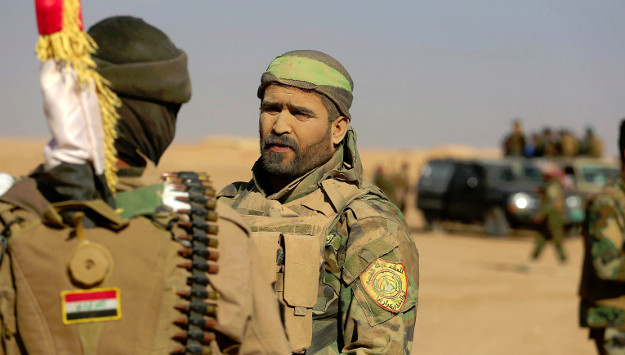
Since the 2003 U.S. invasion, Tehran has encouraged and contributed to the formation of countless Shiite militia groups in Iraq. While most of these armed groups are now formally organized under the umbrella of the Popular Mobilization Forces (P.M.F.), they have in reality remained independent entities and are not controlled by the civilian government in Baghdad.
But has Tehran committed a strategic blunder by fracturing the Iraqi Shiite armed groups or does the existence of competing Shiite Iraqi militias benefit the Islamic Republic?
Iran Vows to Further Empower I.R.G.C. after Trump Signs Sanctions Bill
Hours after President Donald Trump signed a legislation imposing new sanctions on Iran (as well as on Russia and North Korea), the Iranian government announced that it will take “appropriate and proportionate” retaliatory measures, including further empowering the Islamic Revolution Guards Corps (I.R.G.C.) and its elite Quds Force. “The aim of these sanctions is to scare economic firms from dealing with Iran,” said Deputy Foreign Minister Abbas Araghchi. “But Europe will continue economic exchanges with Iran,” he added.
Zarif’s Handshake with Saudi Counterpart Draws Mixed Reactions in Iran
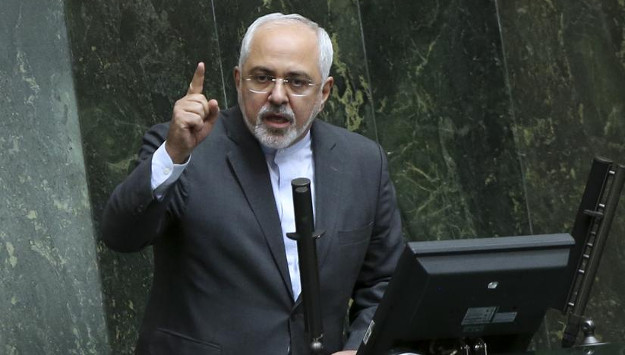
Iranian Foreign Minister Javad Zarif’s handshake and brief conversation with his Saudi counterpart Adel al-Jubeir received mixed reactions inside Iran. While some described their meeting as an encouraging step to improving ties between the two neighbors, others criticized Zarif for seeking friendship with Riyadh. The two top diplomats exchanged diplomatic pleasantries on the sidelines of the Organization of Islamic cooperation (O.I.C.) summit in Istanbul on Tuesday.
The Danger of Conflict Between the Syrian Regime and Y.P.G.
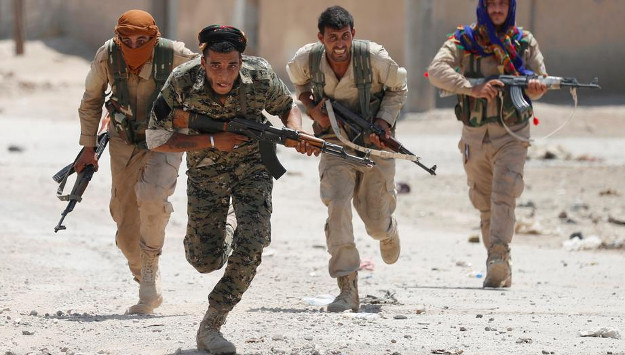
Both the Trump and Obama administrations have made defeating ISIS the United State’s number one priority in the Middle East. In Syria, this focus led the United States to support the Kurdish People’s Protection Units (Y.P.G.) against ISIS. One of the major contributing factors behind this decision was that the Y.P.G. was not actively hostile to the Syrian regime, unlike the Syrian opposition. U.S. support for the Y.P.G.
Iran Complains to U.N. over Latest U.S. Sanctions, Threatens Firm Response
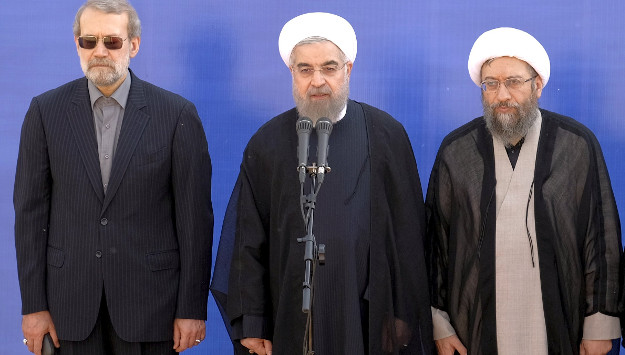
Iranian Parliament Speaker Ali Larijani said today that the country’s committee monitoring the Joint Comprehensive Plan of Action – the nuclear agreement Iran signed with the United States and five other world powers two years ago – has determined that the latest U.S. sanctions violate the accord and added that the committee has filed a complaint with the Iran-P5+1 Joint Commission about it.
Iran-Backed Iraqi Militia Leader Intensifies Propaganda against U.S. and Its Allies
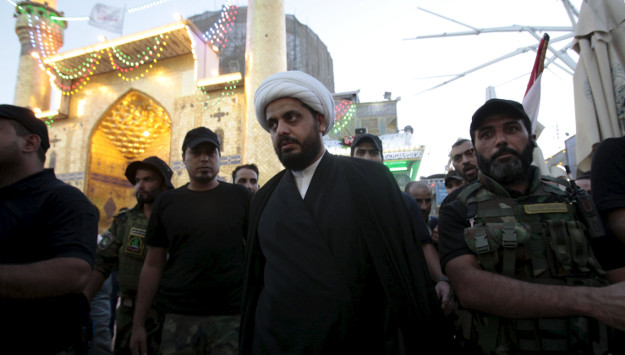
Qais al-Khazali, the secretary-general of Iraq’s Asaib ahl al-Haq armed group, has accused the United States, Israel, Saudi Arabia and Turkey of supporting the Islamic State in Iraq and the broader region, according to Iran’s Fars News Agency. “The heroic forces of Hashd al-Shaabi [Popular Mobilization Forces] easily chop the heads of these forces,” he said while describing the Islamic State as the “special forces” of the United States and its allies.
Influential Iraqi Cleric Muqtada al-Sadr’s Saudi Visit Triggers Worries in Tehran
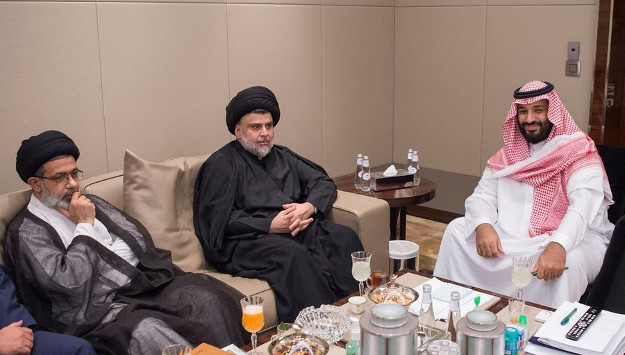
Prominent Iraqi Shiite cleric Muqtada al-Sadr’s weekend visit to Saudi Arabia has raised concerns in Tehran. While the Iranian government and media outlets affiliated with the Islamic Revolution Guards Corps (I.R.G.C.) largely refrained from commenting on Sadr’s trip and his meeting with Saudi Arabia’s Crown Prince Mohammad bin Salman, some conservative newspapers and Iranian analysts cautioned that the Saudi government is attempting to court Iraqi Shiite leaders to influence Iraqi politics at the expense of Iran’s interests.
New Saudi Outreach with Iraqi Shiite Leaders | Monday Briefing
In this week’s Monday Briefing, MEI experts Randa Slim, Paul Salem, and Marvin G. Weinbaum analyze new Saudi diplomatic engagement with Iraq, the escalating G.C.C. crisis, and the continuation of dynastic politics in Pakistan.
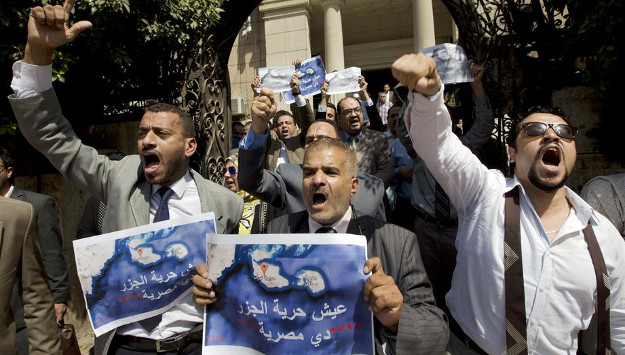
Red Sea Islands Deal Undermines Arab Peace Initiative
The Saudi-led Arab Peace Initiative is losing its value in the wake of Egypt’s decision to return the Red Sea islands of Tiran and Sanafir to Saudi Arabia, and the latter’s participation as a security guarantor of the Egypt-Israel peace treaty.
Last month, the Egyptian parliament, bucking widespread public and institutional opposition, acknowledged Saudi sovereignty over the islands.
Most attention has focused on the dispute over sovereignty, which has been under Egyptian administration for more than half a century. But the real significance of the deal lies elsewhere.
U.S. Absent as Israel-Palestine Violence Escalates | Monday Briefing
In this week’s Monday Briefing, MEI experts Eran Etzion, W. Robert Pearson, Charles Lister, Alex Vatanka, and Randa Slim weigh in on the implications of Israel-Palestinian violence for U.S. foreign policy, Turkish involvement in the Gulf crisis, al-Qaeda’s response to the U.S. decision to terminate support for a program arming anti-Assad Syrian rebels, confrontational U.S. policy towards the Iran nuclear deal, and a former Iraqi Prime Minister’s power play.
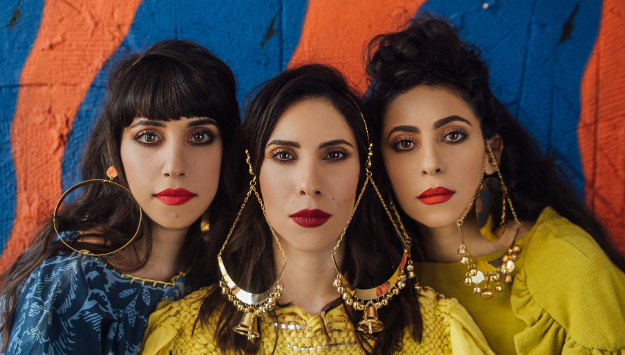
Yemenite pop music has seen a resurgence. The band A-Wa (pronounced “ai-wah,” informal Arabic for “yes!”) and their infectious blend of Yemenite folk, electronic, and hip-hop music can be heard all over the world—from Cairo taxi cabs to Dubai pool parties and Parisian nightclubs. The band, whose mission is to elevate Yemenite music on the international stage, is composed of three Israeli sisters of Yemenite heritage.
Mosul Turning Ugly, Raqqa Front Slows | Monday Briefing
In this week’s Monday Briefing, MEI experts Charles Lister, Marvin G. Weinbaum, Yousef Munayyer, and Alex Vatanka provide analysis on recent events including the battle for Mosul, corruption in Pakistan, Mahmoud Abbas’s trip to China, and Rouhani’s difficult second presidential term.
Senior Cleric: No American Place in World Will Remain Safe If U.S. Commits Mistake
A senior Iranian cleric warned today that “no American place in the world will remain safe if the United States commits a mistake against Iran.” Ayatollah Mohammad Ali Movahedi Kermani, an interim Friday prayer leader of Tehran, told a large gathering of worshippers today that the United States aims to weaken the will of the Iranian people through economic pressure in order to get them to oppose the regime.
The oldest peer-reviewed publication dedicated to the study of the modern Middle East, MEI’s flagship journal covers politics, society, and culture in the region.