Iran’s Role in Arab Allies’ Underground Warfighting
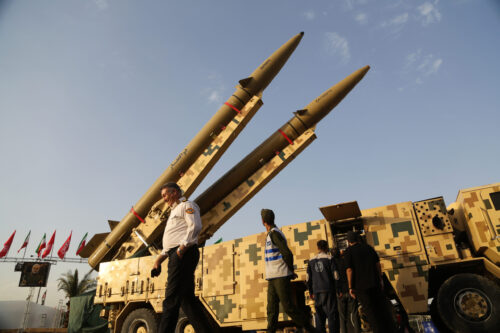
Hamas, Hizballah and Houthi tunnel networks resemble Iran’s underground missile cities. But their origins reveal a more complicated story of local necessity, Iranian assistance and military adaptation.
Dr. Marwan Muasher: Has the Middle East Really Changed?
Have October 7 and the Iran war remade the Middle East, or just made it more dangerous? In the first episode of Re-Orient, Gönül Tol puts that question to Dr. Marwan Muasher, Jordan’s former Deputy Prime Minister and Foreign Minister. Muasher draws on his extensive career to unpack the key issues driving today’s Middle East, from regional alignments to US influence, and offers insights on what has the potential to shape this volatile part of the world.
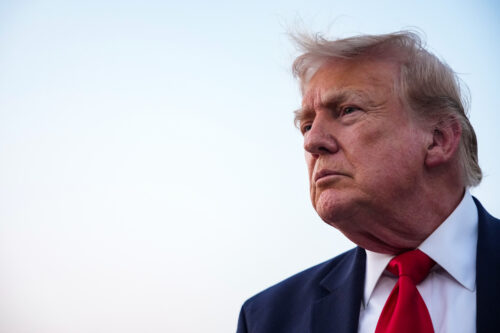
President Donald Trump’s next move on Iran should follow from what he actually wants, and with his legacy at stake, the choice matters. If the ultimate goal is regime change through internal collapse, the logic points to a long squeeze: tighter enforcement of the economic blockade and periodic military strikes to limit Iranian actions in the Strait of Hormuz, a campaign that might outlast his presidency. Whether by design or by drift, that is roughly the course Washington is on today.
It is now clear the United States is sinking into the quagmire of its war with Iran with no clear idea of how to get out. More than five months of intermittent bombing of Iran have not brought Tehran any closer to surrender. Recurring threats by US President Donald Trump to launch a massive military campaign against the country aren’t causing Iran to submit to US demands.
As the US-Israel-Iran war enters its sixth month, the conflict has taken a sharp turn. After a brief lull in the fighting, Iran launched a surprise ballistic missile attack on US forces on July 28, and the US and Saudi Arabia struck back at Iran-backed militias in Iraq, marking Riyadh’s entry into the war. MEI Senior Fellow Alex Vatanka joins host Alistair Taylor to discuss the escalation, what may come next, and the state of talks over sharing the Strait of Hormuz.
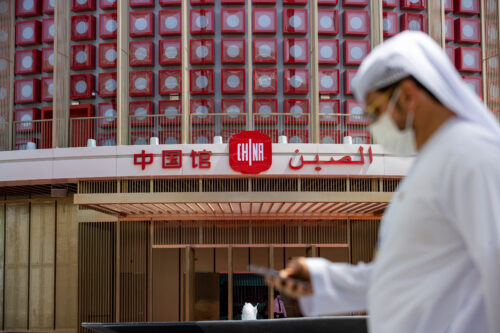
Beyond Ports: China’s Digital Networks of Influence in the Middle East and Africa
For more than a decade, assessments of Chinese strategy in the Middle East and Africa have focused on assets, including the ports Chinese firms own, the pipelines they finance, and the networks they build. This lens has produced familiar maps of Chinese “footholds” and debates over future military bases, but ownership alone reveals less about influence.
The more useful question is not what China owns, but how Chinese firms become embedded in the operational and digital systems that keep trade corridors moving. Influence derives not from controlling infrastructure outright but from participating in the governance of the networks that move goods, data, finance, and information across them.
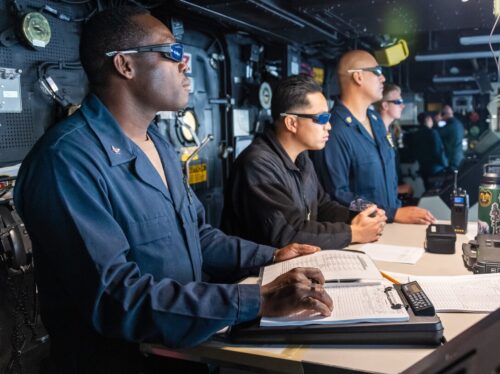
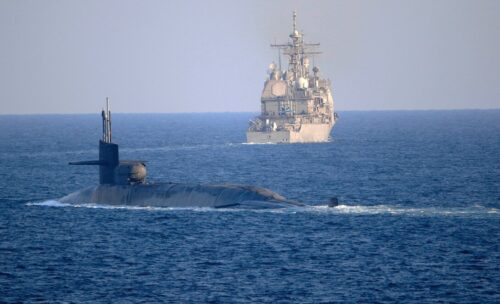
United States Central Command (CENTCOM), one of the US Department of Defense’s (DoD) six geographical combatant commands, is responsible for countering threats, responding to crises, and strengthening regional stability in the Middle East, Central Asia, and parts of South Asia.
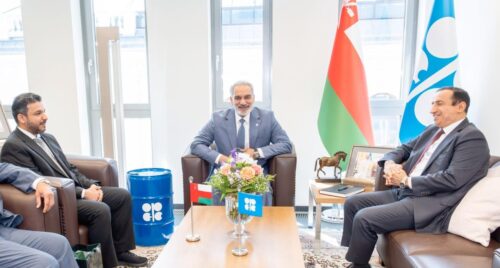
Something more consequential than another oil market disruption is underway. The Iran war has exposed and accelerated an institutional weakness within OPEC that had been building for years. The closure of the Strait of Hormuz, the UAE’s departure, Iraq’s brief flirtation with exit, and the continued rise of U.S. oil production all point to a deeper question about the cartel’s durability. The issue has shifted from OPEC’s ability to manage crises toward whether its model of collective discipline can withstand mounting structural strain.
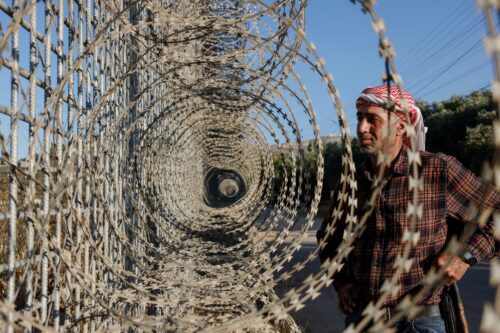
This report considers the lack of Palestinian political agency as a driver of regional insecurity that must be resolved before wider conflicts can be settled. The author analyses the conditions that contributed to the destruction of Palestinian political capacity, including Israeli policies, Palestinian shortcomings, and exploitation by Iran, and makes recommendations for an Arab strategic initiative.
Iran’s New Grand Design: The Next Evolution of the Axis of Resistance
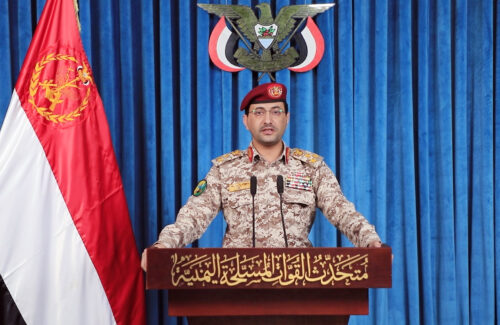
Iran is transforming its Axis of Resistance into a decentralized, Yemen-centered network that leverages the Houthis to threaten both the Strait of Hormuz and the Bab el-Mandeb, extending Tehran’s coercive reach over the world’s key maritime chokepoints and reshaping the post-war balance in the Middle East and Red Sea.
The Gulf’s New Information Battlefield: War, Technology, and the Reconfiguration of Security
During the opening days of the 2025–2026 U.S.–Israel war with Iran, Kuwait’s military briefings highlighted intercepted Iranian missiles and drones while revealing little about strike locations or damage. The approach reflected a familiar wartime dilemma in which governments must reassure populations while limiting information that could aid adversaries or fuel uncertainty. Yet Kuwait’s response revealed a broader shift across the Gulf. Information was no longer simply a messaging tool; it had become part of the battlefield.
Buying certainty: How Hormuz is redefining global shipping
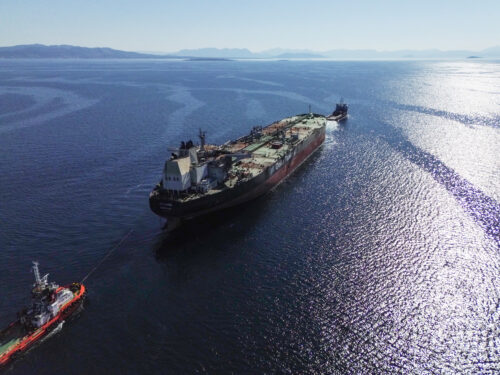
At the recent Lianhe Zaobao Singapore-China Forum 2026 in Singapore, Professor Joseph Liow, dean of the Lee Kuan Yew School of Public Policy and chairman of the Middle East Institute at the National University of Singapore, suggested that the Strait of Hormuz (SOH) may be entering a “new normal”, one in which Iran — and perhaps Oman — could justify charging vessels fees for transiting one of the world’s most important waterways.
Iraq is emerging as the Middle East’s strategic connector – but can it turn foreign competition into advantage?
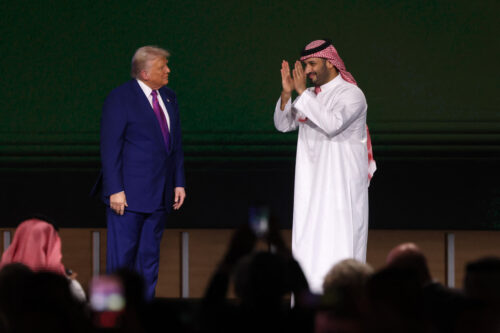
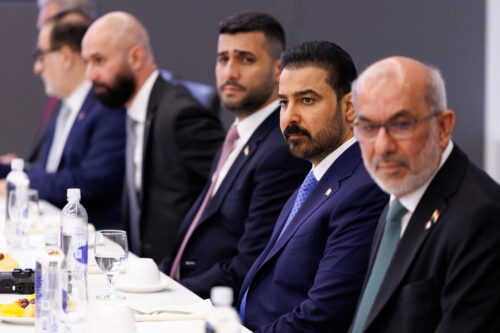
Iraqi Prime Minister Ali al-Zaidi is on something of a diplomatic roll at the moment. Having concluded a weeklong visit to the United States on July 19, 2026, during which he charmed President Donald Trump, al-Zaidi is now expected to head to Tehran to do the same with Iran’s new leaders. Trips to Qatar, Saudi Arabia, Turkey and Syria all figure on his itinerary, too.
The oldest peer-reviewed publication dedicated to the study of the modern Middle East, MEI’s flagship journal covers politics, society, and culture in the region.