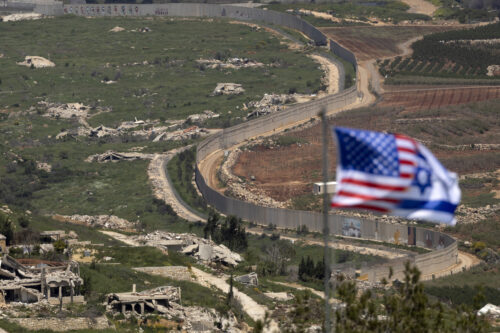
Since 1967, Israeli settlements in the West Bank have been a contested feature of the Israeli-Palestinian conflict. The ultimate disposition of the settlements and ongoing activity related to their growth have repeatedly defied agreement in negotiations over a resolution to the conflict.
As the world’s attention shifts to the Iran war, Gaza is increasingly disappearing from the international spotlight. But more than six months after the United Nations endorsed a peace plan for Gaza, the humanitarian catastrophe continues. Israeli strikes remain relentless, while major international NGOs and aid groups say critical supplies are still not entering Gaza at anywhere near the scale needed.
Syria’s New Investment Law and the Return of State-Mediated Market Access
As Syria moves toward reconstruction, the country’s new authorities have already made a consequential decision about who will control the postwar economy. Last June, President Ahmed al-Sharaa enacted Investment Law 114 by presidential decree, granting sweeping and permanent concessions to investors. Yet rather than make those incentives broadly accessible, the law preserves the country’s longstanding model of state-mediated market access.
The Far Reach of the Iran War: Food Insecurity from North Africa to the Sahel
Within weeks of the Strait of Hormuz closure, fertilizer prices began to rise sharply. Tanker traffic through the strait, which handles one-third of the global fertilizer trade, fell by 90%. Across North Africa the impacts are multiplying, and this is having ripple effects for the Sahel in the south, adding to food price inflation, migration pressures, and the erosion of state legitimacy. The situation underscores how food security is a governance issue compounded by geopolitical crisis.
In 2025, jailed PKK leader Abdullah Öcalan made a historic call for the group to disarm and dissolve, raising hopes of ending a 40-year conflict that has shaped Turkey and the wider region. Months later, the PKK symbolically laid down arms in what many viewed as a breakthrough moment for the peace process.
Violence, Settlements, and Creeping Annexation in the West Bank
As international attention remains fixed on the fallout from the Iran war, conditions in the West Bank continue to deteriorate. Hosts Alistair Taylor and Matthew Czekaj speak with MEI Senior Fellow Lucy Kurtzer-Ellenbogen about the sharp rise in settler violence, expanding settlement activity, and growing Palestinian displacement across the territory. They examine how recent Israeli legal and administrative measures are reshaping realities on the ground, the implications for Israeli-Palestinian relations, and what the United States should do to play a constructive mediator role.
America Cannot Afford to Miss This Opening in Lebanon
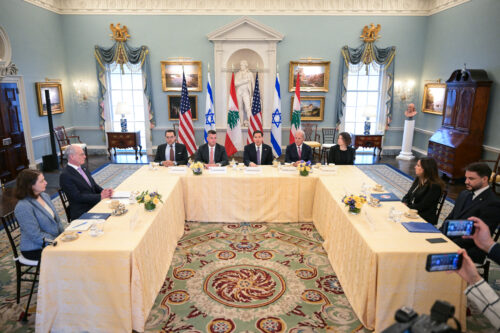
President Donald Trump has an opportunity to do something no American president has managed in nearly half a century: end the war between Israel and Lebanon for good.
As Lebanese, Israeli, and American teams prepare for their first-ever trilateral leaders summit, it is time to reflect on this opportunity and lessons from the past.
As the international community focuses on the regional and economic reverberations of the US-Israel-Iran war, the wartime experiences of ordinary Iranians and their aspirations for the future have received much less attention. Arash Azizi, a postdoctoral associate at Yale University and contributing writer at The Atlantic, joins hosts Alistair Taylor and Matthew Czekaj to discuss the war’s repercussions for the Iranian population and how the outcome of the conflict may shape the peoples’ lives going forward. Together, they explore Iran’s internal politics, the viability of the opposition, and the conditions needed to achieve democracy in Iran.
Nazanin Boniadi: How the World Can Help Iran’s Democratic Struggle
Just weeks before President Trump’s war began, Iran was in the midst of a powerful wave of anti-regime protests spreading across the country. But once the war started, that momentum largely came to a halt. The conflict shifted the focus from dissent to survival and gave the regime an opening to crack down harder. With tighter controls, heightened fear, and everyday life suddenly more precarious, people pulled back from the streets. The protests may have paused, but the resentments that fueled them haven’t gone anywhere.
Currency Boards as Political Commitments: Comparative Experience, Gold Reserves, and the Lebanese Case
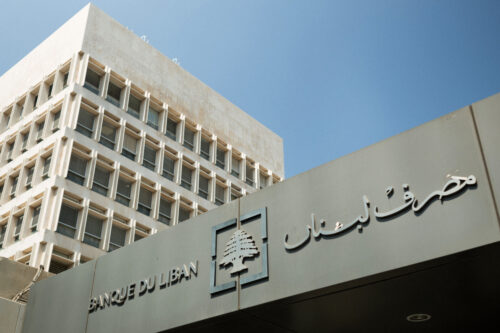
The following study discusses the role of Lebanon’s gold reserves in the establishment of a currency board and evaluates four policy options: a true currency board, constrained central bank reform, full dollarization, and a unified managed float. Gold reserves are relevant under all four. The conclusion is consistent across them: no monetary framework, however carefully designed and however well backed, can substitute for the prior political decision on who bears Lebanon’s losses and how the state will finance itself sustainably.
US-Iran War Gives Syria’s Global Economic Pitch More Urgency
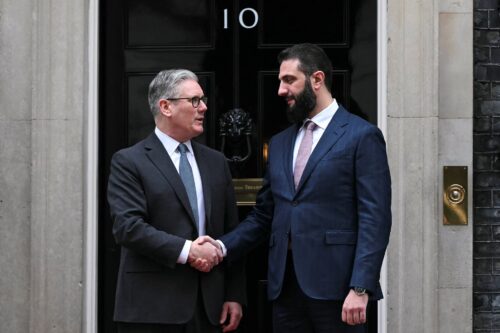
When the United States and Israel launched military operations against Iran a month ago, the Middle East was plunged into debilitating conflict. Nevertheless, Syria has remarkably just completed its most stable month in 15 years. Damascus and its international partners must capitalize on this opportunity.
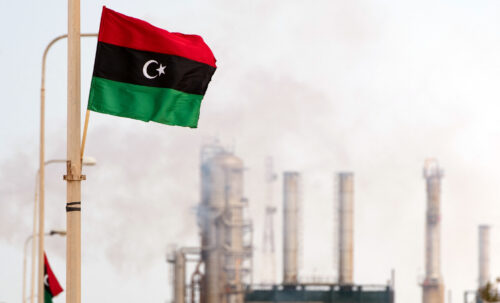
Libya’s Fragile Equilibrium: Succession Risk and Energy Stability
Libya’s stability has taken on renewed strategic importance as the impact of the US and Israeli war with Iran reverberates through global energy markets. Sustaining existing Libyan oil production depends on a governing arrangement capable of keeping ports open, pipelines flowing, and revenues distributed without triggering conflict.