Zarif’s Peace Gambit Meets Tehran’s Limits
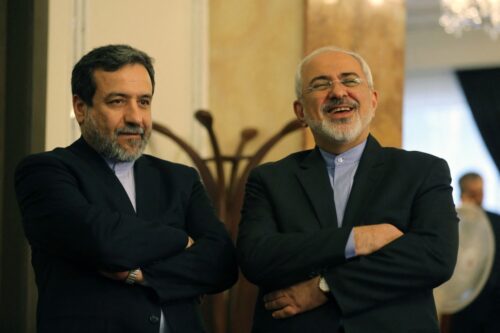
What made Mohammad Javad Zarif’s recent Foreign Affairs article so explosive was not simply what he proposed, but when and where he proposed it.
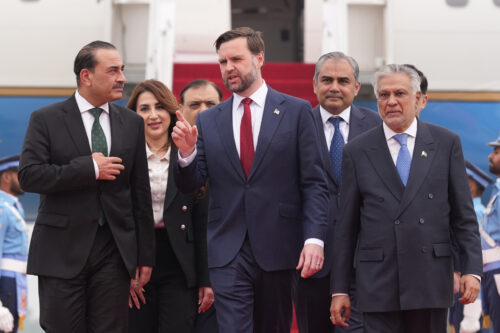
Amb. Hale discusses three broad policy options for Washington following the failure of the US-Iran talks in Pakistan.
The US and Israel entered the war with three goals, and these goals were in tension from the start.
Hosts Alistair Taylor and Matthew Czekaj are joined by MEI Distinguished Diplomatic Fellow Amb. (ret.) Robert S. Ford to examine what is at stake for Iraq in the Iran war. The only country to have been hit by both sides, Iraq is caught in the middle of a regional conflict, with the local Iranian-backed Popular Mobilization Forces (PMF) carrying out attacks on American interests and personnel — and the US responding. This escalation comes at a period of internal political transition in Iraq, which has been locked in negotiations to form a new government since the November 2025 elections. Ford, who served as Deputy and later Acting Ambassador in Baghdad from 2008 until 2010, unpacks how Iraq is navigating the current moment, how the Kurdistan region fits into this equation, and what this all means for the future of US-Iraqi relations.
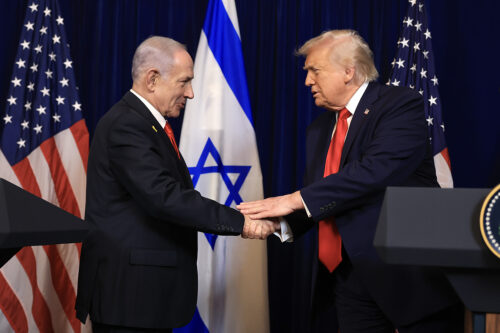
An operation that Donald Trump said could take Iran out “in one night” has now turned into a regional war that has just entered its sixth week, with the US president appearing increasingly frustrated over the situation.
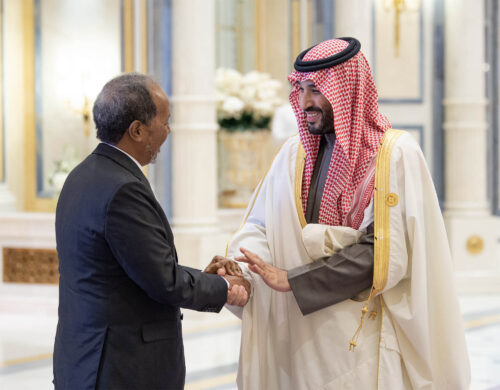
Riyadh’s deepening engagement in Somalia reflects a calculated strategy to shape the emerging Red Sea security order, counter UAE and Iranian influence, hedge against U.S. uncertainty, and safeguard alternative energy export routes following the Strait of Hormuz closure.
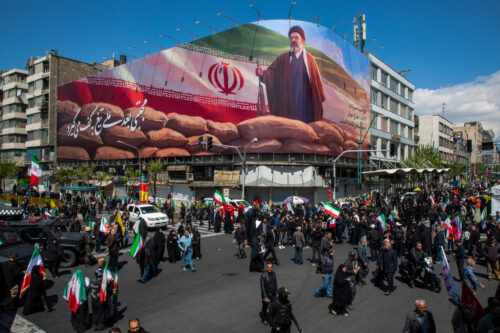
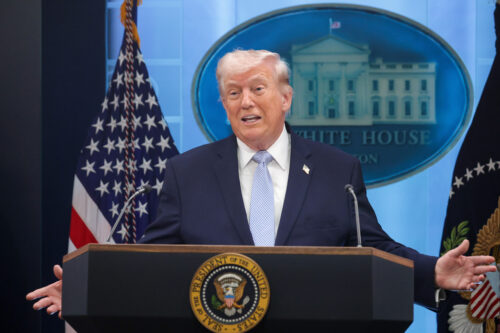
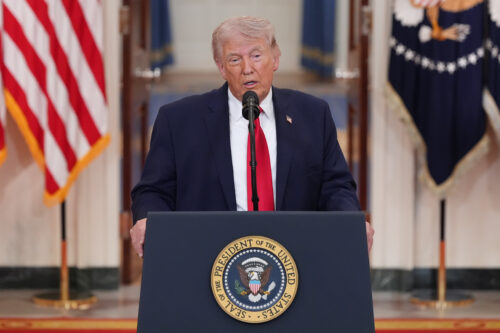
Iran’s leadership did not take long to respond to President Donald Trump’s latest address on the war. Regime-linked media dismissed the April 1 White House speech as a repetition of earlier claims, while officials and commentators close to the Iranian government framed it as further evidence that Washington remains uncertain about its own course. In the battle over messaging, Trump’s ambiguity is giving Iran’s narrative the edge.
This special episode of Middle East Focus features a conversation from MEI’s Virtual Briefing Series. Host Alistair Taylor is joined by former National Security Council Senior Director Stephen Flanagan and MEI Senior Fellow Iulia-Sabina Joja to discuss the impacts of the Iran war on US-European relations. The conflict has hit Europe’s economy hard and created deep divisions across the continent, even as some European countries play a quiet supporting role to the US. President Donald Trump has called for NATO member states to help secure shipping through the Iranian-blocked Strait of Hormuz, a critical chokepoint for international maritime trade. Flanagan and Joja explore the prospects for stepped-up European military involvement, the knock-on effects on the war in Ukraine, and the potential longer-term impact on the future of the US-European alliance.
Entering the second month of the war with Iran, the United States has delivered substantial military effects without articulating a viable political end state—a familiar pattern in which battlefield success fails to produce strategic clarity and increasingly risks an exit without resolution.
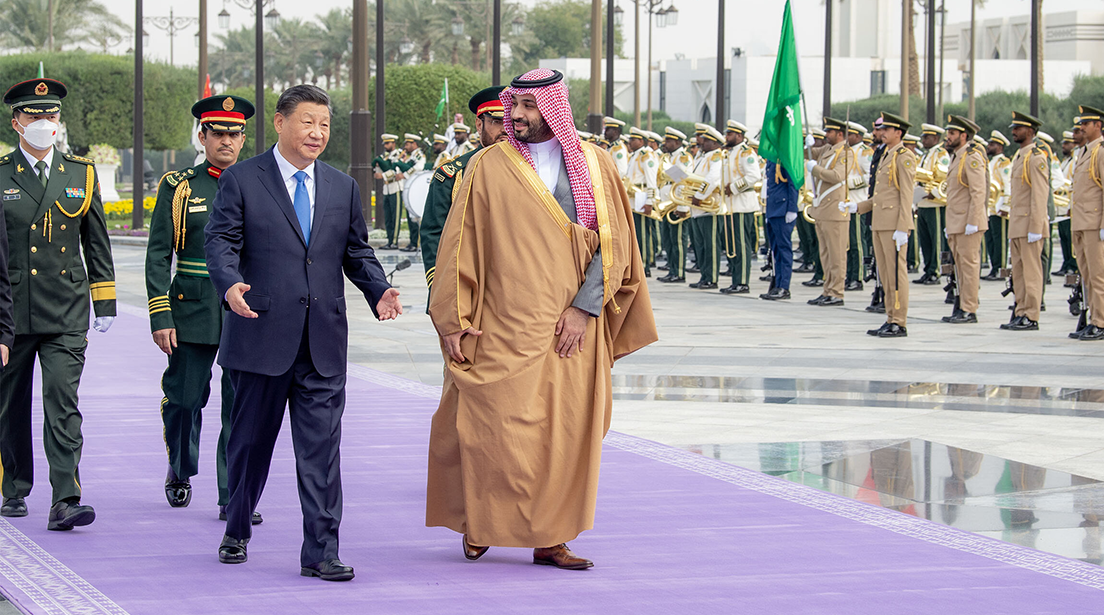
China’s expanding role in the Middle East is often framed as geopolitical rivalry with other global powers, including the United States, Russia, India, and others; but this lens obscures the strategic subtlety of Beijing’s approach.
The most recent cross-border hostilities between Afghanistan and Pakistan show how tensions have crossed a dangerous threshold.
“Tactics without strategy is the noise before defeat” is a well-known axiom attributed to the ancient Chinese military general and strategist, Sun Tzu. With the Iran war now at the one-month mark, it is evident that the Trump administration failed to outline a clear end state or devise a workable war termination strategy before initiating Operation Epic Fury on February 28.
On the anniversary of the 2003 invasion, Iraq finds itself trapped between the same external powers that have defined — and destroyed — its last quarter-century.
The decision U.S. President Donald Trump made to attack Iran was a high-stakes gamble. The gamble is not really in the military campaign itself. It is whether a massive air campaign can trigger a popular rebellion that takes down the regime in Tehran. This could pay off brilliantly, but it could also fail miserably.