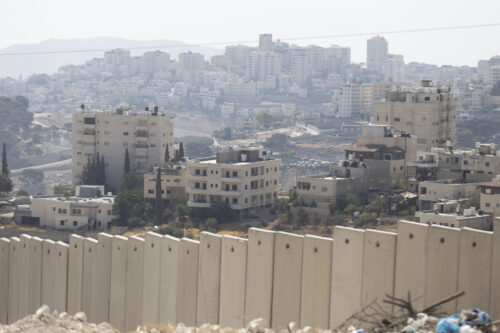
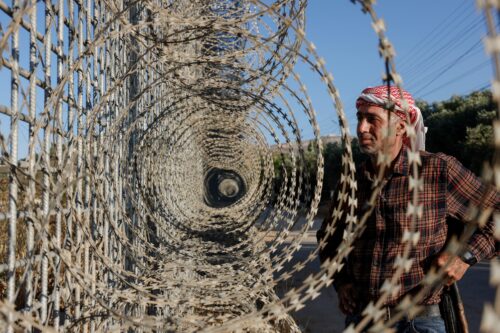
The Israeli government’s plan to build 3,401 housing units in the 12-square-kilometer E-1 corridor, between Jerusalem’s municipal boundary and the Israeli settlement of Ma’ale Adumim, would cut the West Bank in two. Israeli officials are under no illusion about the implications. Announcing the plan’s approval in August 2025, Finance Minister Bezalel Smotrich called it a “significant step that practically erases the two-state delusion.”
Special Episode: Saudi Oil After the East-West Pipeline Attack
Saudi Arabia’s East-West pipeline is back in operation after a drone attack from Iraq, blamed on Iran-backed militias, shut it down for nearly two weeks. The pipeline is the kingdom’s main way to export oil while the Strait of Hormuz is closed, so the shutdown dealt another blow to global energy markets. How vulnerable is this route, and what does that mean for the kingdom and the world economy? This episode of Middle East Focus features a recent MEI Virtual Briefing in which Director of Communications Zeina Al-Shaib is joined by MEI Senior Fellow Colby Connelly and MEI Affiliate Yesar Al-Maleki. They examine the new geopolitical risks facing the oil market, what further losses of global supply could mean for Saudi Arabia and the world economy, and which buffers outside the Persian Gulf could ease the pressure.
The Mecca Joint Défense Agreement: A New Geometry of Middle Eastern Power?
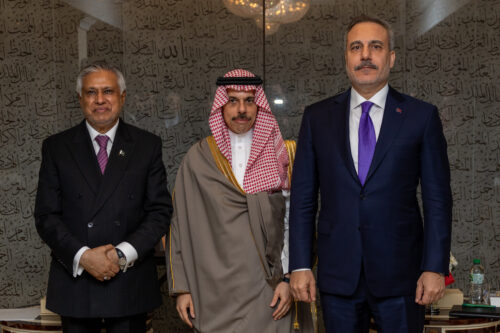
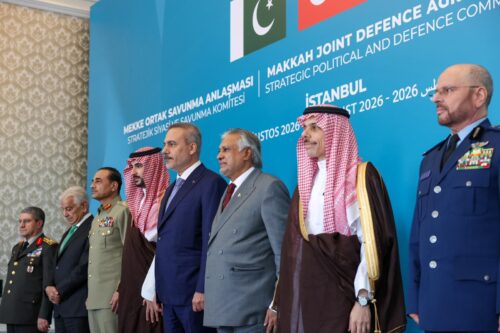
On August 7, 2026, Saudi Arabia, Turkey, and Pakistan signed the Mecca Joint Défense Agreement, a collective-defense pact widely compared to NATO’s Article 5. This essay argues that the comparison is misleading. Mecca borrows NATO’s language of solidarity without yet possessing NATO’s institutional machinery, and the Houthi offensive against Saudi Arabia in September 2026 provided an early and revealing test of what the agreement actually means in practice. Neither Pakistan nor Turkey automatically entered the fight on Saudi Arabia’s behalf, and Washington, despite an initial reluctance to strike directly, remained indispensable through intelligence support and a major proposed F-35 sale. Drawing on realist alliance theory — Hans Morgenthau, Kenneth Waltz, Stephen Walt, Glenn Snyder, and Steven David — and on the precedent of the Central Treaty Organization (CENTO), the essay contends that the Middle East is not dividing into rival blocs but moving from hierarchy toward a looser, overlapping geometry of hedged partnerships, in which American exclusivity is eroding considerably faster than American primacy.
The Mecca Alliance Meets the Red Sea – Saudi Arabia’s New Defense Pact Faces Its First Major Test
When Saudi Arabia, Turkey and Pakistan agreed to a mutual defense pact in August, it was principally seen as a political commitment. The “Mecca alliance,” as it was dubbed, stipulated that an armed attack on one would be treated as an attack on all three, accompanied by deeper military cooperation.
Israel/Palestine: What the Iran War Broke and What May Yet Be Salvaged
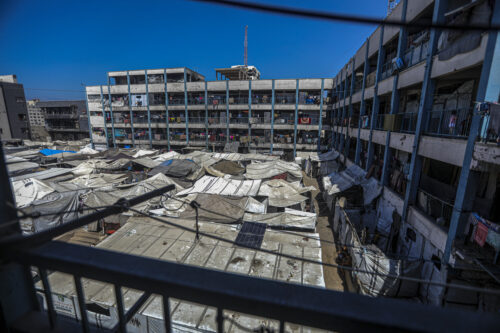
The 20-point plan for Gaza introduced before the war with Iran began has languished, with no meaningful recovery, reconstruction, Hamas disarmament, governance transition, or Israeli withdrawal. The diplomatic pivot back to Gaza in late July and early August suggests that the Iran war’s stubborn persistence may be causing the US and regional actors to seek wins on other fronts.
Israel: Strategic Divergence and Weakened Deterrence
The American-Israeli campaign against Iran that began in February 2026 resulted in a regional conflict its authors never intended. The war’s chief product is not what the United States and Israel destroyed, though that was significant, but what Iran proved: that it holds a strategic lever over its neighbors, the world economy, and the US.
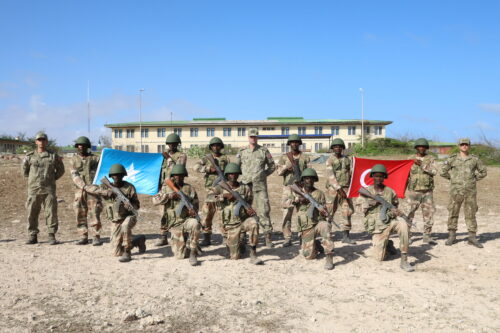
Turkey has become a major player in Africa, with a particularly strong footprint in the Horn. While economic and energy interests’ matter, one sector now stands at the center of Ankara’s regional activism: defense.
Reflections on a Diplomatic Career in the Middle East: A Conversation With Ambassador Yael Lempert
Brian is joined by Amb. (ret.) Yael Lempert, Vice President for Outreach at MEI, to discuss her career in diplomacy and the importance of US diplomatic efforts abroad. She shares stories from postings across the Middle East in Baghdad, Cairo, Tripoli, Jerusalem, and Amman and examines how her personal and professional experiences shaped her approach to the work. Together, Brian and Yael discuss the realities of life in the Foreign Service, the core tenets of American diplomacy, and why it matters in today’s Middle East.
In many ways, the U.S.-Israeli war against Iran and the war in Gaza that preceded it seem transformative. After decades of shadow warfare, Iran and Israel have now attacked each other’s homelands directly. And Israel and the United States have joined forces in a genuinely novel way to wage war against Iran.
This report considers the lack of Palestinian political agency as a driver of regional insecurity that must be resolved before wider conflicts can be settled. The author analyses the conditions that contributed to the destruction of Palestinian political capacity, including Israeli policies, Palestinian shortcomings, and exploitation by Iran, and makes recommendations for an Arab strategic initiative.
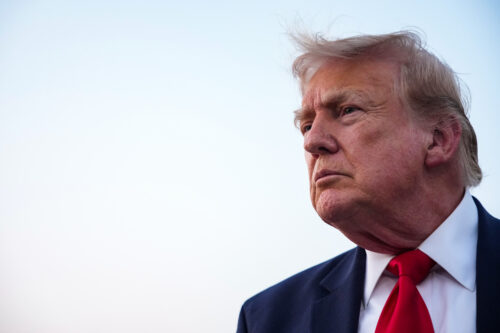
Trump’s Family Business Deals Risk Further Undermining the Credibility of US Middle East Policy
President Trump’s family businesses are once again in the spotlight as a new financial disclosure showed they earned $2 billion in income in 2025 — a dramatic increase on the year before, with much of it coming from Gulf entities, raising emoluments concerns. Mounting perceptions of corruption, combined with unresolved crises in Iran and Israel-Palestine, are eroding trust among key partners in the Middle East. With the 2026 midterms approaching, these entanglements could represent a major political vulnerability and further undermine America’s already-strained standing in the region.
After the US-Israel-Iran war — and the strikes that followed the cease-fire — the Gulf states find themselves dangerously exposed. Host Alistair Taylor is joined by MEI Associate Fellow Gregory Gause to discuss the war’s impact on the Gulf, their partnership with the United States, and whether the turmoil of recent months will push Gulf leaders to reassess their alliances and international engagement.