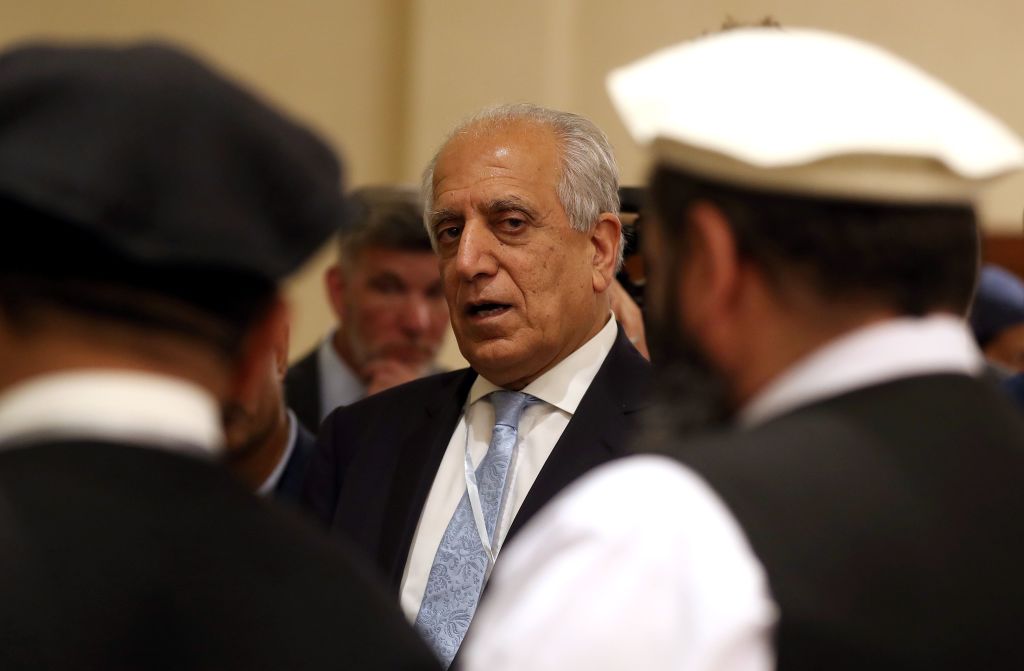
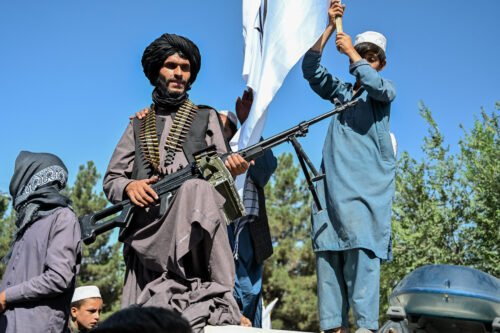
A roadside bomb in Afghanistan’s southern Kandahar Province that resulted in the deaths of two American soldiers on Saturday came in the midst of stalled U.S.-Taliban negotiations in Doha. These talks have been expected to finalize an agreement with the Taliban to replace the one to which President Donald Trump put the kibosh in September. He had singled out the Taliban’s killing of a U.S. serviceman to justify his decision on the eve of a planned signing of the deal. The latest American deaths that follow the brazen attempt by the Taliban to penetrate the U.S.’s airbase at Bagram north of Kabul on Dec. 11 will no doubt cast a pall over negotiations in Doha. But does the ongoing violence in Afghanistan fully account for the unexplained snag in what the Taliban say is a deal only waiting to be signed?
In all likelihood the agreement being readied in Doha closely resembles the previous aborted accord — the terms of which have never been fully revealed — in which U.S. is thought to have made nearly all the concessions. The continued refusal of the Taliban to yield to a U.S. demand that its fighters stand down as American and allied foreign forces withdraw and Afghans commence their own peace negotiations is said to be the sticking point in the paused talks. But there is a less examined reason that the Doha process may be in trouble. The Taliban still apparently balk at an accord that makes any provision for the retention of an American counter-terrorism force.
Refusal to have any American and other foreign troops left behind in a withdrawal has long been an article of faith for the Taliban. For many in military and government circles in Washington and Kabul, having a sufficient number of special forces remain also stands as a red line. This opposition vigorously pressed its case against the aborted September agreement but cannot claim to have swayed President Trump, whose motives apparently lay elsewhere. But there appears now a strengthened resolve among powerful critics that negotiators not give way on this issue — even if it serves as a deal breaker with the Taliban. Rising tensions with Iran and across the Gulf region may also argue for retaining a substantial U.S. military presence in Afghanistan. So is a bilateral agreement with the Taliban headed for the dustbin? Not necessarily. Ultimately, it depends on how badly the president wants to see a deal, even if it’s a bad one, before this year’s presidential conventions and the November election.
Marvin G. Weinbaum is MEI’s Director for Afghanistan and Pakistan Studies.
Photo by KARIM JAAFAR/AFP via Getty Images
The Middle East Institute (MEI) is an independent, non-partisan, not-for-profit, educational organization. It does not engage in advocacy and its scholars’ opinions are their own. MEI welcomes financial donations, but retains sole editorial control over its work and its publications reflect only the authors’ views. For a listing of MEI donors, please click here.