
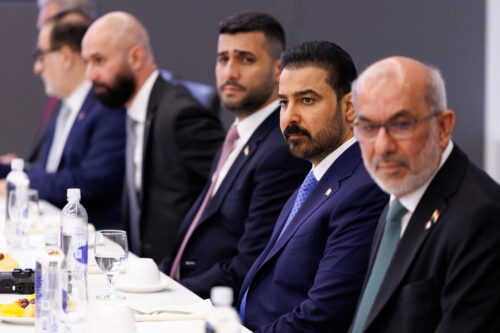
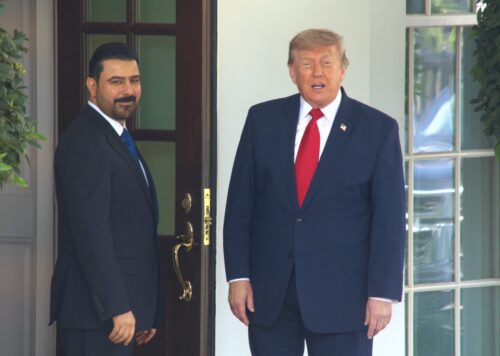
Iraqi Prime Minister Ali al-Zaidi is on something of a diplomatic roll at the moment. Having concluded a weeklong visit to the United States on July 19, 2026, during which he charmed President Donald Trump, al-Zaidi is now expected to head to Tehran to do the same with Iran’s new leaders. Trips to Qatar, Saudi Arabia, Turkey and Syria all figure on his itinerary, too.
The U.S. visit was the first – and arguably most important – stop on a broader effort to give domestic legitimacy to al-Zaidi’s government and attract foreign investment while elevating Iraq’s status in the Middle East.
Alongside seeking closer ties with Washington, Baghdad hopes to maintain its longstanding relationship with Tehran amid a renewed U.S.-Iran confrontation and the economic shock caused by disruptions in the Strait of Hormuz. Becoming a bridge between the two countries – and a possible host to Iran-U.S. negotiations – will help establish Iraq in the delicate position.
Photo by Mark Felix/Bloomberg via Getty Images
The Middle East Institute (MEI) is an independent, non-partisan, not-for-profit, educational organization. It does not engage in advocacy and its scholars’ opinions are their own. MEI welcomes financial donations, but retains sole editorial control over its work and its publications reflect only the authors’ views. For a listing of MEI donors, please click here.

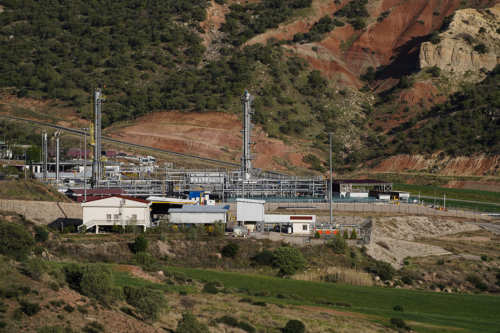
Iraq’s oil paralysis: A self-inflicted wound and a gift to Tehran
