The last few months have witnessed a dramatic shift in the geopolitical balance of the Middle East. Normalization between Israel and multiple Arab states has altered the heart of the historic regional power competition. Much of this change is being driven by is a desire by the relevant countries to unite against Iran. More specifically, the new détente is aimed at presenting a united front to the Biden administration, which is currently formulating its policy for how best to contain the Islamic Republic’s disruptive regional activities and most of all its nuclear ambitions.
The normalization processes are deeply significant to the balance between Israel and Iran. It may take a generation for anti-Israel and antisemitic rhetoric in the Arab and Islamic worlds to disappear, however the myth of the monolithic Arab/Islamic voice has been forever shattered. While future disputes on regional issues – including engagement with the Palestinians – might arise, the Abraham Accords acknowledge that Israel is here to stay.
And as counterintuitive – or even heretical – as it might sound, this is the very moment when Israel and Iran could arrive at a cessation of hostilities. Why?
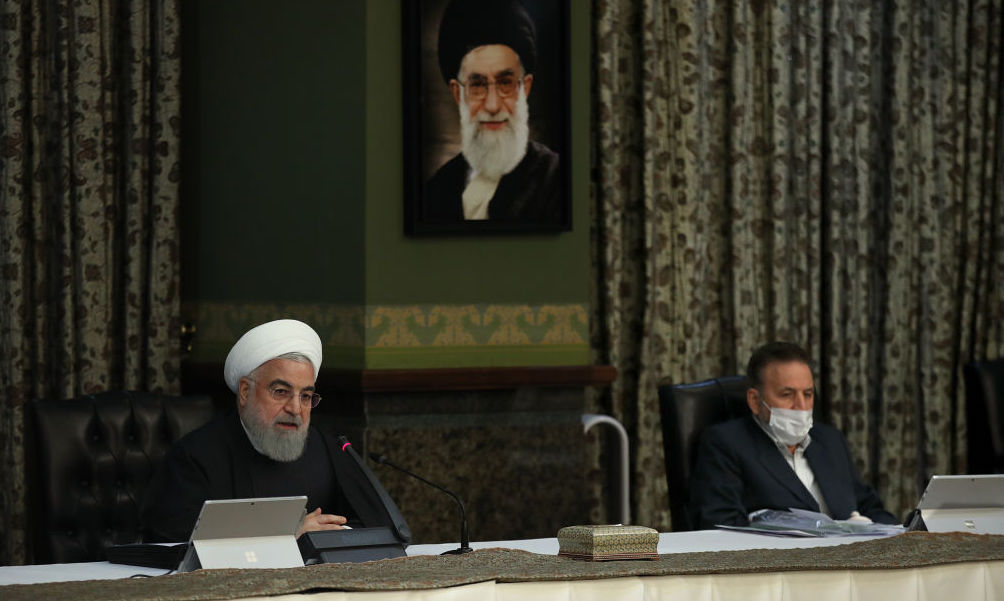
Photo by Presidency of Iran / Handout/Anadolu Agency via Getty Images
The Middle East Institute (MEI) is an independent, non-partisan, not-for-profit, educational organization. It does not engage in advocacy and its scholars’ opinions are their own. MEI welcomes financial donations, but retains sole editorial control over its work and its publications reflect only the authors’ views. For a listing of MEI donors, please click here.