When ISIS’s territorial “state” was dealt its final defeat four years ago in eastern Syria, the world breathed a sigh of relief. For years, ISIS had terrified the globe. Using slick propaganda, the terror group had recruited as many as 50,000 foreign fighters from dozens of countries. ISIS’s declaration of an Islamic “caliphate” saw it transform into a worldwide movement, with activities on every continent. And when the U.S. led an international coalition to confront it, ISIS triggered a global campaign of retaliatory terrorist attacks that transformed international security.
In the years since its territorial defeat, a small force of 900 U.S. troops has remained in northeastern Syria to degrade ISIS’s insurgency, alongside a local partner, the Syrian Democratic Forces (SDF), who occupy a third of the country, counter to the agenda of Syrian dictator Bashar al-Assad. To a large extent, that counterterrorism mission is succeeding.
On a recent visit to the area alongside U.S. Central Command (CENTCOM) Commander Gen. Erik Kurilla, I saw first-hand the vital and sustainable role being played by U.S. troops, whose support to SDF operations is the glue holding together the only meaningful counter to ISIS’s desire to resurge once again. From running an extensive aerial surveillance network, to coordinating the SDF’s more than 100,000 fighters and facilitating civilian aid, stabilization and tribal engagement, these troops are indispensable. U.S. helicopters also medevac injured SDF personnel, as we saw after ISIS militants ambushed an SDF patrol, critically injuring one SDF fighter.
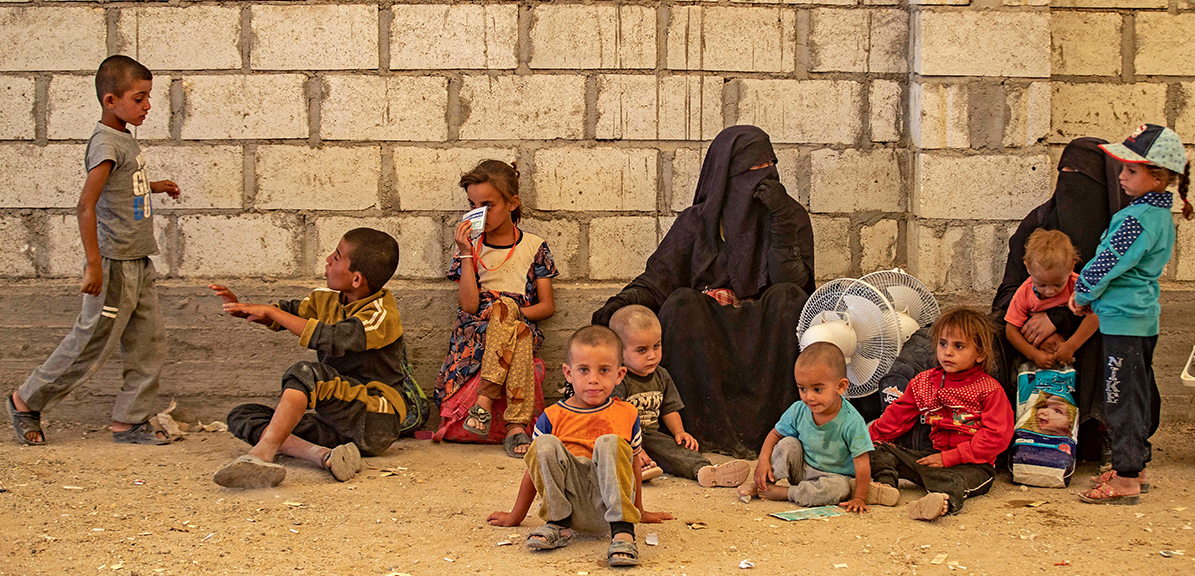
Photo by DELIL SOULEIMAN/AFP via Getty Images
The Middle East Institute (MEI) is an independent, non-partisan, not-for-profit, educational organization. It does not engage in advocacy and its scholars’ opinions are their own. MEI welcomes financial donations, but retains sole editorial control over its work and its publications reflect only the authors’ views. For a listing of MEI donors, please click here.