For two and a half decades, whenever the Turkish government had a falling out with the United States and Europe, analysts frantically began worrying that the West had “lost” Turkey. It happened first in 2003, after the Turkish parliament voted against granting U.S. forces access to Turkish territory for the invasion of Iraq. It happened again in 2010, when Turkey voted against increased UN sanctions on Iran. The warnings grew even more urgent in 2017, when Ankara purchased the Russian-made S-400 missile defense system, raising fears that NATO’s second-largest military power was cozying up to the alliance’s chief adversary.
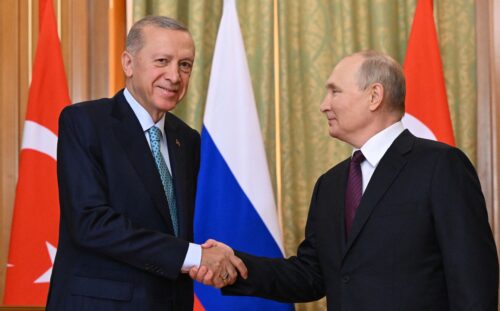
Throughout the second half of the twentieth century, secularist leaders had firmly anchored Turkey in the Western camp. Ankara had joined the Council of Europe in 1949, entered NATO in 1952, and signed an association agreement with the European Economic Community in 1963. But Western observers feared that Turkish President Recep Tayyip Erdogan’s Justice and Development Party, with its historical links to Islamist parties, would pull the country away from the Western bloc after it came to power in 2002. In many ways, Erdogan did attempt such a pivot. Starting in the mid-2010s, under the banner of “strategic autonomy,” Ankara cultivated closer economic, energy, and security ties with Moscow and at times pursued policies that drew the ire of its allies in NATO.
Now, however, Turkey is coming back around to its Western partners.
Photo by Jonathan Nackstrand / AFP via Getty Images
The Middle East Institute (MEI) is an independent, non-partisan, not-for-profit, educational organization. It does not engage in advocacy and its scholars’ opinions are their own. MEI welcomes financial donations, but retains sole editorial control over its work and its publications reflect only the authors’ views. For a listing of MEI donors, please click here.