
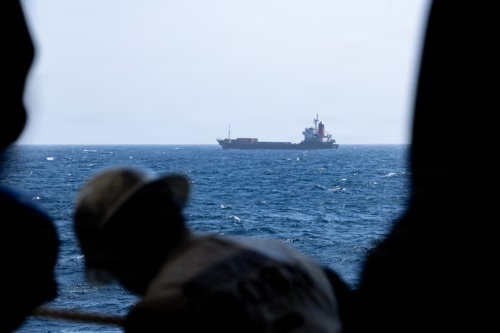
Despite escalating conflicts, sanctions, and strategic rivalry across key producing regions, the global oil market increasingly behaves less like a system gripped by scarcity fears and more like one struggling to absorb abundance. Even dramatic shocks — from the US capture of Venezuelan President Nicolás Maduro to renewed protests in Iran — have prompted only brief market reactions. Traders rushed to hedge against the Iran protests and possible US military intervention, yet Brent prices retreated within days, illustrating how quickly markets now absorb risk.
This decoupling reflects a deeper structural shift, with elevated inventories, ample spare capacity, and diversified flows meaning that even when conflicts flare, markets assume alternative barrels or stock releases will appear quickly. Oil’s politics persist, but they operate through who trades with whom and at what discount, rather than through sustained price spikes.
Photo by CENTCOM
The Middle East Institute (MEI) is an independent, non-partisan, not-for-profit, educational organization. It does not engage in advocacy and its scholars’ opinions are their own. MEI welcomes financial donations, but retains sole editorial control over its work and its publications reflect only the authors’ views. For a listing of MEI donors, please click here.
Jordan’s Economy Weathers Iran War’s Shocks and Finds New Opportunities

From the Middle East to Middle America: Engineering Better Policy with Andrew J. Tabler
