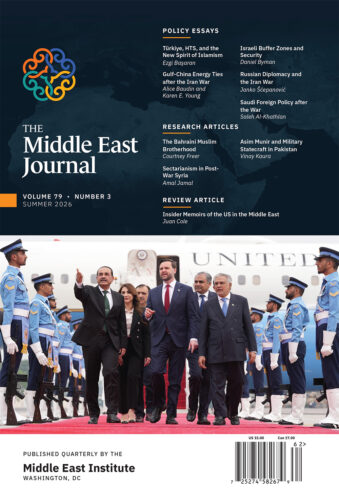
Volume 79, Number 3
“Türkiye, HTS, and the New Spirit of Islamism,” by Ezgi Başaran
“Will Israel’s Buffer Zones Advance Its Security?” by Daniel Byman
“Beyond the Iran War Shock: The Next Phase of Gulf-China Energy Ties,” by Alice Baudin and Karen E. Young
“Russian Diplomacy and the 2026 Iran War,” by Janko Šćepanović
“Saudi Foreign Policy After the War: Strategic Restraint in a Changing Middle East,” by Saleh Al-Khathlan
“The Myth of a Transnational Muslim Brotherhood: The Case of Bahrain,” by Courtney Freer
“Sectarianism and the Predicament of Raison D’état in Post-War Syria: Lessons from the Druze Case,” by Amal Jamal
“Pakistan’s Military Statecraft: The Munir Model of Constitutional Praetorianism,” by Vinay Kaura
“Witnesses to War and Diplomacy: Insider Memoirs of the US in the Middle East,” a review essay by Juan Cole

مراجعات الكتب الجديدة، بما في ذلك:
The Persian Gulf Triangle: Strategic Relations Between Iran, Saudi Arabia and the United States, by Luiza Cerioli, reviewed by Eric Lob
Yemen at the Crossroads: Crisis and Reconstruction, edited by Khalil Fadl Osman and Mona Hadaya, reviewed by Adam Baron
Russia and Iran: Partners in Defiance from Syria to Ukraine, by Nicole Grajewski, reviewed by Mark N. Katz

نبذة عن مجلة الشرق الأوسط
مجلة الشرق الأوسط هي مورد لا غنى عنه للبحث والتحليل، حيث تدرس الاتجاهات الناشئة والتحديات المستمرة في بيئة إقليمية معقدة. صدرت لأول مرة في عام 1947، مجلة الشرق الأوسط هي أقدم مطبوعة محكمة في أمريكا الشمالية مخصصة لدراسة الشرق الأوسط المعاصر. تضم مجلة الشرق الأوسط أعمال كبار العلماء والمحللين السياسيين والصحفيين والخبراء في المنطقة من جميع أنحاء العالم، بما في ذلك من الشرق الأوسط نفسه.
كل MEJ مقالات سياسية تتناول النقاشات الحالية حول الإصلاح السياسي والتنمية الاقتصادية والأمن الإقليمي، ومقالات بحثية تستخدم أفضل العلوم الاجتماعية والإنسانية لشرح مسارات التغيير الإقليمي، ومراجعات كتب تبقي القراء على اطلاع على الأدبيات الحالية. MEJ على مراجعين خارجيين ومجلس تحرير متميز لضمان جودة عالية ودقة وموضوعية في الأبحاث.
إرسال إلى وزارة العدل
ترحب مجلة MEJ بالمقالات البحثية والمقالات السياسية المتعلقة بالشرق الأوسط وشمال أفريقيا، وكذلك أفغانستان وباكستان، من مختلف التخصصات. يجب أن تحتوي المقالات المقدمة على أبحاث وتحليلات أصلية، وتخضع لمراجعة مزدوجة من قبل الأقران. لا يجوز تقديم المقالات في وقت واحد إلى أي منشور آخر، ولا يجوز نشرها مسبقًا في أي مكان آخر، بما في ذلك على الإنترنت أو كورقة عمل، باللغة الإنجليزية أو أي لغة أخرى.
يجب على المؤلفين إرسال المقالات والبحوث في صيغة Microsoft Word أو RTF إلى مكتب التسليم التابع لمجلة MEJ على العنوان [email protected]. يجب إرسال نسختين من الورقة البحثية: الأولى مجهولة المصدر، والثانية تحتوي على صفحة غلاف بها معلومات الاتصال الكاملة للمؤلفين.
MEJ تنظر في نوعين من الطلبات:
- مقالات بحثية. المقالات البحثية هي دراسات علمية متعمقة، عادة ما تكون حوالي 8000 كلمة (بما في ذلك الحواشي)، بالإضافة إلى ملخص من 100 كلمة. كمجلة دراسات إقليمية، MEJ مفتوحة لتقبل الأفكار من مختلف تخصصات العلوم الاجتماعية والإنسانية. ينصب تركيزنا على الشؤون السياسية والاجتماعية والاقتصادية المعاصرة في المنطقة. يجب أن تثبت الأبحاث ذات التوجه التاريخي صلتها بالشرق الأوسط المعاصر. المقالات التي تركز بشكل مفرط على المنهجية أو القضايا النظرية غير مناسبة لهذا المكان.سيقرر طاقم تحرير مجلة MEJ في غضون ستة أسابيع من تقديم المخطوط ما إذا كان سيتم إجراء مراجعة خارجية من قبل الأقران. يجب على المؤلفين توقع تلقي المراجعات بعد ثلاثة إلى خمسة أشهر. MEJ ليست مسؤولة عن أي تأخير في عملية اتخاذ القرار.
- مقالات سياسية. تتناول المقالات السياسية النقاشات المعاصرة حول الشؤون السياسية والاقتصادية والاجتماعية في الشرق الأوسط. يمكن أن تستند المقالات السياسية إلى ملاحظات وتجارب شخصية مباشرة أو إلى دراسة استقصائية أوسع نطاقاً للفضاء السياسي. يجب أن تكون المقالات السياسية حوالي 3000 كلمة، مع الحد الأدنى من الحواشي. لا يلزم تقديم ملخص.تخضع المقالات السياسية لعملية مراجعة سريعة، بالاعتماد على طاقم التحرير في MEJ بالتعاون مع زملاء معهد الشرق الأوسط. سيتم النظر في المقالات السياسية على أساس كل عدد على حدة، ولن يتم النظر فيها بعد أكثر من شهرين قبل النشر.
دليل أسلوب MEJ
يشمل جمهور MEJ الأكاديميين والمتخصصين في السياسة، بالإضافة إلى القراء العاديين المهتمين بشؤون الشرق الأوسط. يجب على المؤلفين الكتابة بأسلوب جذاب وسلس، وتجنب المصطلحات غير الضرورية والعبارات المعقدة. لمزيد من الإرشادات، راجعهذا المستند.
يجب أن تستخدم جميع المقالات البحثية والمقالات السياسية الحواشي السفلية — وليس الاقتباسات داخل النص — بناءً على دليل أسلوب شيكاغو، واستخدام الاقتباسات القصيرة بدلاً من المرجع نفسه أو المرجع السابق MEJ ترجمة حرفية وفقًا لـ المجلة الدولية لدراسات الشرق الأوسط (IJMES) للغة العربية، وأكاديمية اللغة العبرية قواعد عام 2006 للغة العبرية، ومجلس الأسماء الجغرافية الأمريكي (BGN) للغة الفارسية.
اشترك في مجلة الشرق الأوسط
توفر مجلة الشرق الأوسط الخلفية اللازمة لفهم وتقدير التطور السياسي والاقتصادي والتراث الثقافي والتنوع العرقي والديني في المنطقة. وتصدر المجلة كل ثلاثة أشهر في الربيع والصيف والخريف والشتاء. ويحصل المشتركون على نسخة مطبوعة من كل عدد جديد ويمكنهم الاطلاع إلكترونياً على الأعداد التي تعود إلى عام 2004.
معلومات التسعير:
$100 – Individual Print + Online access
325 دولار - إصدار المؤسسة عبر الإنترنت فقط (بدون رسوم شحن دولي)
350 دولارًا أمريكيًا - نسخة مطبوعة للمؤسسة + وصول عبر الإنترنت (بالإضافة إلى 40 دولارًا أمريكيًا رسوم شحن للمشتركين من خارج الولايات المتحدة)