This text has been translated by AI and may contain errors.
Skip to Content

Jean-Pierre Cassarino

Professor

Expertise

North Africa

This individual is a guest contributor. MEI is not able to assist with contact requests.

Jean-Pierre Cassarino holds a professorship at the Robert Schuman Center for Advanced Studies (RSCAS/European University Institute, Florence) where he directs the Return migration and Development Platform (http://rsc.eui.eu/RDP/). He is also research associate at the Tunis-based Institut de Recherche sur le Maghreb Contemporain (IRMC). Since the mid-1990s, he has published extensively on international migration, particularly on return migration and has carried out numerous field surveys investigating returnees’ manifold patterns of reintegration. Selected publications include: (ed.) Unbalanced Reciprocities: Cooperation on Readmission in the Euro-Mediterranean Area, The Middle East Institute Press, Washington, 2010; (ed.) “Conditions of Modern Return Migrants”, International Journal on Multicultural Societies, Vol. 10, Issue 2, UNESCO, Paris, 2008; (ed.) Return Migrants to the Maghreb Countries: Reintegration and development challenges, RSCAS, European University Institute, Florence, 2008; Tunisian New Entrepreneurs and their Past Experiences of Migration in Europe: Networks, Resource Mobilisation, and Hidden Disaffection. Ashgate Publishers, Aldershot, 2000. Email: [email protected]

The Latest from Jean-Pierre Cassarino

Filter by
9992 Results
The flaws in the content moderation system: The Middle East case study
Photo by OZAN KOSE/AFP via Getty Images
  • Analysis
  • The flaws in the content moderation system: The Middle East case study

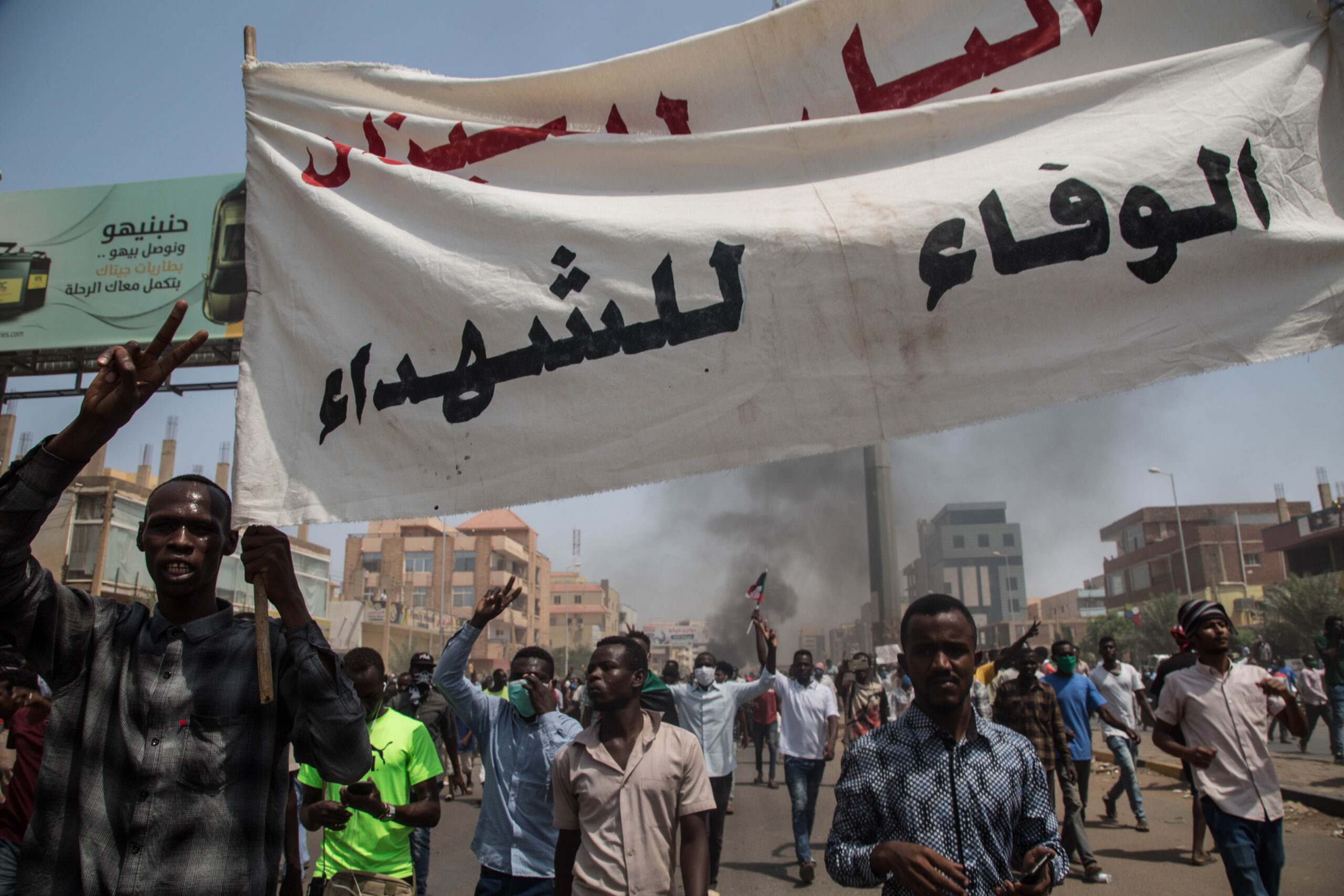
    Tech platforms like Facebook, Twitter, YouTube, and Google have come to play a central role in questions of free speech, governance, and human rights in the Middle East. In particular, the question of content moderation — how platforms create and enforce policies which determine what kinds of user-generated content are and are not permissible on their services — has become a focal point of these discussions.

    November 17, 2020

    United States-Georgia Charter on Strategic Partnership: Defense and Security
  • Analysis
  • United States-Georgia Charter on Strategic Partnership: Defense and Security

    As part of these two countries’ defense and security cooperation, the US provides financial support to the Georgian military, support for Georgia’s territorial defense and sovereignty, and, ultimately, for Georgia’s procurement of US defensive weapons. This triple combination ensures Georgia’s military strength and demonstrates America’s unwavering support for Georgia’s independence, sovereignty, and territorial integrity. However, a lack of medium- to long-term US political and military commitment to Georgia’s security could put Georgia in jeopardy.

    November 17, 2020

    Joe Biden must quickly make a call on America’s longest war
    Smoke rises from the site of an attack after a massive explosion the night before near the Green Village in Kabul on September 3, 2019. - A massive blast in a residential area of Kabul killed at least 16 people, officials said on September 3, yet another Taliban attack that came as the insurgents and Washington try to finalise a peace deal.
  • Analysis
  • Joe Biden must quickly make a call on America’s longest war

    Though the war in Afghanistan largely went unmentioned in the U.S. presidential race, the incoming Joe Biden administration must make a major decision in the coming weeks and months on whether to follow through on the U.S. commitment to withdraw all troops from the country by the end of April 2021.

    November 17, 2020

    COVID-19 and Migant Laborers in Kuwait
    (Photo by YASSER AL-ZAYYAT/AFP via Getty Images)
  • Analysis
  • COVID-19 and Migant Laborers in Kuwait

    The 2020 COVID-19 pandemic has made Kuwait less welcoming for the 70% of the country’s population and the overwhelming majority of its private sector work force that are expatriates. While Kuwait’s actions and economic pressure might have a short term impact, more permanent, substantial changes to its demographics will only come if the country also changes incentives to encourage Kuwaitis to work in the private sector.  

    November 17, 2020

    Lebanese maritime security: Navigating rough seas with good policy
  • Analysis
  • Lebanese maritime security: Navigating rough seas with good policy

    Lebanon has a coastline of 120 nautical miles (NM) along the eastern Mediterranean and an exclusive economic zone (EEZ) that encompasses an area of 5000 square nautical miles (SNM). While this wide expanse presents many opportunities, it also represents a pressing security challenge for the Lebanese Navy and the region in general.

    November 16, 2020

    Between Trump’s Iranian lens and Obama’s indifference: What might a Biden presidency mean for Iraq?
    US Vice President Joe Biden meets with General Lloyd Austin, the commander of United States Forces - Iraq (USF-I), and US ambassador in Iraq James Jeffrey at the US embassy upon the former's arrival at Baghdad on a surprise visit on November 29, 2011, during which he is due to meet top Iraqi officials, as American troops depart Iraq ahead of a year-end deadline.
  • Analysis
  • Between Trump’s Iranian lens and Obama’s indifference: What might a Biden presidency mean for Iraq?

    Joe Biden is no stranger to Iraq and this informs how Iraqi politicians have responded to his victory in the U.S. presidential election. Some have welcomed the news, while others are more cautious given concerns that a Biden presidency might lead to greater Iranian influence in the country. Indeed, Biden has a mixed record on Iraq. Though a Democrat, he voted for the 2003 Iraq War. But later as vice president, he was President Barack Obama’s right hand and fast-tracked their campaign promise to withdraw U.S. troops in 2011. Looking ahead to his presidency, his familiarity with the political class in Baghdad, forthright proposals about Iraq’s territorial integrity, and previous role in tipping power between major actors may falsely lead to a conclusion that Iraq will be a focus for his upcoming administration. The reality, however, is much different.

    November 16, 2020

    The role of the West in countering Russian Passportization in the Black Sea
  • Analysis
  • The role of the West in countering Russian Passportization in the Black Sea

    ‘Passportization’ has been a longstanding policy of Russia as it seeks to maintain control over former Soviet countries. The policy is a functional ideological mechanism that has served as a complementary argument to Russia’s military interventions in the Black Sea region and influence in domestic affairs of post-Soviet countries. In recent years, the consequences of passportization have been felt in the Baltic States, as well as break-away territories of the Republic of Moldova and Georgia. It also preceded the annexation of Crimea and anticipated the breakaway of Eastern Ukraine.

    November 16, 2020

    The Palestinian-Israeli conflict: Has the equation changed?
  • Analysis
  • The Palestinian-Israeli conflict: Has the equation changed?

    Throughout his term in office, the longest in Israeli history, Benjamin Netanyahu has sought to implement his expansionist vision regarding the Palestinian territories occupied in 1967. Netanyahu’s vision was explicitly articulated in the Nation-State Law, which declares that “the state views the development of Jewish settlement as a national value and will act to encourage and promote its establishment and consolidation.” The Israeli PM reiterated his stance at the most recent U.N. General Assembly meeting in a speech that described such Palestinian demands as the right of return for refugees, Israeli withdrawal from the occupied Palestinian Territories, and the evacuation of Israeli settlers from the West Bank as unrealistic.

    November 12, 2020

    A “blue mirage”: Biden’s presidency and the Iranian economy
    This picture illustrates Iranians on January 12, 2012 counting and exchanging the United States 100-dollar bills and Iran's Rial banknotes, bearing a portrait of Iran's late founder of Islamic Republic Ayatollah Ruhollah Khomeini in Tehran. The Rial's plunge, to 18,000 to the dollar hit a record low on January 18, based on rates in black market trading that the government has tried to ban.
  • Analysis
  • A “blue mirage”: Biden’s presidency and the Iranian economy

    What does a Biden presidency mean for the economy of Iran? The short answer is: not much. While the Iranian public considers his election good news for the country, these sentiments are fleeting and will soon fade. The reason is simple: Even if Joe Biden decides to reengage with Iran or reenter the 2015 nuclear deal on his first day in office, a Biden presidency will not change many crippling realities for the Iranian economy.

    November 12, 2020