This individual is a guest contributor. MEI is not able to assist with contact requests.
Jean-Pierre Cassarino holds a professorship at the Robert Schuman Center for Advanced Studies (RSCAS/European University Institute, Florence) where he directs the Return migration and Development Platform (http://rsc.eui.eu/RDP/). He is also research associate at the Tunis-based Institut de Recherche sur le Maghreb Contemporain (IRMC). Since the mid-1990s, he has published extensively on international migration, particularly on return migration and has carried out numerous field surveys investigating returnees’ manifold patterns of reintegration. Selected publications include: (ed.) Unbalanced Reciprocities: Cooperation on Readmission in the Euro-Mediterranean Area, The Middle East Institute Press, Washington, 2010; (ed.) “Conditions of Modern Return Migrants”, International Journal on Multicultural Societies, Vol. 10, Issue 2, UNESCO, Paris, 2008; (ed.) Return Migrants to the Maghreb Countries: Reintegration and development challenges, RSCAS, European University Institute, Florence, 2008; Tunisian New Entrepreneurs and their Past Experiences of Migration in Europe: Networks, Resource Mobilisation, and Hidden Disaffection. Ashgate Publishers, Aldershot, 2000. Email: [email protected]
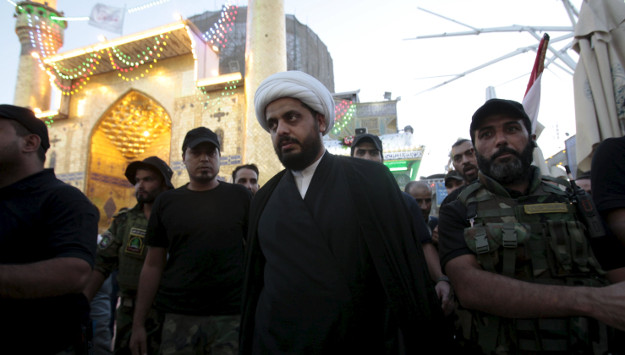
Iran-backed militia leader: “The Iraqis will be the first to enter Jerusalem”
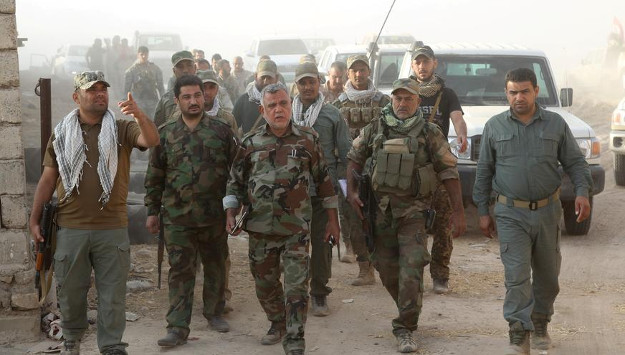
The secretary-general of Asa’ib Ahl al-Haq, an Iranian-supported Iraqi militia group, has threatened that its forces will fight Israel to seize Jerusalem, according to Shafaaq, an Arab outlet.
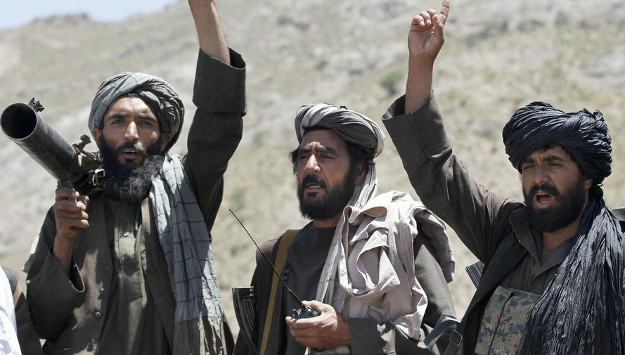
Afghans blame Iran and Pakistan for Taliban’s rapid gains in Farah Province
With Afghanistan’s western Farah Province on the verge of falling to the Taliban, Afghan officials and tribal leaders in the province accuse neighboring Iran and Pakistan of aiding the insurgents for political and economic ends.
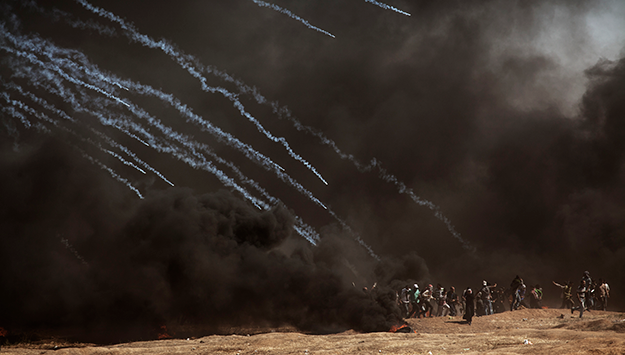
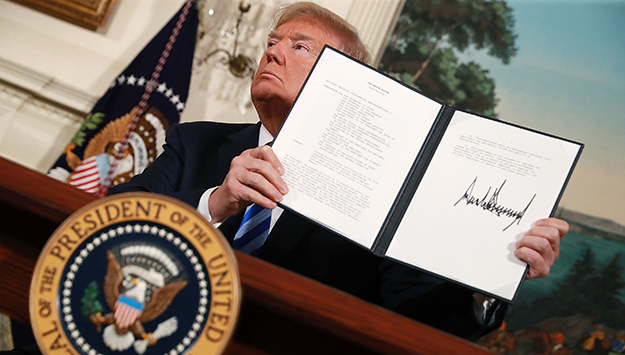
Trump’s Jerusalem decision destabilizing West Bank and Gaza | Monday Briefing
In this week’s Monday Briefing, MEI experts Nathan Stock, Alex Vatanka, Ruba Husari, and Gonul Tol provide analysis on recent and upcoming events including the fallout from President Trump’s decision to recognize Jerusalem as Israel’s capital, Iran’s diplomatic efforts with Europe to keep the nuclear deal alive, how Iran’s other trading partners are responding to U.S. warnings of sanctions, and Britain’s efforts to cultivate closer ties with Turkey.
The bombs continue to fall over Syria to the consternation of all concerned. Syrian president Bashar al-Assad warns of a conflict on Syrian soil that will embroil Israel, Iran, and Russia. “Things,” he says, “could spin out of control.”
The escalating violence between Iran and Israel in recent days is clear evidence of a new post-“Assad must go” phase in Syria’s ongoing misery.
Alex Vatanka and Gerald Feierstein join host Paul Salem to discuss reactions in the region and around the world to Trump’s announcement that the United States will withdraw from the Iran nuclear deal and restore sanctions on Iran.
In a region beset with conflicts, Oman has served as a valued intermediary in foreign relations, including as a facilitator in U.S.-Iranian contacts that led to the Iran nuclear deal. How is it managing its delicate diplomatic balancing act as it works to mediate the Yemen civil war and the dispute between Qatar and other GCC states? Sayyid Badr bin Hamad al-Busaidi, secretary general of Oman’s ministry of foreign affairs, joins guest host Gerald Feierstein to discuss.
Iran’s militia allies in Iraq eye election victory to consolidate gains, expel US
As Iraqis are heading to the polls on Saturday to vote in the country’s parliamentary elections, the Fateh Alliance, a coalition dominated by Iranian-backed militia groups, is confident that it will win sufficient parliamentary seats to choose the country’s next prime minister. Abu Ala al-Wa’eli, the commander of Kata’ib Sayyid al-Shuhada, a militia unit within the Popular Mobilization Force (PMF) and part of the Fateh Alliance, said the alliance has not nominated anyone to become the next prime minister but will play the kingmaker in the post-election government formation process.
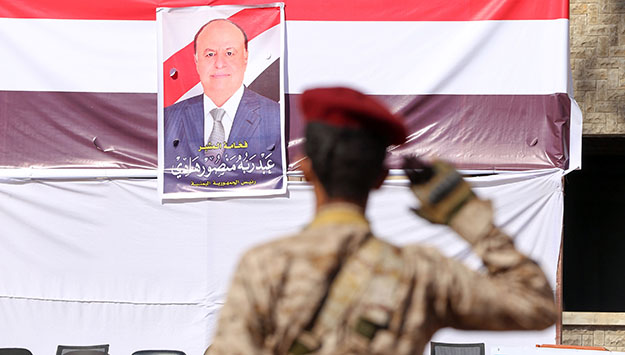
A ray of hope for Yemen finally appeared on Apr. 17 when Martin Griffiths, the new U.N. special envoy to Yemen, announced that he will put in place a framework for new talks within two months. However, a string of resignations and revelations in the Yemeni government raises questions about Hadi’s leadership of the anti-Houthi forces.
Special briefing: The far-reaching impacts of Trump's withdrawal from the Iran nuclear deal
In this special briefing, MEI experts Bilal Y. Saab, Alex Vatanka, Randa Slim, Ahmad Majidyar, Gerald Feierstein, Gonul Tol, and Marvin G. Weinbaum discuss President Trump’s announcement that the United States will withdraw from the Iran nuclear deal and its ramifications for the region.
Iran’s Sixth Five-Year Development Plan (2016-21) identifies the energy sector as a key source of revenue and driver of economic growth.[1] The plan envisages increasing oil output by 2 million barrels per day (bpd) to 4.8 million bpd.[2] Achieving this ambitious target will require substantial foreign investment, technology, and expertise.
China’s Approach to Mediation in the Middle East: Between Conflict Resolution and Conflict Management
Mediation diplomacy has emerged as one of the central pillars of China’s foreign policy objectives and practice, with Beijing deliberately positioning itself as a peacemaker in the Middle East conflicts and crises in the region (e.g., Afghanistan, Syria, Sudan, Yemen, Iran, and the Israeli-Palestinian peace process). This article examines whether China’s mediation diplomacy in the Middle East is a precursor of change in China’s interpretation and application of the principle of non-intervention.