This individual is a guest contributor. MEI is not able to assist with contact requests.
Jean-Pierre Cassarino holds a professorship at the Robert Schuman Center for Advanced Studies (RSCAS/European University Institute, Florence) where he directs the Return migration and Development Platform (http://rsc.eui.eu/RDP/). He is also research associate at the Tunis-based Institut de Recherche sur le Maghreb Contemporain (IRMC). Since the mid-1990s, he has published extensively on international migration, particularly on return migration and has carried out numerous field surveys investigating returnees’ manifold patterns of reintegration. Selected publications include: (ed.) Unbalanced Reciprocities: Cooperation on Readmission in the Euro-Mediterranean Area, The Middle East Institute Press, Washington, 2010; (ed.) “Conditions of Modern Return Migrants”, International Journal on Multicultural Societies, Vol. 10, Issue 2, UNESCO, Paris, 2008; (ed.) Return Migrants to the Maghreb Countries: Reintegration and development challenges, RSCAS, European University Institute, Florence, 2008; Tunisian New Entrepreneurs and their Past Experiences of Migration in Europe: Networks, Resource Mobilisation, and Hidden Disaffection. Ashgate Publishers, Aldershot, 2000. Email: [email protected]
Iran Cleric Gets Jail Term for Releasing Mass Execution Tape
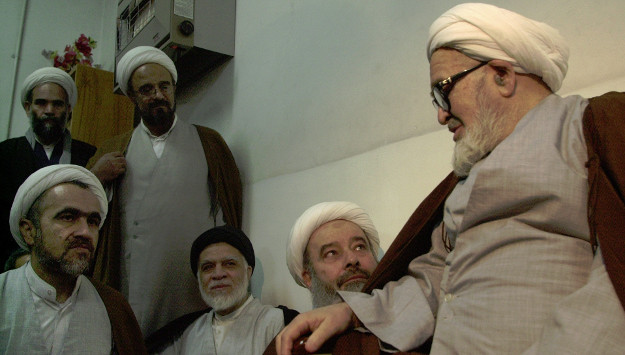
In the latest act of political repression and human rights violation in Iran, a Special Clerical Court has defrocked regime critic Ahmad Montazeri and sentenced him to six years in jail for publishing an audio recording in
Shell Latest Energy Giant to Return to Iran after Nuclear Deal
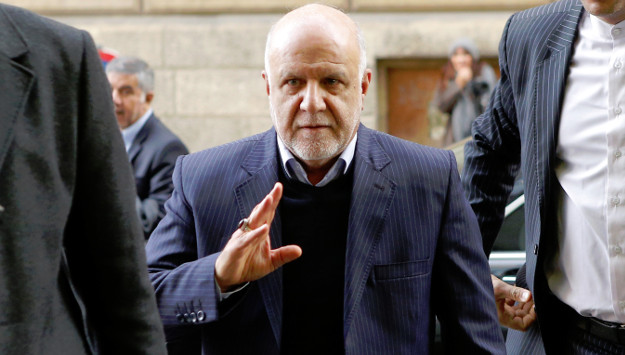
Despite uncertainty surrounding the future of the 2015 Iran nuclear deal, international energy giants are competing fiercely to invest in Iran’s rich oil and natural gas sectors.
Access to Legal Residency for Refugees in the Middle East: Bureaucracy, Deterrence, and Prolonged Impermanence
The more than four million refugees presently residing in Middle East and North Africa host states often have difficulty accessing residency due to several factors, including bureaucratic barriers, prohibitive application costs, and policies designed to intentionally exclude them from the national residence system. This essay explores how states such as Egypt only issue permits for very limited periods of time, states such as Turkey make residency contingent upon remaining in one isolated geographic region, and states such as Lebanon make the process so expensive and burdensome that refugees are effectively forced to remain in an irregular status. While sometimes these barriers only have mild implications because residency permits are not frequently checked by host state authorities, in many cases the consequences can be dire.
Rouhani Warns Trump: You Can’t Tear up Nuclear Deal
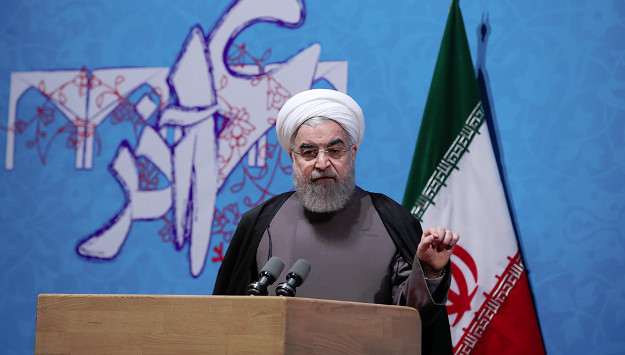
Iran’s President Hassan Rouhani said he would not allow President-elect Donald Trump to tear up the 2015 nuclear agreement and warned of “bitter response” if the next US administration failed to honor the deal.
Reformists and Hardliners at Loggerheads over Opposition Leaders’ Arrest
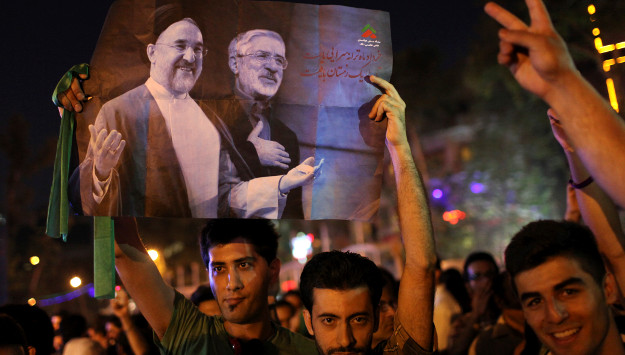
More than seven years since the 2009 presidential elections in Iran, controversies related to the disputed polls and the regime’s subsequent crackdown of the protest movement continue to haunt the Islamic Republic. As the country is gearing up for next year’s presidential vote, Iranian conservatives and reformists are yet again at loggerheads over the house arrest of Green Movement leaders Mir Hossein Mousavi and Mehdi Karroubi.
In this week’s Monday Briefing, MEI experts Herman Franssen, Charles Lister, W. Robert Pearson, and Marvin G. Weinbaum provide analysis on recent and upcoming events including OPEC’s agreement to reduce oil output, the continuing offensive in Aleppo, Erdogan’s increasing executive powers, and deteriorating relations between Pakistan and India.
Iran’s Recruitment of Afghan, Pakistani Shiites Fuels Sectarianism
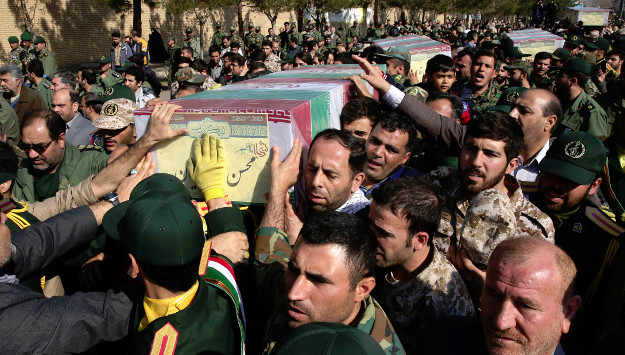
On November 30, hundreds of people gathered in the Iranian city of Qom to attend the funeral procession of several Afghan and Pakistani Shiites killed in Syria.
Tycoon's Death Penalty Points to Oil Corruption in Iran
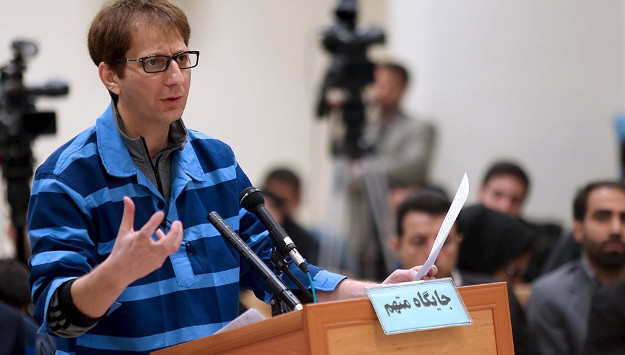
The Iranian media reports that the country’s Supreme Court has upheld the death sentence for Babak Zanjani, an Iranian billionaire convicted in a high-profile oil corruption case. In March, a court in Iran had convicted him of being “
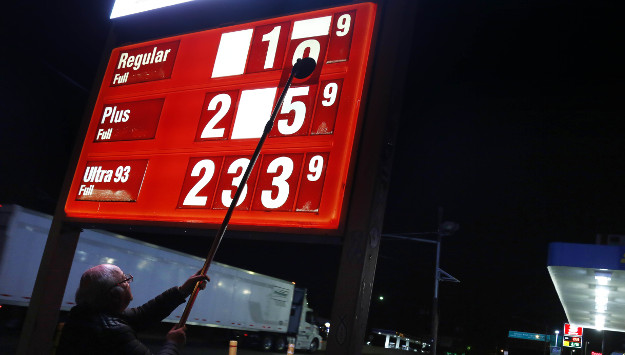
In Tehran, the November 30 decision by OPEC to cut oil production by member states was predictably a big deal. This, however, was not just about the economics of the event. Sure, the price of crude oil shot up by 10% on the announcement. It was the first time in eight years that OPEC states had agreed to a collective production cut.
But in Tehran, the other big news was that Iran – OPEC’s third-biggest producer – had escaped the call for it to cut back its production. On the other hand, Iran’s biggest regional rival, Saudi Arabia, agreed to a steep cut.
Iranian Authorities Intensify Acts of Repression against Artists
Mehdi Rajabian, an Iranian musician serving a three-year jail term at Tehran’s Evin prison, is being treated for internal bleeding at a hospital. But the country’s judiciary has demanded that he return to prison, disregarding his serious medical condition.
A Revolutionary Court in 2015 found Rajabian, his filmmaker brother Hossein Rajabian, and their musician friend Yousel Emadi guilty of “insulting Islamic sanctities” and “illegal audio-visual activities.”