This individual is a guest contributor. MEI is not able to assist with contact requests.
Jean-Pierre Cassarino holds a professorship at the Robert Schuman Center for Advanced Studies (RSCAS/European University Institute, Florence) where he directs the Return migration and Development Platform (http://rsc.eui.eu/RDP/). He is also research associate at the Tunis-based Institut de Recherche sur le Maghreb Contemporain (IRMC). Since the mid-1990s, he has published extensively on international migration, particularly on return migration and has carried out numerous field surveys investigating returnees’ manifold patterns of reintegration. Selected publications include: (ed.) Unbalanced Reciprocities: Cooperation on Readmission in the Euro-Mediterranean Area, The Middle East Institute Press, Washington, 2010; (ed.) “Conditions of Modern Return Migrants”, International Journal on Multicultural Societies, Vol. 10, Issue 2, UNESCO, Paris, 2008; (ed.) Return Migrants to the Maghreb Countries: Reintegration and development challenges, RSCAS, European University Institute, Florence, 2008; Tunisian New Entrepreneurs and their Past Experiences of Migration in Europe: Networks, Resource Mobilisation, and Hidden Disaffection. Ashgate Publishers, Aldershot, 2000. Email: [email protected]
These days even the hint of a renewal of diplomacy on Palestine is enough to set tongues wagging. In recent months, France has led what remains an inchoate effort to fill the diplomatic vacuum created by the Obama administration’s decision two years ago to close its book on Palestine.
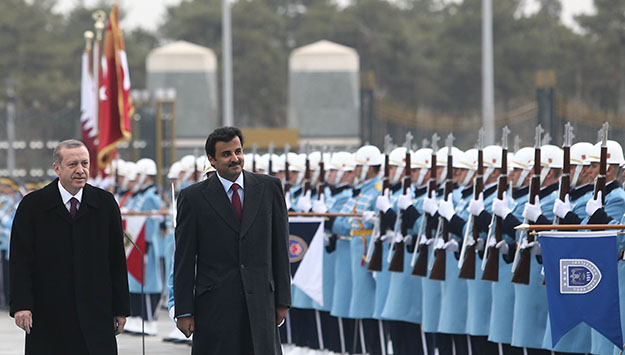
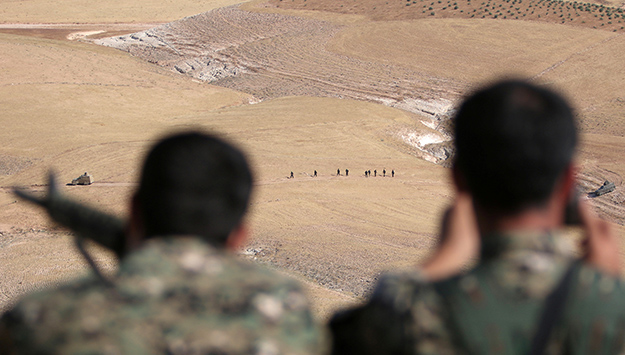
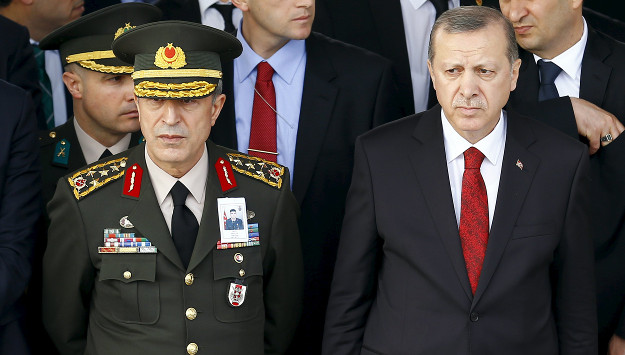
Between the rise to power of the Justice and Development Party (A.K.P.) in the early 2000s and the eruption of the Syrian crisis in 2011, Turkey’s “zero problems with neighbors” approach to foreign policy seemed commendable. Today, however, Ankara’s foreign policy is perhaps best described as “zero neighbors without problems.” In response to the Arab uprisings of 2011, Ankara’s projection of primarily soft power has evolved into the embrace of hard power—most notably in Iraq and Syria.
Community Responses to Floods in Fiji: Lessons Learned
As Pacific countries urbanize, the possibilities for more deaths and destruction are obvious. Traditional means of flood prevention and protection are not necessarily forgotten, despite modern changes in living patterns and life styles. In this essay, taking Fiji as a case study, lessons learned from traditional lifestyles are analyzed in the light of new, urban settlement patterns.
This Policy Paper is part of The Middle East Institute’s Regional Cooperation Series. Throughout 2016, MEI will be releasing several policy papers by renowned scholars and experts exploring possibilities to foster regional cooperation across an array of sectors. The purpose is to highlight the myriad benefits and opportunities associated with regional cooperation, and the high costs of the continued business-as-usual model of competition and intense rivalry.
Netanyahu’s Risky Politics and the French Initiative
The so-called ‘French initiative’—a boost-plan for the moribund ‘Middle East Peace Process’ designed to bring Israel and the P.L.O. back to the negotiating table under an international umbrella through a series of multilateral summits—was born in classic French diplomatic opulence. Not nearly half-baked, the initiative was presented ceremoniously in a grandiose manner by a foreign minister who was replaced shortly after, prompting knee-jerk reactions from all parties.
Monday Briefing: Manbij Offensive, Yemen Talks, Turkey-Israel, Tunisia Unity Government
In this week’s Monday Briefing, MEI experts Robert S. Ford, Charles Schmitz, Gonul Tol, and Mabrouka M’Barek provide analysis on recent events including Manbij offensive, Yemen talks, Israel-Turkey rapprochement, and Tunisia national unity government.
Rohingya Refugees in Aceh, Indonesia: Hostile Hospitality
This essay investigates what became of the many hundreds of Rohingya who were rescued from their rickety boats in the Andaman Sea in May 2015 and brought to shore in Aceh, Indonesia. It discusses the spontaneous acts of hospitality that initially greeted their arrival, the subsequent escapes by some from the camps in which they were accommodated, and the struggle by local officials and NGOs to find mid-term solutions for their care.
Presidential Race Shifts Discourse on Israel-Palestine
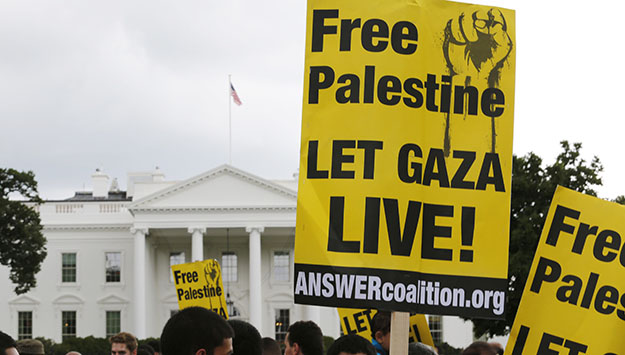
The 2016 presidential primaries have upended a wide variety of assumptions about the rules of American politics, and what the traffic will bear. One of these areas is the Israeli-Palestinian conflict.
Protracted Refugee Displacement in the Middle East: Making Home in Limbo?
This essay examines a key policy assumption behind the concept Protracted Refugee Situations—the notion that the refugee predicament, “limbo,” can only be resolved through going Home as defined within a nation-state framework. The authors’ proposal—that refugees can make home without necessarily going home—offers an alternative, refugee-centered perspective of home as a “constellation” of practices, strategies, and ideas.