This individual is a guest contributor. MEI is not able to assist with contact requests.
Jean-Pierre Cassarino holds a professorship at the Robert Schuman Center for Advanced Studies (RSCAS/European University Institute, Florence) where he directs the Return migration and Development Platform (http://rsc.eui.eu/RDP/). He is also research associate at the Tunis-based Institut de Recherche sur le Maghreb Contemporain (IRMC). Since the mid-1990s, he has published extensively on international migration, particularly on return migration and has carried out numerous field surveys investigating returnees’ manifold patterns of reintegration. Selected publications include: (ed.) Unbalanced Reciprocities: Cooperation on Readmission in the Euro-Mediterranean Area, The Middle East Institute Press, Washington, 2010; (ed.) “Conditions of Modern Return Migrants”, International Journal on Multicultural Societies, Vol. 10, Issue 2, UNESCO, Paris, 2008; (ed.) Return Migrants to the Maghreb Countries: Reintegration and development challenges, RSCAS, European University Institute, Florence, 2008; Tunisian New Entrepreneurs and their Past Experiences of Migration in Europe: Networks, Resource Mobilisation, and Hidden Disaffection. Ashgate Publishers, Aldershot, 2000. Email: [email protected]
Profound changes are occurring throughout the global energy system, including an increase in the production of hydrocarbons in the Americas and a shift in demand in which oil is giving way to gas and, to a lesser extent, coal. How are these changes affecting the Middle East and North Africa (MENA) region, and what might the MENA countries do to meet the challenges posed by this “energy revolution?” Robert Springborg addresses these issues in this MEI Policy Focus.
On the surface, it is difficult to identify the common ground between Korea and the Middle East in terms of religious heritage: Shamanism, Buddhism, Confucianism, and Christianity are the major religions of Korea, while Islam predominates in the Middle East. However, rapid globalization and the increased frequency of exchange between Koreans and the peoples of the Middle East are beginning to challenge common assumptions about the religious composition of each region. This essay will describe the history and current status of Islamic expansion in Korea, as well as Korean Christian missions in the Middle East.
1,500 Years of Contact between Korea and the Middle East
Islamic history in Korea and Korea-Middle East relations predate the Korean War by more than a millennium. Yet, many Koreans are not aware of this long history of cultural and commercial interaction. Furthermore, there are widespread misconceptions in Korea about the Middle East and aspects of Islam.
Korea and the GCC: Reaching a Sustainable Economic Partnership
Over the past four decades, economic relations between the Republic of Korea (hereafter Korea) and the Gulf Cooperation Council (GCC) countries have been focused on two sectors. Given the lack of energy resources in Korea, the GCC countries have provided oil and gas for Korean manufacturing, electricity, transport, and related activities. These countries have also provided Korea with business opportunities in the construction sector, including the building of expressways, seaports, and industrial plants.
This week’s visit to Tehran by the Kuwaiti emir, Sheik Sabah al-Ahmad al-Sabah, is about more than Iranian-Kuwaiti relations. It might even be a pivotal moment in the shaping of Iran’s ties with the Arab countries across the Gulf. Kuwait, which currently holds the rotating presidency of the Gulf Cooperation Council (GCC), is acting as a conduit for the collective unease that the GCC’s six member states, particularly Saudi Arabia, have about Iran’s regional policies.
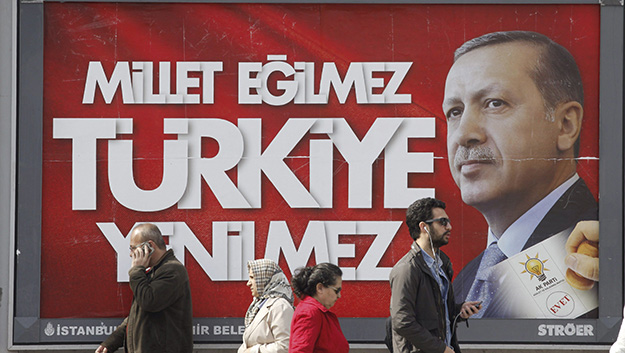
Turkish Prime Minister Recep Tayyip Erdogan secured his eighth big win in 14 years when his ruling AK Party won over 45 percent of the vote in local elections on March 30. After facing down corruption charges, mass protests, and accusations of authoritarianism, Erdogan may feel emboldened to run for president in Turkey’s first direct presidential election in August.
Allen Keiswetter is a scholar at the Middle East Institute and an analyst at the law firm of Dentons. This is an updated version of a paper originally published by Dentons-GPS.
The Iran Sanctions and South Korea’s Balancing Act
Following the recent progress on the Iranian nuclear issue and the subsequent easing of sanctions, South Korean businesses are reengaging the Iranian market. A South Korean trade delegation visited Iran on March 9, 2014 to expand bilateral trade ties in the mining, industrial, and food sectors. On March 17, South Korea’s Finance Ministry lifted a ban, allowing South Korean auto, construction, pharmaceutical, and telecommunications industries to resume trade with Iran, though sanctions remained in the shipbuilding, shipping, and harbor sectors.
Sabbahi, Spoiled Ballots, and the Egyptian Election
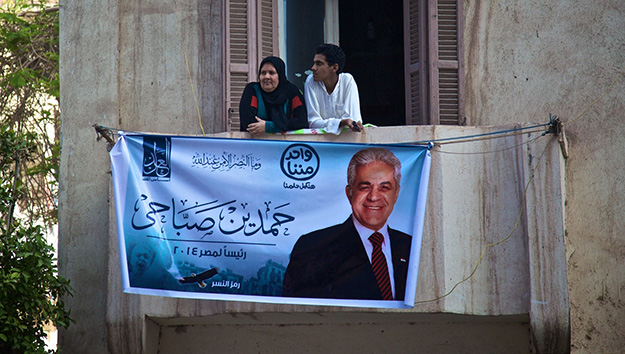
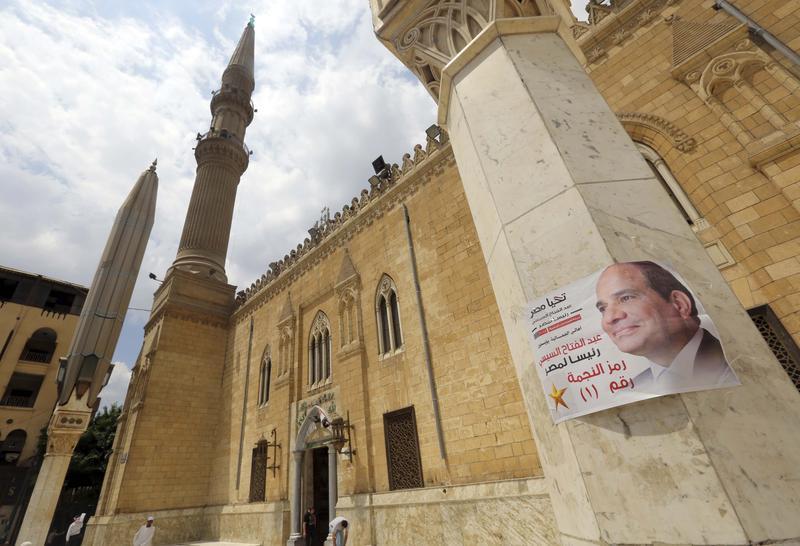
Egyptian presidential elections underdog Hamdeen Sabbahi achieved the impossible: he came in third in a two-horse race. The 60-year-old leftist politician and sole rival to the country’s ex-army chief Abdul-Fattah el-Sisi secured just under 757,000 votes in the preliminary count as opposed to Sisi’s more than 23 million votes—as well as to the votes of a last-minute unexpected entrant: the spoiled ballot.
Pakistan is only one of three countries—the others being Afghanistan and Nigeria—in which polio has never been eradicated. Polio in Pakistan has been a particular worry recently, with a disturbing spike in cases. According to the World Health Organization (WHO), 61 out of 77 cases of polio reported worldwide from January through mid-May 2014, or 79 percent, were in Pakistan.[1]