This text has been translated by AI and may contain errors.
Skip to Content

Ragui Assaad

Professor

Expertise

North Africa

This individual is a guest contributor. MEI is not able to assist with contact requests.

Ragui Assaad is Professor at the Humphrey Institute of Public Affairs at the University of Minnesota. He has written extensively on labor market and youth issues in the Middle East and North Africa. The author acknowledges the able research assistance of Stefan Johansson in the preparation of this essay.

The Latest from Ragui Assaad

Filter by
9989 Results
حلقة 15: آراء من واشنطن – أسباب تجدّد المواجهات في القدس وغزة
  • Video
  • حلقة 15: آراء من واشنطن – أسباب تجدّد المواجهات في القدس وغزة

    واقع الفلسطينيين في القدس الشرقية وغزة وأسباب تجدّد المواجهات بشكل دوري مع إسرائيل هو موضوع هذه الحلقة من ‘آراء من واشنطن’، ويستعرض فيها إبراهيم الأصيل رأياً لخالد الجندي. هل تتفقوا مع خالد؟

    May 21, 2021

    Greece and Cyprus can play a modest role in advancing Israeli-Palestinian peace
  • Analysis
  • Greece and Cyprus can play a modest role in advancing Israeli-Palestinian peace

    In March 2021, the Eastern Mediterranean Gas Forum held its first meeting as a recognized international organization. Delegations from member countries – including Cyprus, Egypt, Greece, Israel, Italy, Jordan, and Palestine – gathered in Cairo to organize a regional gas market. The forum is a unique space that offers a platform for dialogue between European and Middle Eastern countries. Furthermore, it is rare that Israeli and Palestinian delegations cooperate on the international stage. Yet, as the inaugural meeting demonstrated, the conflict is never too far away. When the delegates voted on whether to grant the United Arab Emirates observer status in the forum – a privilege given to the United States and European Union – Palestine vetoed, a clear demonstration of Ramallah’s frustration with the normalization process that started a few months ago.

    May 21, 2021

    Is Ahmadinejad set for a comeback?
    Photo by Majid Saeedi/Getty Images
  • Analysis
  • Is Ahmadinejad set for a comeback?

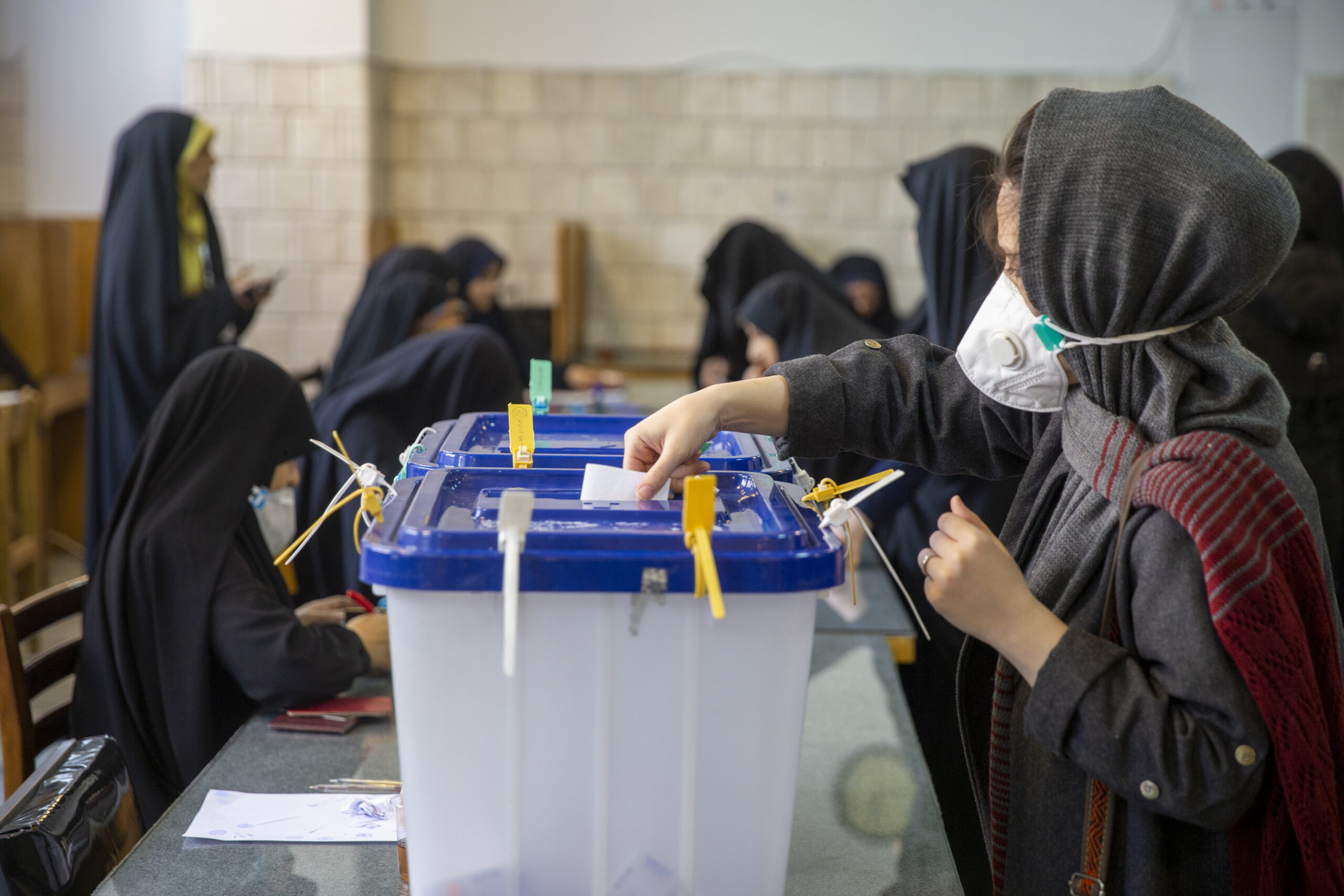
    As the Islamic Republic of Iran approaches its 13th presidential election, the candidacy of former President Mahmoud Ahmadinejad (2005-13), once strongly supported by the conservative camp, poses a significant challenge to other conservative candidates by dividing their base. Given Ahmadinejad’s transformation into an opposition voice — one who openly crosses the Islamic Republic’s redlines — the ruling establishment is now facing a predicament on whether to allow the controversial statesman to run, or to bar him from participating in the presidential elections.

    May 21, 2021

    The 5G divide in the Middle East: Further disparity between the Gulf and its neighbors
  • Analysis
  • The 5G divide in the Middle East: Further disparity between the Gulf and its neighbors

    The 5G technology revolution is poised to change society irreversibly in the Middle East. The evolution of the Internet of Things (IoT) powered by 5G networks could prove life-enhancing. Already, the Gulf countries have led the way in adopting 5G technology in the region and the rollout of 5G showcases the Gulf’s new role as a leader in digital technology. Although the Gulf countries have made strides to be global tech leaders, their neighbors in the region seriously lag behind in their abilities to adopt large-scale 5G technology. This disparity will further deepen the divides in development between the Gulf and the rest of MENA. Looking to the future, the Gulf will surely pull ahead as the tech hub of the region, but there are still important benefits for the rest of the region to reap as they slowly adopt next generation technology. 

    May 20, 2021

    Amid the escalating violence in Israel and Palestine, can the EU move from words to deeds?
    Photo by Dursun Aydemir/Anadolu Agency/Getty Images
  • Analysis
  • Amid the escalating violence in Israel and Palestine, can the EU move from words to deeds?

    While riots and even violent military clashes between Israel and the Palestinians are unfortunately nothing new, and the conflict itself has been of interest to the international community for many decades, the recent, sudden escalation in violence has come as a surprise to many outside observers. This has forced individual states and international organizations to take a stance on what’s happening, including the EU. For the EU, the Middle East conflict is one of the greatest challenges in the immediate neighborhood and a major factor hindering the implementation of its European Neighborhood Policy in the eastern Mediterranean.

    May 20, 2021

    Eye on Niamey: Middle East regional powers vie for influence in Niger
    Photo by Arda Kucukkaya/Anadolu Agency via Getty Images
  • Analysis
  • Eye on Niamey: Middle East regional powers vie for influence in Niger

    Due to its relatively stable political institutions, geographic proximity to Libya, and UNSC seat, regional powers in the Middle East are competing for influence in Niger. Egypt and the UAE are trying to counter Turkey’s growing economic and security cooperation with Niger, Saudi Arabia and Iran wish to leverage its UNSC voting power, and Israel is testing the waters for a potential normalization of diplomatic relations. These rivalries are poised to intensify, as the Sahel’s geostrategic significance continues to expand.

    May 20, 2021

    Hezbollah's regional challenge
    Middle East Institute
  • Podcast
  • Hezbollah's regional challenge

    Hanin Ghaddar and Kasra Aarabi join host Alistair Taylor to discuss the challenges Hezbollah poses to the region and its key role in Iran’s proxy network, which spans from Iraq to Syria and Lebanon to Yemen.

    May 20, 2021

    A successful US strategy in Syria must focus on hearts and minds of Syrian youth
    Photo by Muhammed Said/Anadolu Agency via Getty Images
  • Analysis
  • A successful US strategy in Syria must focus on hearts and minds of Syrian youth

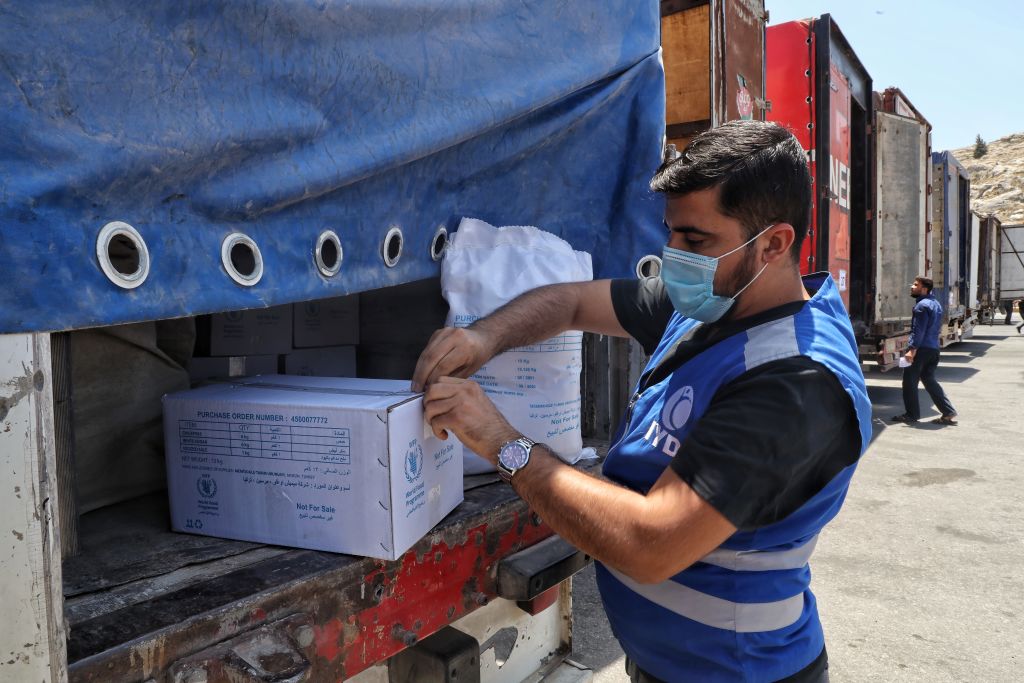
    Assad’s current geopolitical challenges present the U.S. with an important opportunity to address a growing national security threat. By taking steps today to ensure that areas currently outside of Assad’s control remain protected from both the Syrian regime and other external actors seeking to further destabilize the country amid the chaos, the U.S can protect itself and the West from an uncertain tomorrow and stand up for Syrian refugees in the process.

    May 19, 2021

    Agricultural technology in the Middle East: Sowing the seeds of the future
     Christopher Pike/Bloomberg via Getty Images
  • Analysis
  • Agricultural technology in the Middle East: Sowing the seeds of the future

    Over the last decade, new technology has been developed to address agriculture’s longstanding structural problems related to unproductive farming soils and water shortages. Such initiatives could potentially play a pivotal role in promoting food systems’ resilience across the region. These technologies are designed to increase and improve the outputs of the agricultural sector, while using less energy and more sustainable methods. Responding to the need to promote sustainable agricultural growth, agricultural technology (or “agritech”) today aims to reduce agrarian waste and the use of chemical fertilizers. Looking to the future — while taking cues from the past — may unlock the solutions to the region’s desperate food insecurity.

    May 19, 2021