Ragui Assaad is Professor at the Humphrey Institute of Public Affairs at the University of Minnesota. He has written extensively on labor market and youth issues in the Middle East and North Africa. The author acknowledges the able research assistance of Stefan Johansson in the preparation of this essay.
The Latest from Ragui Assaad
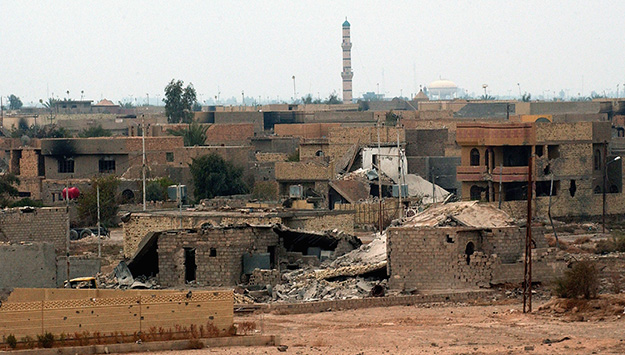
Learning from SIGIR's Final Report on Iraq Reconstruction
The Special Inspector General for Iraq Reconstruction (SIGIR) recently published a final report on U.S. efforts in Iraq from 2003-2012. It provides an impressive level of detail on the thousands of projects and over $60 billion spent over those years. Until recently, when it was surpassed by the ongoing effort in Afghanistan, the U.S. project in Iraq was the single largest reconstruction effort in American history.

Blasphemy in New and Old Egypt
Many participants and leaders of the January 25 revolution hoped for a new Egypt to emerge, one that respected freedom of speech and freedom of religion, amongst other liberties. More than two years later, it has become glaringly obvious that such hopes were pipe dreams, and that the “New Egypt” will respect neither, in part thanks to the mounting number of blasphemy cases and trials that have taken place.
Egypt Needs Washington Now More than Ever
Egypt is in trouble. And Egypt’s trouble is bad news both for Egypt and for the United States. With a withering economy, continued political unrest, and poor institutionalization of new and ever-evolving political rules, many Egyptians have lost hope in the ultimate success of the country’s political transformation. Given the sacrifices and optimism associated with the removal of President Hosni Mubarak in 2011, the failure of governance in Egypt, though not entirely unexpected, has the makings of tragedy.

Asia-Gulf Economic Relations in the 21st Century: The Local to Global Transformation
Asia constitutes the hub of the transformation of global economic power today. The Gulf, itself part of Asia, is of increasing importance in this transformation. This book documents the growing interactions between the economies of the Gulf states and those of the rest of Asia. These relationships are critical to how the world economy develops over the next decade, and how economic (and perhaps strategic) power is distributed.
Egypt's Draft NGO Law: Impact and Implications
The Middle East Institute is pleased to welcome Sarah Margon of Human Rights Watch and Nancy Okail of Freedom House for a timely discussion about the implications of Egypt’s controversial draft NGO law submitted for vote to the Shura Council last week. The law, which seeks to restrict the funding and operation of non-governmental organizations, is being slammed by human rights groups both inside Egypt and around the world as a blow to the free and full expression of Egyptian civil society.
Egypt's Draft NGO Law: Impact and Implications
The Middle East Institute is pleased to welcome Sarah Margon of Human Rights Watch and Nancy Okail of Freedom House for a timely discussion about the implications of Egypt’s controversial draft NGO law submitted for vote to the Shura Council last week. The law, which seeks to restrict the funding and operation of non-governmental organizations, is being slammed by human rights groups both inside Egypt and around the world as a blow to the free and full expression of Egyptian civil society.
Egypt's Draft NGO Law: Impact and Implications
The Middle East Institute is pleased to welcome Sarah Margon of Human Rights Watch and Nancy Okail of Freedom House for a timely discussion about the implications of Egypt’s controversial draft NGO law submitted for vote to the Shura Council last week. The law, which seeks to restrict the funding and operation of non-governmental organizations, is being slammed by human rights groups both inside Egypt and around the world as a blow to the free and full expression of Egyptian civil society.
Egypt's Draft NGO Law: Impact and Implications
The Middle East Institute is pleased to welcome Sarah Margon of Human Rights Watch and Nancy Okail of Freedom House for a timely discussion about the implications of Egypt’s controversial draft NGO law submitted for vote to the Shura Council last week. The law, which seeks to restrict the funding and operation of non-governmental organizations, is being slammed by human rights groups both inside Egypt and around the world as a blow to the free and full expression of Egyptian civil society.
Egypt's Draft NGO Law: Impact and Implications
The Middle East Institute is pleased to welcome Sarah Margon of Human Rights Watch and Nancy Okail of Freedom House for a timely discussion about the implications of Egypt’s controversial draft NGO law submitted for vote to the Shura Council last week. The law, which seeks to restrict the funding and operation of non-governmental organizations, is being slammed by human rights groups both inside Egypt and around the world as a blow to the free and full expression of Egyptian civil society.
Malaysia: A Base for the Growing Asia-Middle East Market?
With the shift in the direction of Gulf Cooperation Council (GCC) countries’ trade from the West to Asia and the emphasis on the “Islamic connection” by Malaysia and many of its Middle Eastern counterparts, Malaysia-GCC economic cooperation appears to be gaining momentum. Malaysia’s strategic location at the center of Southeast Asia and the need for as well as the apparent determination of Malaysia and the GCC countries to diversify their export markets could provide the impetus for this partnership to flourish.
NGOs Under Fire in Egypt
It was with customary gusto that Egyptian President Mohamed Morsi proudly announced that he had submitted his first draft law to the Shura Council under the new constitution that came into effect in December of 2012.
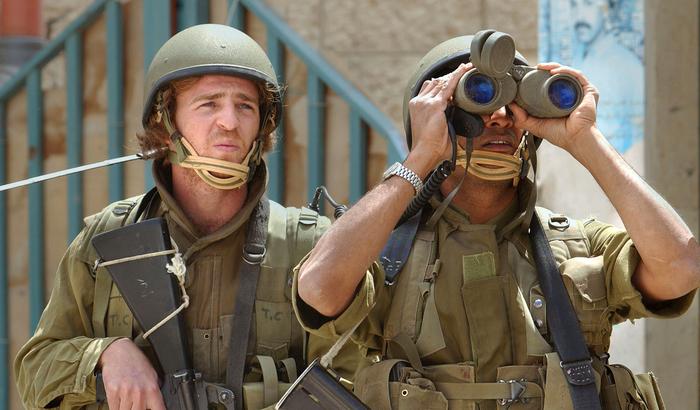
Security Challenges in a Two-State Solution: Is an International Role the Key?
…in any peace agreement, the Palestinian area must be demilitarized. No army, no control of air space. Real effective measures to prevent arms coming in, not what’s going on now in Gaza. Israel must govern its own fate and security. (Prime Minister Benjamin Netanyahu, June 14, 2009)[1]



