Read the PDF
As a result of the Iran war, Turkish thinking about nuclear weapons appears to be shifting. Iran’s emergent ability to threaten regional states (and possible determination to acquire a nuclear weapon itself), growing concern about Israeli aggressiveness, doubts about US security guarantees, and greater Saudi nuclear autonomy are all pushing Ankara to consider a future nuclear option.
Technologically, Turkey remains at least a decade away from being able to produce a bomb and lacks uranium enrichment and spent-fuel reprocessing capabilities. The greater near-term risk is that Ankara decides to reach nuclear-threshold status by acquiring the expertise and infrastructure through civilian channels that would enable it to produce a weapon relatively quickly if the security environment were to deteriorate.
These shifts are very recent and lack any political or bureaucratic inertia, so it should be relatively easy for the United States to steer Turkey back away from the nuclear track. Washington still has leverage to shape this trajectory, but the window will narrow if Ankara’s civilian nuclear program expands in response to the Iran war.
Why It Matters for the US
- Turkey’s nuclear rhetoric is shifting. President Recep Tayyip Erdoğan has publicly questioned why Turkey should be denied nuclear weapons, while Foreign Minister Hakan Fidan has suggested that changing international conditions could force a policy shift. These statements show Ankara no longer considers the development of nuclear weapons to be unthinkable.
- Regional changes are strengthening incentives to hedge. The Iran war and Tehran’s decision to fire missiles toward Turkey, concerns about Israel’s undeclared nuclear arsenal and increasingly bellicose regional posture, as well as Washington’s willingness to accommodate greater Saudi nuclear autonomy are feeding Ankara’s interest.
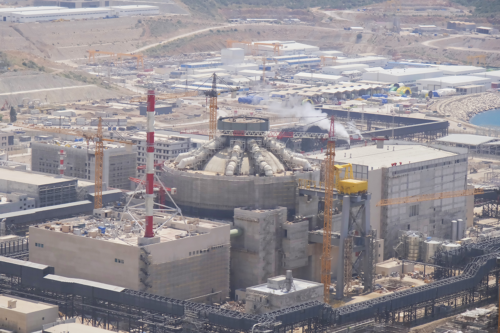
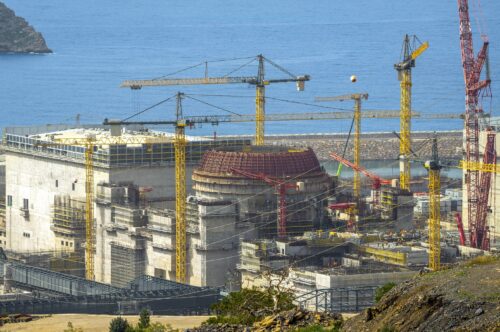
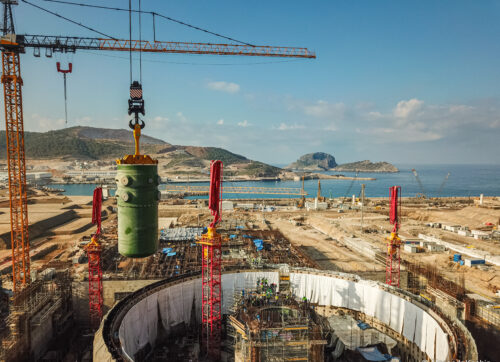
- Turkey is not close to possessing a weapon, but its options are expanding. It has no identified enrichment or reprocessing capability, and Russia’s ownership and fuel control at the nuclear plant under construction at Akkuyu constrain Turkish autonomy. But Ankara is negotiating the development of additional reactors with the US, Canada, France, and South Korea, and it is seeking greater technology transfer and control over its nuclear supply chain.
- A Turkish hedge could accelerate regional proliferation pressures. As Saudi Arabia expands its nuclear ambitions and Iran’s trajectory remains uncertain, multiple states moving closer to threshold status would shorten warning times, increase incentives for preventive action, and weaken the global nonproliferation regime.
Policy Considerations
- Reassure but attach clear proliferation red lines. Strengthen confidence in the extended deterrence capacity of the North Atlantic Treaty Organization (NATO) while making clear that acquiring weapons-relevant enrichment or reprocessing capabilities would carry consequences for defense cooperation.
- Address Turkey’s marginalization from NATO nuclear sharing. If the disagreement over Ankara’s acquisition of Russian S-400 missile systems can be resolved, Washington should examine whether Turkey can regain a meaningful role in NATO’s nuclear mission. Greater integration could reduce incentives for an independent option.
- Shape Turkey’s next generation of reactors. Encourage US and allied suppliers to compete for Turkish projects, but condition sensitive technology transfers on strong safeguards, transparency, and limits on capabilities that could shorten a weapons pathway.
- Coordinate early with other potential suppliers. Turkey’s interest in Canada’s CANDU reactor technology warrants particular attention because Ankara is seeking greater technology transfer and supply-chain autonomy. Supplier governments should coordinate before contracts are finalized.
- Preserve safeguards and pursue regional fuel-cycle arrangements. Keep Turkey’s International Atomic Energy Agency (IAEA) safeguards and Additional Protocol commitments central to cooperation, while exploring multilateral, IAEA-supervised fuel-cycle options that provide greater civilian nuclear autonomy without national control over the full weapons-relevant fuel cycle.
Gönül Tol is a senior fellow at MEI, where she focuses on Turkish politics, US-Turkey relations and regional dynamics in the Middle East.
Photo by Akkuyu Nuclear PP/Anadolu via Getty Images