Sudanese President’s Remarks Draw Angry Reactions in Iran
January 27, 2017
Share
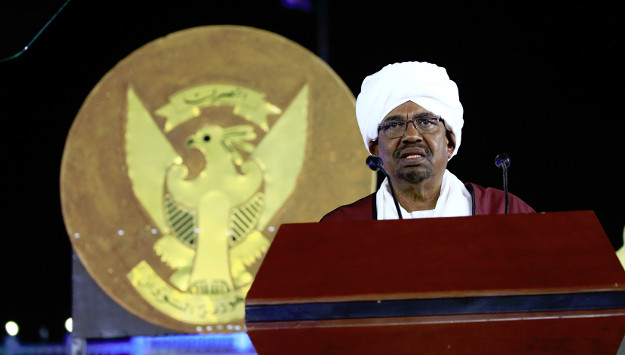
The Iranian media has reacted angrily to the Sudanese president’s yesterday remarks that Tehran is destabilizing the Middle East and North Africa and “spreading Shiism” in Sudan and throughout the region. Fars News Agency (FNA), an outlet affiliated with the Islamic Revolution Guards Corps (IRGC), opined that President Omar al-Bashir has made the allegations to appease Saudi Arabia, and that Riyadh has given Khartoum “special attention” after the latter severed its ties with Tehran.
FNA also claimed that the Obama administration recently lifted some of the US sanctions against Sudan “as a result of Saudi pressure and as a reward to Sudan for cutting ties with Iran.” The International Quran News Agency (IQNA) also said that the Sudanese president had made the anti-Iran remarks to receive rewards from Saudi Arabia.
Hamandishi, another Iranian outlet, instead blamed Riyadh. “By publishing such interviews and statements in the media, it appears that Saudi official are trying to create an anti-Iran atmosphere in the region and around the world, in order to justify their defeats…” The reformist-leaning Asr-e Iran also called Bashir’s allegations “baseless.”
While the Iranian media paints the Sudanese president’s allegations as an attempt to woo Saudi Arabia and gain financial and political rewards, Khartoum is not alone in accusing Tehran of meddling in regional countries. In the past, government officials from Afghanistan, Pakistan, Lebanon, Iraq, Gulf Arab states and beyond have raised similar concerns about Iranian interference in their domestic affairs.
The Middle East Institute (MEI) is an independent, non-partisan, not-for-profit, educational organization. It does not engage in advocacy and its scholars’ opinions are their own. MEI welcomes financial donations, but retains sole editorial control over its work and its publications reflect only the authors’ views. For a listing of MEI donors, please click here.