This text has been translated by AI and may contain errors.
Skip to Content

Afghanistan-Pakistan

Countries

The Mecca Joint Défense Agreement: A New Geometry of Middle Eastern Power?
  • Analysis
  • The Mecca Joint Défense Agreement: A New Geometry of Middle Eastern Power?

    On August 7, 2026, Saudi Arabia, Turkey, and Pakistan signed the Mecca Joint Défense Agreement, a collective-defense pact widely compared to NATO’s Article 5. This essay argues that the comparison is misleading. Mecca borrows NATO’s language of solidarity without yet possessing NATO’s institutional machinery, and the Houthi offensive against Saudi Arabia in September 2026 provided an early and revealing test of what the agreement actually means in practice. Neither Pakistan nor Turkey automatically entered the fight on Saudi Arabia’s behalf, and Washington, despite an initial reluctance to strike directly, remained indispensable through intelligence support and a major proposed F-35 sale. Drawing on realist alliance theory — Hans Morgenthau, Kenneth Waltz, Stephen Walt, Glenn Snyder, and Steven David — and on the precedent of the Central Treaty Organization (CENTO), the essay contends that the Middle East is not dividing into rival blocs but moving from hierarchy toward a looser, overlapping geometry of hedged partnerships, in which American exclusivity is eroding considerably faster than American primacy.

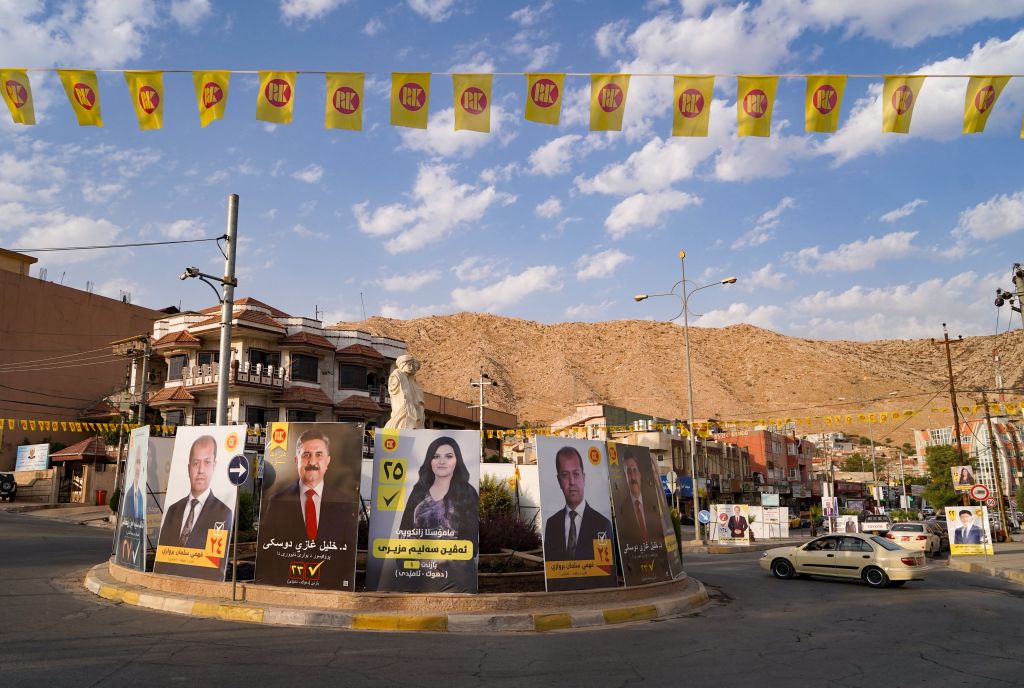
    The Mecca Alliance Meets the Red Sea – Saudi Arabia’s New Defense Pact Faces Its First Major Test
  • Commentary
  • The Mecca Alliance Meets the Red Sea – Saudi Arabia’s New Defense Pact Faces Its First Major Test

    When Saudi Arabia, Turkey and Pakistan agreed to a mutual defense pact in August, it was principally seen as a political commitment. The “Mecca alliance,” as it was dubbed, stipulated that an armed attack on one would be treated as an attack on all three, accompanied by deeper military cooperation.

    The Case for a Middle Course in Afghanistan
  • Commentary
  • The Case for a Middle Course in Afghanistan

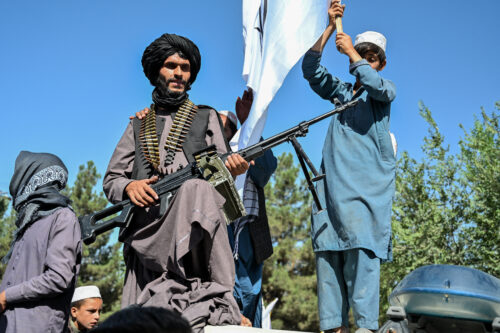
    I was a teenage Afghan refugee in Pakistan’s tribal areas when the Twin Towers fell. Almost nobody around us understood the politics of what had happened, but we knew that something had changed for good. Afghanistan, which until then had been our private tragedy and our first exile from Taliban rule, had suddenly become the world’s concern, with the United States leading the response.

    The Latest

    Filter by
    1194 Results
    Afghanistan Under the Taliban
    Middle East Institute
  • Podcast
  • Afghanistan Under the Taliban

    Marvin Weinbaum and Javid Ahmad discuss conditions in Afghanistan since falling back under Taliban rule, including worsening economic and humanitarian crises, the security situation, the role of international and regional actors, and where things might be headed moving forward.

    November 8, 2021

    The China-Pakistan Economic Corridor: Slower may be better
    Photo by Saeed Ahmad/Xinhua via Getty Images
  • Analysis
  • The China-Pakistan Economic Corridor: Slower may be better

    In September, China and Pakistan convened the tenth session of their joint coordination committee that oversees the CPEC — the largest of the BRI corridors. The long-anticipated meeting ultimately yielded no major breakthroughs. The momentum of CPEC appears to be losing steam once again, but for Pakistan, slower may actually be better.

    November 3, 2021

    Will China save the Afghan economy?
    Photo by Oliver Weiken/picture alliance via Getty Images
  • Analysis
  • Will China save the Afghan economy?

    Afghanistan’s economy is collapsing. The Taliban’s forceful seizure of power led to a curtailment of almost all foreign aid, a devastating development for a nation overwhelmingly dependent on international assistance. Widespread drought, pervasive corruption, the perennially inadequate use of the country’s human capital, and a population largely unvaccinated against COVID-19 have exacerbated this longstanding problem of foreign financial dependence.

    November 1, 2021

    Monday Briefing: COP26 kicks off in Glasgow
  • Commentary
  • Monday Briefing: COP26 kicks off in Glasgow

    Read MEI’s weekly briefing featuring expert analysis of key regional developments for the week ahead.

    November 1, 2021

    America’s reputation and local actors in a trust vacuum
    Photo by Andrew Renneisen/Getty Images
  • Analysis
  • America’s reputation and local actors in a trust vacuum

    The rapid collapse of the U.S.-supported Afghan government after the withdrawal of U.S. troops raised a number of questions about America’s credibility and reputation in the eyes of its allies, especially those who had participated in and contributed to the 20-year war. Analysts and commentators have focused on how NATO member states or the European Union now perceive the U.S., but it is also important to consider the perspective of non-state groups or individuals who served or could serve as local partners for the U.S. government and military.

    October 20, 2021

    Overcoming unemployment in Jordan: The need for evidence-based policies
    Photo by KHALIL MAZRAAWI/AFP via Getty Images
  • Analysis
  • Overcoming unemployment in Jordan: The need for evidence-based policies

    In the last few years, it has become conventional wisdom that unemployment is Jordan’s most pressing challenge. While King Abdullah himself has stressed on many occasions that reducing unemployment is a top priority, the number of unemployed is still on the rise. This problem can be overcome with evidence-based active labor market policies, which are lacking in Jordan.

    October 13, 2021

    The humanitarian and human security crises in Afghanistan
    Photo by MARCUS YAM/LOS ANGELES TIMES/via Getty Images
  • Analysis
  • The humanitarian and human security crises in Afghanistan

    The concept of human security encompasses people-centric policies to protect individuals from insecurity that could pose threats to their survival and dignity. Traditional security systems support that protection and state institutions are responsible for enabling conditions for growth and development in a society. This article discusses the emerging characteristics of Taliban governance, the current state of human security in Afghanistan, and how these new conditions affect the protection of human security.

    October 12, 2021

    How digital rights are key to protecting Afghans under the Taliban
    Photo by Oliver Weiken/picture alliance via Getty Images
  • Analysis
  • How digital rights are key to protecting Afghans under the Taliban

    Like the rest of the world during the past 20 years, Afghanistan has lived much of its life online and via networked technology; a multifaceted understanding of how digital rights are foundational to protecting Afghans in the face of an uncertain future must be key to any humanitarian or policy strategy undertaken by the U.S. or the international community.

    October 12, 2021

    Don’t Arm the Afghan Resistance
    Photo by AHMAD SAHEL ARMAN/AFP via Getty Images
  • Commentary
  • Don’t Arm the Afghan Resistance

    Supporting anti-Taliban fighters will spark a return to civil war, antagonize Pakistan, and draw the United States back into a conflict it sought to put behind it.

    October 5, 2021

    Read the Middle East Journal

    The oldest peer-reviewed publication dedicated to the study of the modern Middle East, MEI’s flagship journal covers politics, society, and culture in the region.