This text has been translated by AI and may contain errors.
Skip to Content

Afghanistan-Pakistan

Countries

The Mecca Joint Défense Agreement: A New Geometry of Middle Eastern Power?
  • Analysis
  • The Mecca Joint Défense Agreement: A New Geometry of Middle Eastern Power?

    On August 7, 2026, Saudi Arabia, Turkey, and Pakistan signed the Mecca Joint Défense Agreement, a collective-defense pact widely compared to NATO’s Article 5. This essay argues that the comparison is misleading. Mecca borrows NATO’s language of solidarity without yet possessing NATO’s institutional machinery, and the Houthi offensive against Saudi Arabia in September 2026 provided an early and revealing test of what the agreement actually means in practice. Neither Pakistan nor Turkey automatically entered the fight on Saudi Arabia’s behalf, and Washington, despite an initial reluctance to strike directly, remained indispensable through intelligence support and a major proposed F-35 sale. Drawing on realist alliance theory — Hans Morgenthau, Kenneth Waltz, Stephen Walt, Glenn Snyder, and Steven David — and on the precedent of the Central Treaty Organization (CENTO), the essay contends that the Middle East is not dividing into rival blocs but moving from hierarchy toward a looser, overlapping geometry of hedged partnerships, in which American exclusivity is eroding considerably faster than American primacy.

    The Mecca Alliance Meets the Red Sea – Saudi Arabia’s New Defense Pact Faces Its First Major Test
  • Commentary
  • The Mecca Alliance Meets the Red Sea – Saudi Arabia’s New Defense Pact Faces Its First Major Test

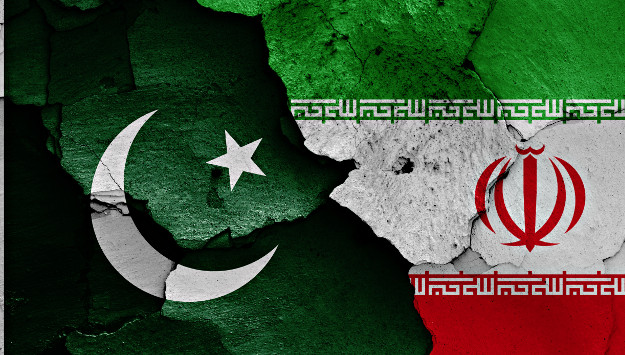
    When Saudi Arabia, Turkey and Pakistan agreed to a mutual defense pact in August, it was principally seen as a political commitment. The “Mecca alliance,” as it was dubbed, stipulated that an armed attack on one would be treated as an attack on all three, accompanied by deeper military cooperation.

    The Case for a Middle Course in Afghanistan
  • Commentary
  • The Case for a Middle Course in Afghanistan

    I was a teenage Afghan refugee in Pakistan’s tribal areas when the Twin Towers fell. Almost nobody around us understood the politics of what had happened, but we knew that something had changed for good. Afghanistan, which until then had been our private tragedy and our first exile from Taliban rule, had suddenly become the world’s concern, with the United States leading the response.

    The Latest

    Filter by
    1194 Results
    Locating Syria in India’s Diplomacy toward West Asia
    Middle East Institute
  • Analysis
  • Locating Syria in India’s Diplomacy toward West Asia

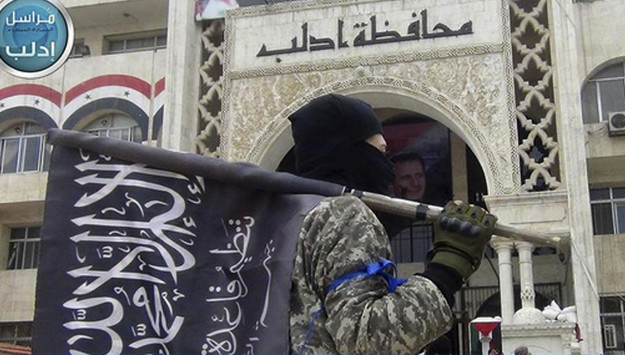
    India has sought to continue its five-decade long cordial relationship with Syria despite the conflict raging there, and has been providing muted support for Bashar al-Assad’s government. However, as the Syrian conflict has dragged on, it has become increasingly clear that the conflict in Syria is the epicenter of the tremors that are shaking the region, placing India’s own national interests at risk. This essay examines the arc of India’s policy toward the Syrian crisis, within the context of the broader thrust of Indian foreign policy towards West Asia under Prime Minister Narendra Modi.

    March 30, 2017

    Shiite Mobilization and the Transformation of Sectarian Militancy in Pakistan
    Middle East Institute
  • Analysis
  • Shiite Mobilization and the Transformation of Sectarian Militancy in Pakistan

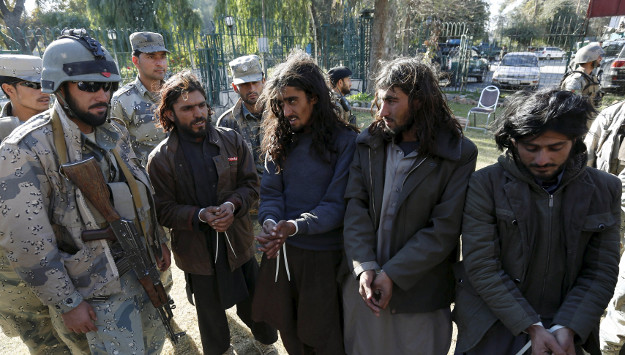
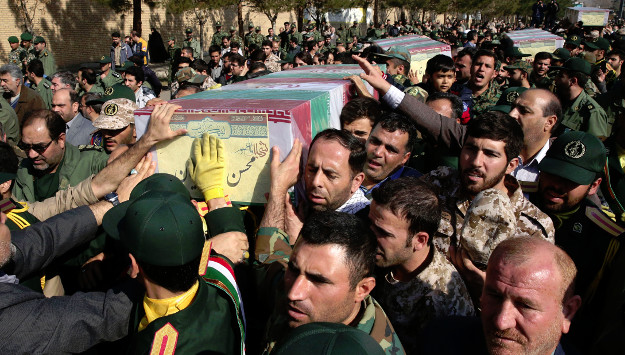
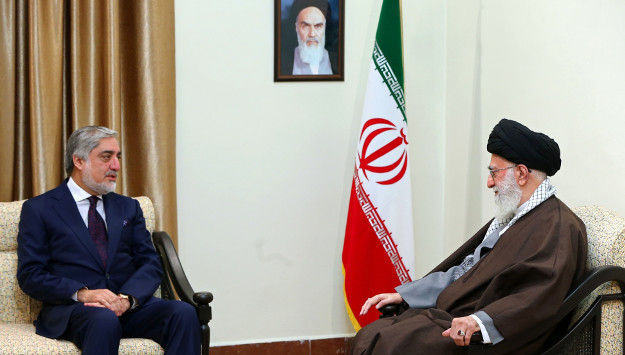
    Historically in Pakistan, Shiite militancy has remained reactive and selective. But with thousands of Pakistani Shiites being recruited and trained by Tehran, the landscape of sectarian militancy is likely to undergo a momentous transformation with a possibility of a head-on confrontation between militant fronts of the two opposing sects. This essay assesses the future impact of Shiite mobilization in Pakistan on the country and how it could transform the local sectarian conflict by fueling radicalization and increasing prospects for ISIS to penetrate and exploit local militant groups to its favor.

    March 29, 2017

    Enhancing India-Oman Economic Engagement: Four Promising Initiatives
    Middle East Institute
  • Analysis
  • Enhancing India-Oman Economic Engagement: Four Promising Initiatives

    India’s interests and capabilities extend well beyond the sub-continent. This essay is part of a series that explores the geopolitical dimensions, economic ties, transnational networks, and other aspects of India’s links with the Middle East (West Asia) — a region that plays a vital role in India’s economy and its future. More ...


    March 28, 2017

    Iran and Russia Team up with Taliban to Undermine U.S.-led Mission in Afghanistan
  • Analysis
  • Iran and Russia Team up with Taliban to Undermine U.S.-led Mission in Afghanistan

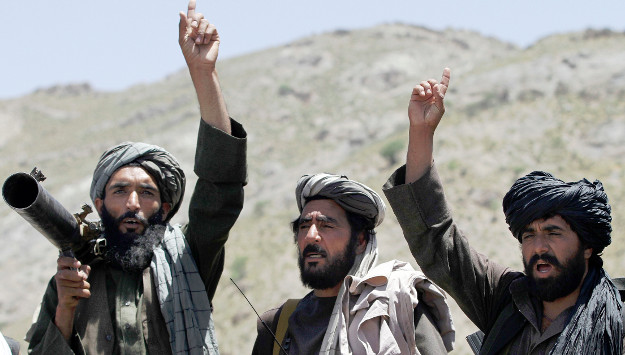
    Afghan and U.S. officials say Iran and Russia have teamed up to undermine the U.S.-led stabilization efforts in Afghanistan by sheltering, training, funding and arming Taliban insurgents. They claim that the two countries have not only expanded their diplomatic engagement with the Taliban leadership, but are also providing advanced weapons to the insurgents that are fighting the Afghan government and the U.S.-led coalition forces in the country.

    March 24, 2017

    India’s Strategic Vision About West Asia and Its Limitations
    Middle East Institute
  • Analysis
  • India’s Strategic Vision About West Asia and Its Limitations

    The discourse of Non-Alignment continues to shape the political culture of the Indian establishment’s strategic thinking in the field of foreign policy, notwithstanding the decline of Gandhian-Nehruvian moralism and increasing adaptation to the culture of power-centered realism in recent years. This essay shows that gradualism and risk avoidance remain deeply embedded features of India’s conduct of external relations, including its relations with West Asia.

    March 21, 2017

    U.S. Policy Options in Afghanistan and Pakistan
    Middle East Institute

    U.S. Policy Options in Afghanistan and Pakistan

    March 10 – January 1, 1970, March 10 - 12:00 PM – 12:00 AM
    January 1 - 12:00 PM – 12:00 AM

    Middle East Institute, 1319 18th St NW, Washington, District of Columbia 20036

    India’s Relations with West Asia: A New Era Dawns
    Middle East Institute
  • Analysis
  • India’s Relations with West Asia: A New Era Dawns

    This essay, which launches the MAP series on India’s relations with the Middle East (West Asia), delineates the extraordinary transformation of India’s deeply fraught relations with the region into, arguably, India’s most satisfying set of external relationships.

    March 7, 2017

    The Impact of Shifting Geopolitics on MENA Energy

    The Impact of Shifting Geopolitics on MENA Energy

    February 28 – January 1, 1970, February 28 - 12:00 PM – 12:00 AM
    January 1 - 12:00 PM – 12:00 AM

    Middle East Institute, 1319 18th Street NW, Washington, District of Columbia 20036

    Read the Middle East Journal

    The oldest peer-reviewed publication dedicated to the study of the modern Middle East, MEI’s flagship journal covers politics, society, and culture in the region.