This text has been translated by AI and may contain errors.
Skip to Content

Afghanistan-Pakistan

Countries

The Mecca Joint Défense Agreement: A New Geometry of Middle Eastern Power?
  • Analysis
  • The Mecca Joint Défense Agreement: A New Geometry of Middle Eastern Power?

    On August 7, 2026, Saudi Arabia, Turkey, and Pakistan signed the Mecca Joint Défense Agreement, a collective-defense pact widely compared to NATO’s Article 5. This essay argues that the comparison is misleading. Mecca borrows NATO’s language of solidarity without yet possessing NATO’s institutional machinery, and the Houthi offensive against Saudi Arabia in September 2026 provided an early and revealing test of what the agreement actually means in practice. Neither Pakistan nor Turkey automatically entered the fight on Saudi Arabia’s behalf, and Washington, despite an initial reluctance to strike directly, remained indispensable through intelligence support and a major proposed F-35 sale. Drawing on realist alliance theory — Hans Morgenthau, Kenneth Waltz, Stephen Walt, Glenn Snyder, and Steven David — and on the precedent of the Central Treaty Organization (CENTO), the essay contends that the Middle East is not dividing into rival blocs but moving from hierarchy toward a looser, overlapping geometry of hedged partnerships, in which American exclusivity is eroding considerably faster than American primacy.

    The Mecca Alliance Meets the Red Sea – Saudi Arabia’s New Defense Pact Faces Its First Major Test
  • Commentary
  • The Mecca Alliance Meets the Red Sea – Saudi Arabia’s New Defense Pact Faces Its First Major Test

    When Saudi Arabia, Turkey and Pakistan agreed to a mutual defense pact in August, it was principally seen as a political commitment. The “Mecca alliance,” as it was dubbed, stipulated that an armed attack on one would be treated as an attack on all three, accompanied by deeper military cooperation.

    The Case for a Middle Course in Afghanistan
  • Commentary
  • The Case for a Middle Course in Afghanistan

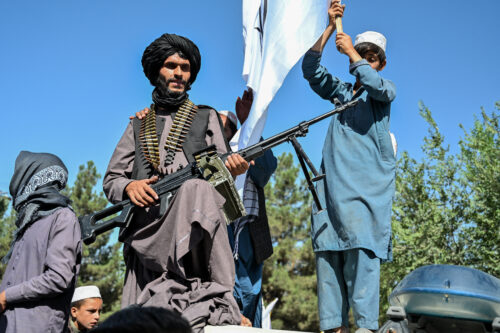
    I was a teenage Afghan refugee in Pakistan’s tribal areas when the Twin Towers fell. Almost nobody around us understood the politics of what had happened, but we knew that something had changed for good. Afghanistan, which until then had been our private tragedy and our first exile from Taliban rule, had suddenly become the world’s concern, with the United States leading the response.

    The Latest

    Filter by
    1194 Results
    Assessing the Past, Informing the Future: U.S. Aid Policy in Afghanistan & Pakistan
    Middle East Institute
  • Podcast
  • Assessing the Past, Informing the Future: U.S. Aid Policy in Afghanistan & Pakistan

    Thu, 9/19/2013 12:00 pm to 1:30 pmThe Middle East Institute is pleased to welcome Vanda Felbab-Brown, senior fellow with the Center for 21st Century Security and Intelligence in the Foreign Policy program at Brookings, independent consultant Polly Nayak,  Amb. Robin Raphel, U.S. Coordinator for Non-Military Assistance to Pakistan, and Alex Thier, assistant to the Administrator for Policy, Planning, and Learning at USAID, for a panel discussion examining how the US can contribute to the stability of post-2014 Afghanistan and Pakistan through economic and development assistance.

    September 23, 2013

    East Meets East – A Shakuhachi and Nay Duo
    Middle East Institute
  • Analysis
  • East Meets East – A Shakuhachi and Nay Duo

    Instruments such as the shakuhachi and the nay—though both many centuries old—have seldom met because they come from very distant places. The nay is a piece of reed from the Middle East, while the shakuhachi is bamboo from Japan. Although very simple in substance and shape, their sound has a strong character because they have grown to represent in the most complex ways what they have inherited from the past. When Kamal Helou, my musical partner, and I made these two instruments converse, we knew that we were forcing the laws of time. We found the first musical contact timid—both the shakuhachi and the nay imposing their characters, clinging to their traditional aesthetics. The shakuhachi is sharp and focused, the nay moving and warm. Yet the similarities were evident, both instruments having come to reflect similar ethical questions—the universality of being and the intuition of the soul.

    September 16, 2013

    Collection Spotlight: The Arab Awakening
    Middle East Institute
  • Analysis
  • Collection Spotlight: The Arab Awakening

    The Arab Awakening: America and the Transformation of the Middle East, by Kenneth Pollack and Daniel Byman et al., 2011

    July 1, 2013

    A Postmortem on Pakistan's 2013 Elections
    Middle East Institute
  • Podcast
  • A Postmortem on Pakistan's 2013 Elections

    In the wake of Pakistan’s recently concluded elections, this panel will offer insight and analysis into what the results are likely to mean for the future of the country and region. The speakers will reflect on the possible composition of a new government and the implications of the election for the future of Pakistan’s democratic system.

    May 15, 2013

    A Postmortem on Pakistan's 2013 Elections
    Middle East Institute

    A Postmortem on Pakistan's 2013 Elections

    May 15 – January 1, 1970, May 15 - 12:00 PM – 12:00 AM
    January 1 - 12:00 PM – 12:00 AM

    Carnegie Endowment - Choate Room, 1779 Massachusetts Ave NW, Washington, District of Columbia 20036

    Read the Middle East Journal

    The oldest peer-reviewed publication dedicated to the study of the modern Middle East, MEI’s flagship journal covers politics, society, and culture in the region.