This text has been translated by AI and may contain errors.
Skip to Content

Afghanistan-Pakistan

Countries

The Mecca Joint Défense Agreement: A New Geometry of Middle Eastern Power?
  • Analysis
  • The Mecca Joint Défense Agreement: A New Geometry of Middle Eastern Power?

    On August 7, 2026, Saudi Arabia, Turkey, and Pakistan signed the Mecca Joint Défense Agreement, a collective-defense pact widely compared to NATO’s Article 5. This essay argues that the comparison is misleading. Mecca borrows NATO’s language of solidarity without yet possessing NATO’s institutional machinery, and the Houthi offensive against Saudi Arabia in September 2026 provided an early and revealing test of what the agreement actually means in practice. Neither Pakistan nor Turkey automatically entered the fight on Saudi Arabia’s behalf, and Washington, despite an initial reluctance to strike directly, remained indispensable through intelligence support and a major proposed F-35 sale. Drawing on realist alliance theory — Hans Morgenthau, Kenneth Waltz, Stephen Walt, Glenn Snyder, and Steven David — and on the precedent of the Central Treaty Organization (CENTO), the essay contends that the Middle East is not dividing into rival blocs but moving from hierarchy toward a looser, overlapping geometry of hedged partnerships, in which American exclusivity is eroding considerably faster than American primacy.

    The Mecca Alliance Meets the Red Sea – Saudi Arabia’s New Defense Pact Faces Its First Major Test
  • Commentary
  • The Mecca Alliance Meets the Red Sea – Saudi Arabia’s New Defense Pact Faces Its First Major Test

    When Saudi Arabia, Turkey and Pakistan agreed to a mutual defense pact in August, it was principally seen as a political commitment. The “Mecca alliance,” as it was dubbed, stipulated that an armed attack on one would be treated as an attack on all three, accompanied by deeper military cooperation.

    The Case for a Middle Course in Afghanistan
  • Commentary
  • The Case for a Middle Course in Afghanistan

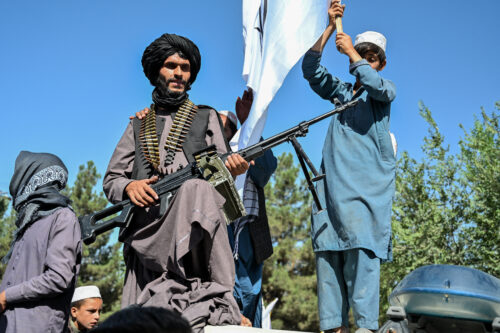
    I was a teenage Afghan refugee in Pakistan’s tribal areas when the Twin Towers fell. Almost nobody around us understood the politics of what had happened, but we knew that something had changed for good. Afghanistan, which until then had been our private tragedy and our first exile from Taliban rule, had suddenly become the world’s concern, with the United States leading the response.

    The Latest

    Filter by
    1194 Results
    Is There a Political Solution to the Afghan Conflict?
    Middle East Institute
  • Podcast
  • Is There a Political Solution to the Afghan Conflict?

    MEI Podcast 32

    Is There a Political Solution to the Afghan Conflict? 

    Amb. Omar Samad, Shamila Chaudhary, Arif Rafiq, Marvin Weinbaum  

    September 10, 2012

    Afghanistan: Where Chaos Is King and Plunder Is Privilege
  • Analysis
  • Afghanistan: Where Chaos Is King and Plunder Is Privilege

    The “new and improved” tactics of “divide and conquer” are operational both at the vertical and horizontal layers of the government and society in Afghanistan.

    August 27, 2012

    Informal Governance and Role of State in Cities in Developing Countries: Comparing Karachi and Cairo
  • Analysis
  • Informal Governance and Role of State in Cities in Developing Countries: Comparing Karachi and Cairo

    The 21st century has been called the “Century of the City,” as half of the world’s population lives in urban areas.[1] Virtually all of the projected global population growth will be in cities of the developing world, and most of it will be concentrated in informal settlements.

    August 21, 2012

    Afghanistan 2002-2012: A Decade of Progress and Hope.
  • Analysis
  • Afghanistan 2002-2012: A Decade of Progress and Hope.

    Recent media coverage of the Afghan war questions whether we’ve made meaningful progress towards security and an effective Government in that country. Or were the past ten years a lost decade for the Afghans and Coalition partners? This ten-year milestone is a good point in time to pause, check Afghanistan’s progress, and assess where it appears to be headed. With the assistance of over 40 nations, Afghanistan developed its infrastructure and has taken major steps towards self sufficiency.

    August 15, 2012

    Rethinking Afghanistan
    Middle East Institute
  • Analysis
  • Rethinking Afghanistan

    Originally posted December 2009

    We are regularly bombarded by news reports and political analysis that reflect certain underlying assumptions about Afghanistan. These assumptions range from claims that Afghanistan was always a backward state ruled by warlords, to assertions that the country was never really a nation at all, and proclamations that Afghanistan is unfit for Western-style democracy and that it is dangerously naïve to think otherwise.

    August 9, 2012

    Cultural Imperatives Of Afghanistan
  • Analysis
  • Cultural Imperatives Of Afghanistan

    Since the overthrow of King Mohammad Zahir Shah in 1973, Afghanistan has been plagued by war — either war waged among ideologues (Marxists v. nationalists) or war marked by foreign invasion and occupation. The Soviet occupation of Afghanistan, which began in 1979, lasted a full decade.

    August 7, 2012

    Police Reform in Pakistan
    Middle East Institute
  • Podcast
  • Police Reform in Pakistan

    Police Reform in Pakistan
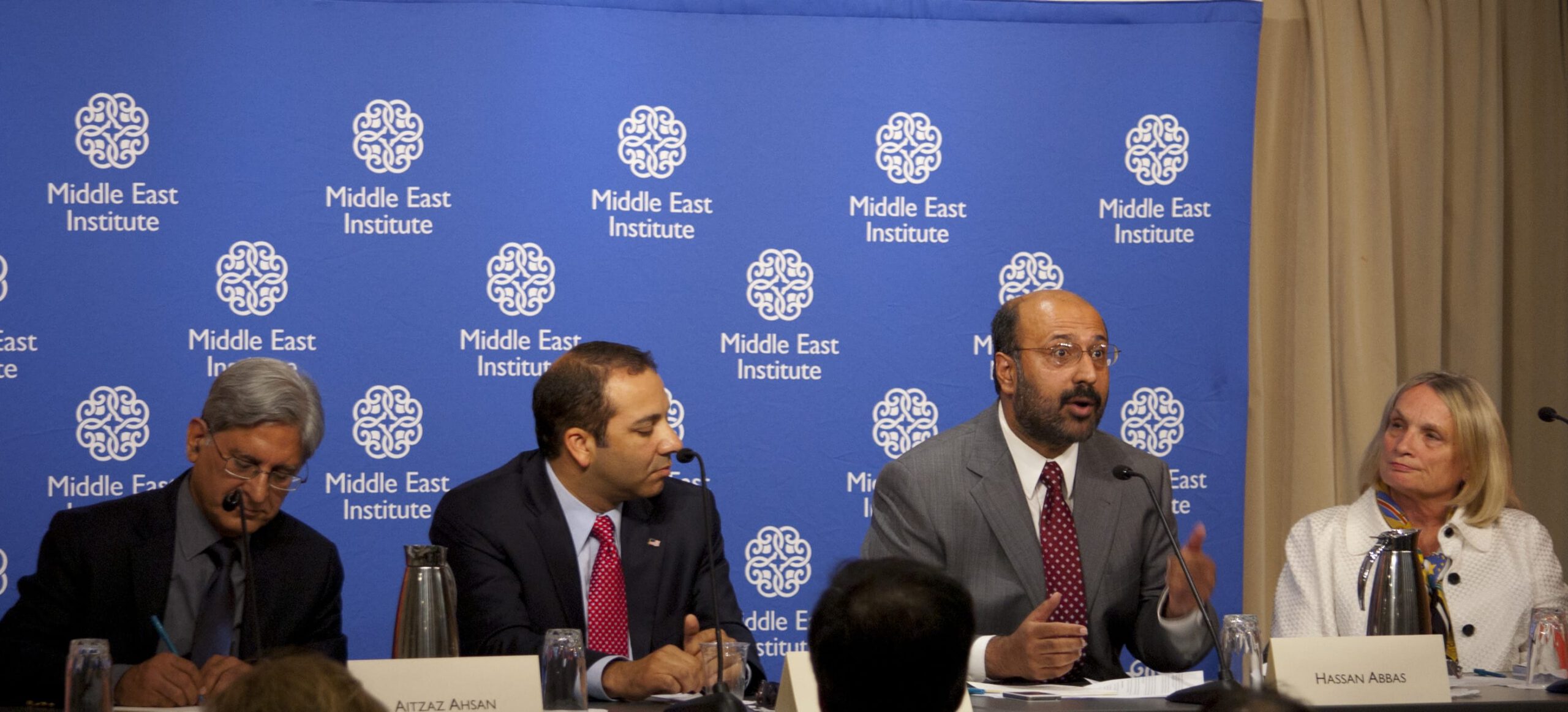
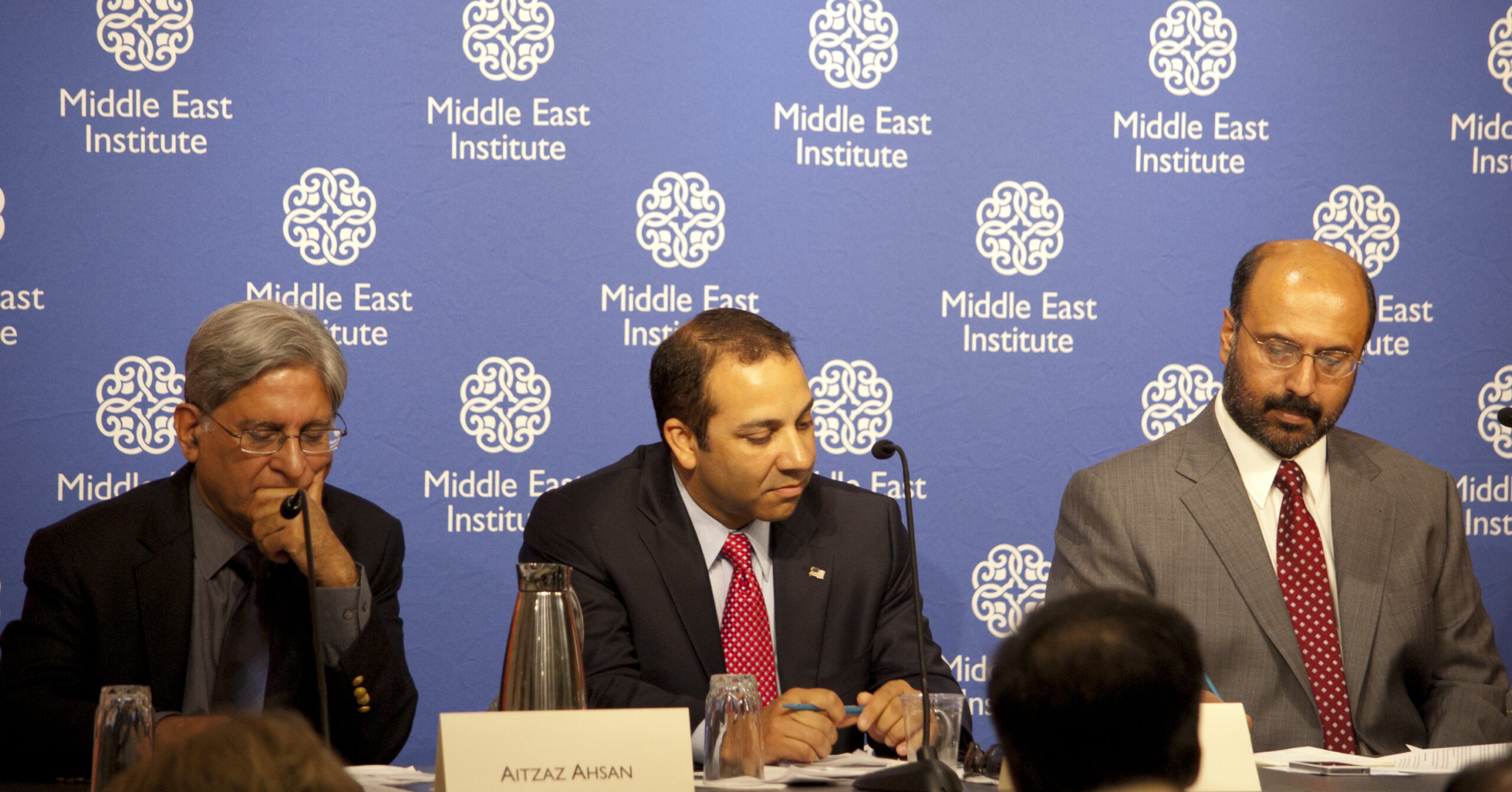
    Hassan Abbas, Aitzaz Ahsan, Arif Alikhan, Wendy Chamberlin

    July 25, 2012

    Police Reform in Pakistan
    Middle East Institute
  • Podcast
  • Police Reform in Pakistan

    Police Reform in Pakistan
    Hassan Abbas, Aitzaz Ahsan, Arif Alikhan, Wendy Chamberlin

    July 25, 2012

    Police Reform in Pakistan
    Middle East Institute
  • Podcast
  • Police Reform in Pakistan

    Police Reform in Pakistan
    Hassan Abbas, Aitzaz Ahsan, Arif Alikhan, Wendy Chamberlin

    July 25, 2012

    Police Reform in Pakistan
    Middle East Institute
  • Podcast
  • Police Reform in Pakistan

    Police Reform in Pakistan
    Hassan Abbas, Aitzaz Ahsan, Arif Alikhan, Wendy Chamberlin

    July 25, 2012

    Police Reform in Pakistan
    Middle East Institute
  • Podcast
  • Police Reform in Pakistan

    Police Reform in Pakistan
    Hassan Abbas, Aitzaz Ahsan, Arif Alikhan, Wendy Chamberlin

    July 25, 2012

    Police Reform in Pakistan

    Police Reform in Pakistan

    July 25 – January 1, 1970, July 25 - 3:00 PM – 12:00 AM
    January 1 - 3:00 PM – 12:00 AM

    Carnegie Conference Center, 1779 Massachusetts Avenue NW, Washington, District of Columbia 20036

    Read the Middle East Journal

    The oldest peer-reviewed publication dedicated to the study of the modern Middle East, MEI’s flagship journal covers politics, society, and culture in the region.