تمت ترجمة هذا النص بواسطة الذكاء الاصطناعي وقد يحتوي على أخطاء.
تخطي إلى المحتوى

أفغانستان وباكستان

The Mecca Joint Défense Agreement: A New Geometry of Middle Eastern Power?
  • التحليل
  • The Mecca Joint Défense Agreement: A New Geometry of Middle Eastern Power?

    On August 7, 2026, Saudi Arabia, Turkey, and Pakistan signed the Mecca Joint Défense Agreement, a collective-defense pact widely compared to NATO’s Article 5. This essay argues that the comparison is misleading. Mecca borrows NATO’s language of solidarity without yet possessing NATO’s institutional machinery, and the Houthi offensive against Saudi Arabia in September 2026 provided an early and revealing test of what the agreement actually means in practice. Neither Pakistan nor Turkey automatically entered the fight on Saudi Arabia’s behalf, and Washington, despite an initial reluctance to strike directly, remained indispensable through intelligence support and a major proposed F-35 sale. Drawing on realist alliance theory — Hans Morgenthau, Kenneth Waltz, Stephen Walt, Glenn Snyder, and Steven David — and on the precedent of the Central Treaty Organization (CENTO), the essay contends that the Middle East is not dividing into rival blocs but moving from hierarchy toward a looser, overlapping geometry of hedged partnerships, in which American exclusivity is eroding considerably faster than American primacy.

    The Mecca Alliance Meets the Red Sea – Saudi Arabia’s New Defense Pact Faces Its First Major Test
  • تعليق
  • The Mecca Alliance Meets the Red Sea – Saudi Arabia’s New Defense Pact Faces Its First Major Test

    When Saudi Arabia, Turkey and Pakistan agreed to a mutual defense pact in August, it was principally seen as a political commitment. The “Mecca alliance,” as it was dubbed, stipulated that an armed attack on one would be treated as an attack on all three, accompanied by deeper military cooperation.

    The Case for a Middle Course in Afghanistan
  • تعليق
  • The Case for a Middle Course in Afghanistan

    I was a teenage Afghan refugee in Pakistan’s tribal areas when the Twin Towers fell. Almost nobody around us understood the politics of what had happened, but we knew that something had changed for good. Afghanistan, which until then had been our private tragedy and our first exile from Taliban rule, had suddenly become the world’s concern, with the United States leading the response.

    الأخبار الأخيرة

    تصفية حسب
    1194 Results
    Uzbekistan ups its involvement in Afghanistan
  • التحليل
  • Uzbekistan ups its involvement in Afghanistan

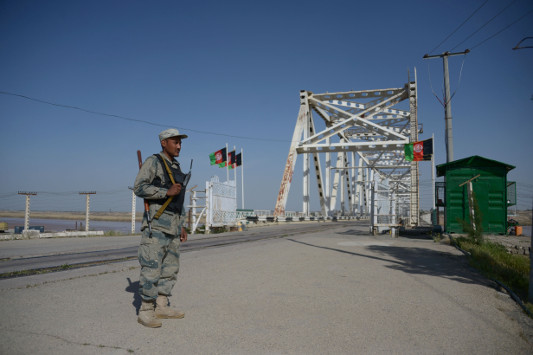
    The Afghan conflict is so intractable that it continues to resist any kind of resolution. But Afghanistan’s northern neighbor, Uzbekistan, wants to try its hand. An international ministerial conference titled “Afghanistan–path to a peaceful future” is scheduled in Tashkent for late March 2018.

    January 31, 2018

    Trump will no longer waive U.S. nuclear sanctions on Iran | Weekly Briefing
  • التحليل
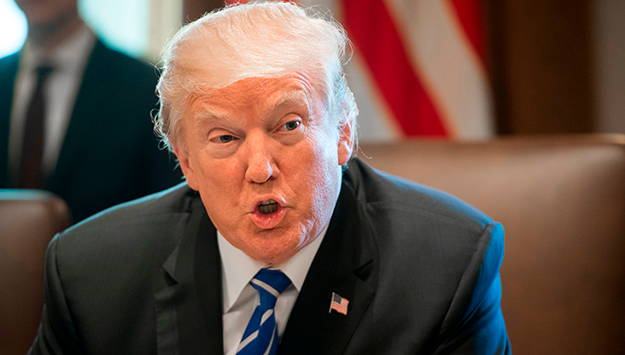
  • Trump will no longer waive U.S. nuclear sanctions on Iran | Weekly Briefing

    In this week’s Monday Briefing, MEI experts Alex Vatanka, Charles Lister, Marvin G. Weinbaum, and Eran Etzion provide analysis on recent and upcoming events including President Trump’s statement that he will no longer waive U.S. nuclear sanctions on Iran, new developments in northern Syria, Pakistan’s response to the withdrawal of U.S. security assistance, and Benjamin Netanyahu’s trip to India.

    Afghan politician cautions Tehran against aiding Taliban
  • التحليل
  • Afghan politician cautions Tehran against aiding Taliban

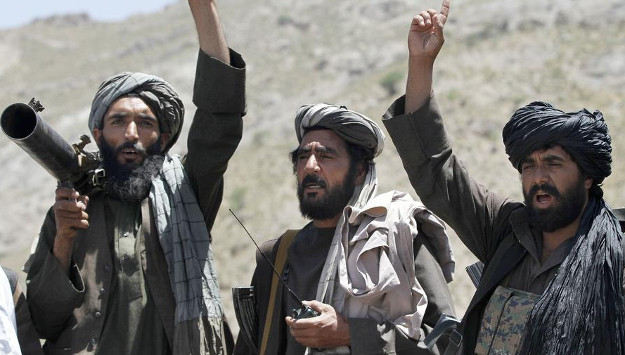
    A prominent Afghan politician has cautioned that it is not in the interest of Iran to have close relations with the Taliban, Afghan media reported. “As an Afghan, I explicitly state that cultivating close relations – I hope it is a mistake – with an enemy, which has no difference with ISIS in its essence and substance, is harmful not only to the Iranian people but also to the people Afghanistan,” Amrullah Saleh, the head of the Afghan Green Trend and former intelligence chief, said at the Tehran Security Conference.

    January 11, 2018

    Countering the Weaponization of Information
  • Video
  • Countering the Weaponization of Information

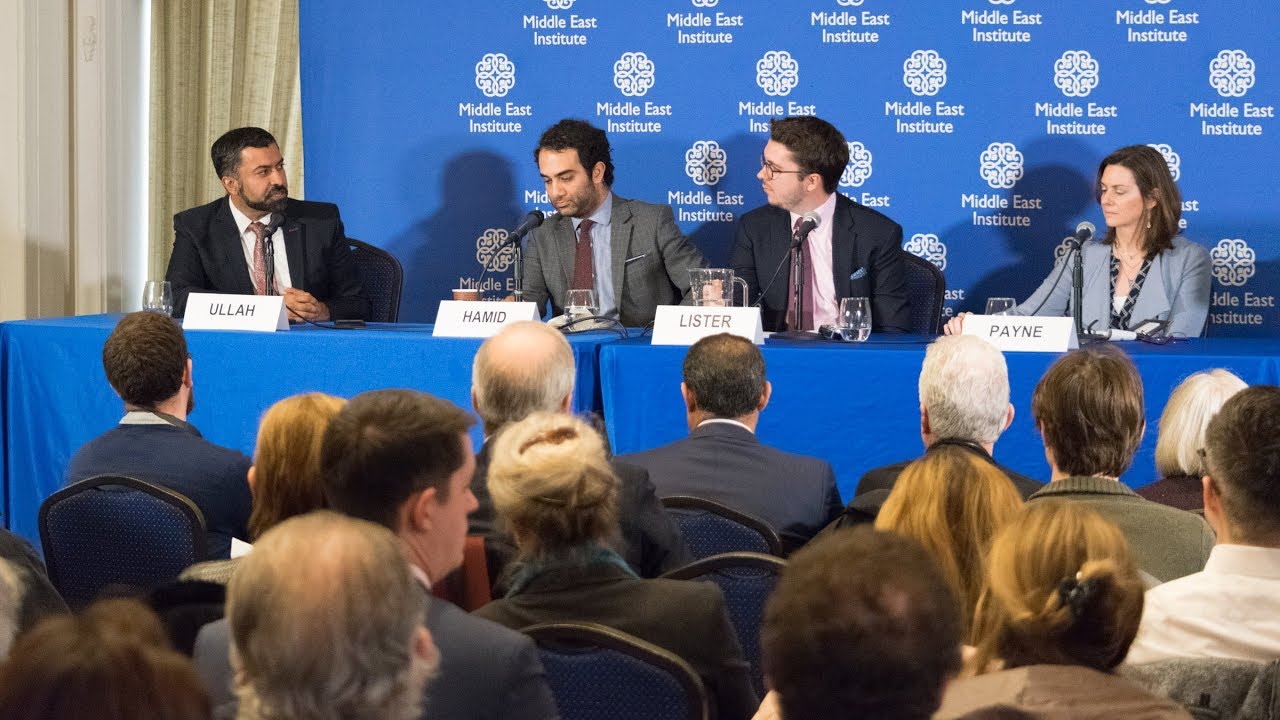
    January 10, 2018 – Mobile technologies for consuming and spreading information are empowering individuals and nonstate actors in politics and in conflicts. Social media activists scrutinize authoritarian and democratic powers alike. Violent extremists such as ISIS have used the web to advance their ideologies, project invincibility, undermine governments, and sow fear and hatred. The information battlefield surrounds all internet users.

    January 10, 2018

    Countering the Weaponization of Information
    معهد الشرق الأوسط

    Countering the Weaponization of Information

    January 10 – January 1, 1970, January 10 - 12:00 PM – 12:00 AM
    January 1 - 12:00 PM – 12:00 AM

    The Middle East Institute, 1319 18th Street NW, Washington, District of Columbia 20036

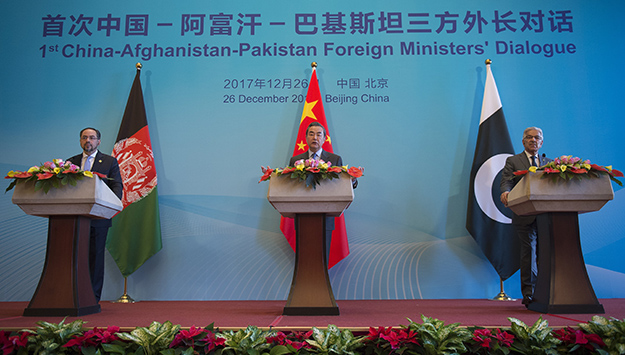
    China, US differ on road to peace in Afghanistan
  • التحليل
  • China, US differ on road to peace in Afghanistan

    Afghanistan remains a key military and diplomatic challenge for the United States, with far-reaching strategic and economic implications. While achieving stability in war-torn Afghanistan is a prerequisite for regional peace, fixing matters there has become hostage to innumerable domestic contradictions as well as deep-rooted strategic mistrust among key regional stakeholders.

    January 9, 2018

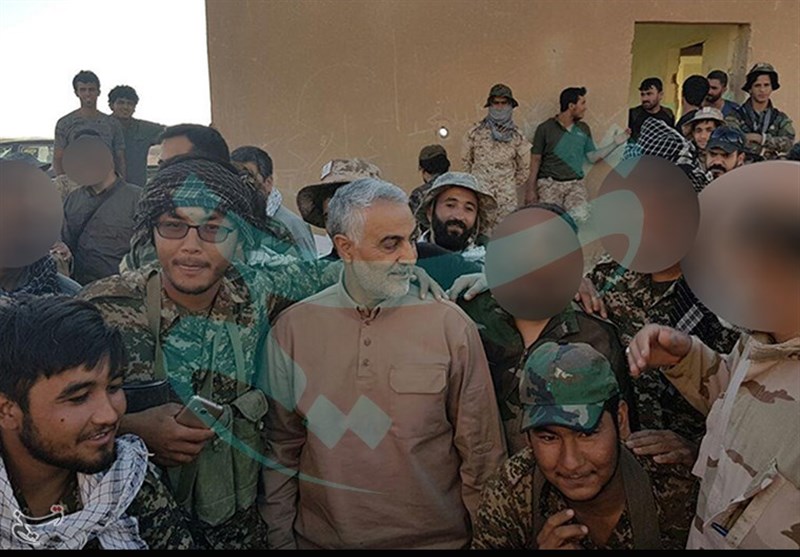
    Afghan Official in Deep Water after Praising Role of Soleimani and Shiite Militias in Syria
  • التحليل
  • Afghan Official in Deep Water after Praising Role of Soleimani and Shiite Militias in Syria

    Mohammad Mohaqeq, a deputy chief executive of Afghanistan, has come under fire at home after he praised the role of Iran and its regional proxies in the Syrian conflict. Speaking at a conference in Tehran last week, Mohaqeq congratulated Qassem Soleimani, the commander of Iran’s elite Quds Force, and Hassan Nasrallah, the leader of the Lebanese Hezbollah, for the “victory” against ISIS. But what particularly triggered angry reactions in Afghanistan was Mohaqeq’s praise for Afghan Shiite militias, known as the Fatemiyoun Division, who are fighting in Syria under Soleimani’s leadership.

    November 29, 2017

    After ISIS, Fatemiyoun Vows to Fight with “Axis of Resistance” to Destroy Israel
    معهد الشرق الأوسط
  • التحليل
  • After ISIS, Fatemiyoun Vows to Fight with “Axis of Resistance” to Destroy Israel

    With ISIS militarily defeated in Syria and Iraq, the Fatemiyoun Division, an all-Afghan Afghan Shiite militia group fighting in Syria, says its fighters will join the Lebanese Hezbollah and Iranian-sponsored Iraqi militia groups to fight Israel next.

    November 22, 2017

    France and Egypt Try to Moderate Saudi-Iran Escalation | Monday Briefing
  • التحليل
  • France and Egypt Try to Moderate Saudi-Iran Escalation | Monday Briefing

    In this week’s Monday Briefing, MEI experts Paul Salem, Alex Vatanka, Randa Slim, Marvin G. Weinbaum, and Eran Etzion provide analysis on recent and upcoming events including the Arab League meeting in Cairo to moderate the Saudi-Iran escalation, Iran’s view of the Sochi Summit as a turning point, Putin’s effort to reach an agreement on Syria before presidential elections, Afghanistan’s response to the increase of US troops on their ground, and the political upheaval in Israel as Netanyahu’s corruption case continues.

    Progress and Social Change in Afghanistan
    معهد الشرق الأوسط
  • Podcast
  • Progress and Social Change in Afghanistan

    The war in Afghanistan has dragged on for 16 years, appearing to many Americans to have no end in sight or positive outcome. However, as Defense Secretary James Mattis recently testified, “Violence and progress in Afghanistan continue to coexist.” What is that progress, and what does it mean for Afghans themselves? Saad Mohseni, chairman and CEO of Moby Media Group, and Ahmad Majidyar, director of MEI’s IranObserved project, join host Paul Salem to discuss the positive changes taking place in the country.

    November 16, 2017

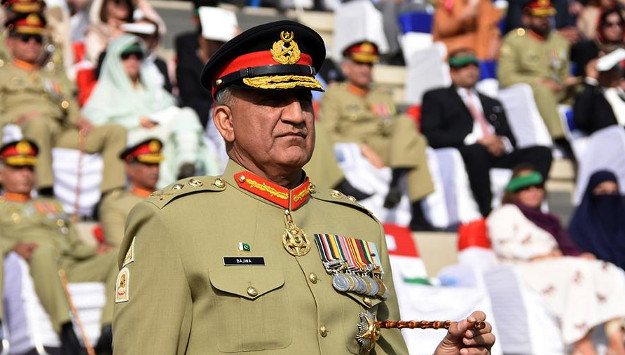
    Pakistan’s Army Chief: We’re Interested in Learning Experience of Basij from Iran
  • التحليل
  • Pakistan’s Army Chief: We’re Interested in Learning Experience of Basij from Iran

    When the chief of the Pakistani Army visited Tehran last week, he told the commander of Iran’s Islamic Revolution Guards Corps (I.R.G.C.) that Pakistan is interested in learning from Iran’s experience of creating the Basij Organization and using “popular forces” to counter enemy threats, according to the Iran

    November 14, 2017

    America Shifts to India to Help in Afghanistan
  • التحليل
  • America Shifts to India to Help in Afghanistan

    Ever since the announcement of America’s new Afghan-Pakistan strategy, the Trump administration has not been willing to let Pakistan off the hook. The manner in which President Donald Trump has confronted Pakistan on its double dealing on terrorism and called for a larger Indian role in Afghanistan has brought about an irreversible shift in U.S.-Pakistan relations.

    November 2, 2017

    Think West to Go West: Origins and Implications of India’s West Asia Policy Under Modi (Part II)
    معهد الشرق الأوسط
  • التحليل
  • Think West to Go West: Origins and Implications of India’s West Asia Policy Under Modi (Part II)

    The first part of this article outlined how the newly-elected Narendra Modi government had no sense of where West Asia, including the Persian Gulf, fit into its larger foreign policy. However, this view changed radically following overtures from the Abu Dhabi royal family and the August 2015 state visit by Prime Minister Modi to the United Arab Emirates (U.A.E.). This second part details how, since that visit, India’s relations with West Asia, and particularly with the Gulf monarchies and Iran, have evolved.

    October 24, 2017

    Tillerson Promotes Stronger Saudi-Iraq Ties | Monday Briefing
  • التحليل
  • Tillerson Promotes Stronger Saudi-Iraq Ties | Monday Briefing

    In this week’s Monday Briefing, MEI experts Gerald Feierstein, Marvin G. Weinbaum, Randa Slim, Paul Salem, and Gonul Tol provide analysis on recent and upcoming events including Secretary Tillerson’s visit to Riyadh and Doha as well as his visit to India and Pakistan, Abadi’s regional tour to promote positive relations with neighbors, Sisi’s visit to Paris to boost Egypt-France relations , and German Chancellor Merkel’s threat to cut European Union funding to Turkey due to its crackdown on democratic institutions.

    اقرأ مجلة الشرق الأوسط

    أقدم مطبوعة محكمة مخصصة لدراسة الشرق الأوسط المعاصر، تغطي مجلة MEI الرائدة السياسة والمجتمع والثقافة في المنطقة.