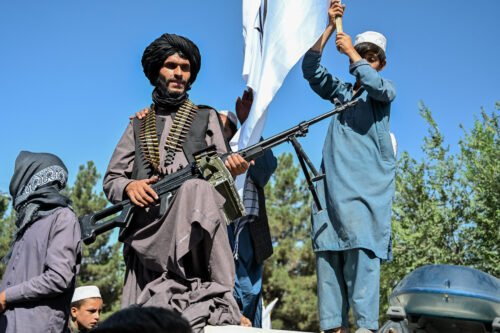
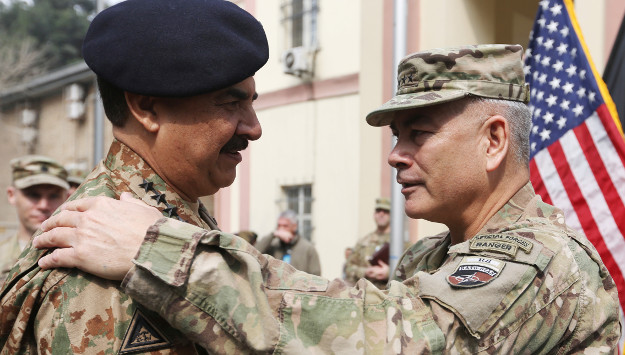
I was a teenage Afghan refugee in Pakistan’s tribal areas when the Twin Towers fell. Almost nobody around us understood the politics of what had happened, but we knew that something had changed for good. Afghanistan, which until then had been our private tragedy and our first exile from Taliban rule, had suddenly become the world’s concern, with the United States leading the response.
United States Central Command (CENTCOM), one of the US Department of Defense’s (DoD) six geographical combatant commands, is responsible for countering threats, responding to crises, and strengthening regional stability in the Middle East, Central Asia, and parts of South Asia.
A Strategic Conundrum: Pakistan’s Transit Corridor to Iran as Lifeline or Liability
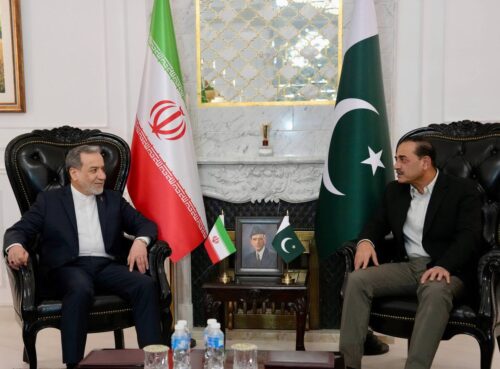
The US-Iran standoff over the Strait of Hormuz — disruptive to global trade and energy flows, and devastating for debt-burdened economies — has handed Pakistan an unexpected geoeconomic opportunity, one that may persist even if the framework agreement announced on June 14 results in a lasting peace and permanent reopening of the strait. But seizing it will have interlocking consequences for Islamabad’s ties with Tehran, Washington, and the Gulf states.
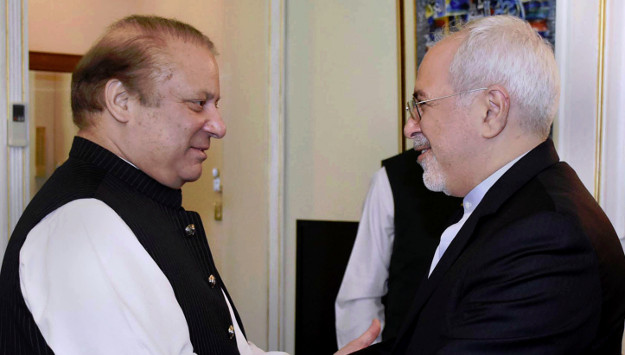
Zarif Visits Pakistan for Security Talks after Gunmen Killed 10 Iranian Border Guards
Iran and Pakistan agreed Wednesday to work together to boost security along their shared border after Pakistan-based militants killed 10 Iranian border guards in the Iranian province of Sistan and Baluchestan last week. A militant group called Jaish al-Adl claimed responsibility for the attack.
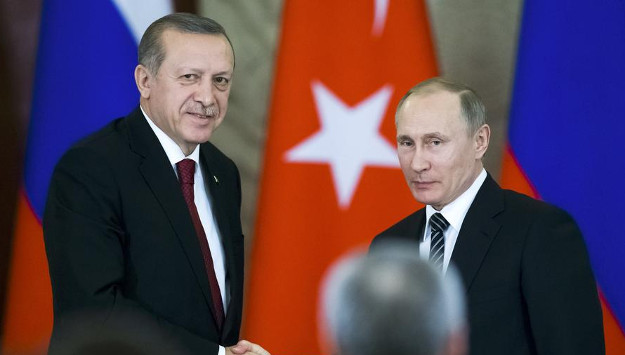
In this week’s Monday Briefing, MEI experts Gonul Tol, Randa Slim, Alex Vatanka, Marvin G. Weinbaum, and Mabrouka M’Barek provide analysis on recent and upcoming events including Turkish President Erdogan’s upcoming meeting with Russian President Putin, the upcoming speech by Hezbollah Secretary General Nasrallah, the suprising popularity of Rouhani’s VP in the Iranian Presidential Race, the Taliban’s new Spring offensive, and protests in Tunisia over a government proposal to give amnesty to the country’s corrupt financial elite.
Rouhani Calls on Islamabad to Prosecute Border Guards’ Killers to Save Ties with Tehran
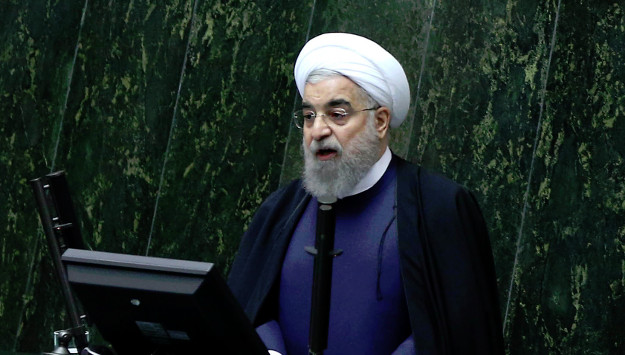
Iran’s President Hassan Rouhani has sent a letter to Pakistani Prime Minister Nawaz Sharif, calling on Islamabad to prosecute perpetrators of an attack that killed 10 Iranian troops along the Iranian-Pakistani border on Wednesday. A militant group called Jaish al-Adl claimed responsibility for the attack. According to Iran’s Tasnim News Agency, Rouhani blamed the Pakistani government’s “inaction” and “lack of necessary measures” for repeated attacks originating from Pakistan against Iranian border guards.
Turkey's Erdogan Gets His Presidential Wish | Monday Briefing
In this week’s Monday Briefing, MEI experts Gonul Tol, Gerald Feierstein, Alex Vatanka, and Marvin G. Weinbaum provide analysis on recent and upcoming events including the victory of Turkish President Erdogan’s “Yes” constitutional referendum campaign to increase his powers, Secretary of Defense Mattis’ trip to the Middle East, the entry of 1,600 candidates for the upcoming Iranian presidential elections, and the alarming violence in Pakistan against accused “blasphemers”.
Islamist Terrorism in Pakistan: New Alignments, New Tactics
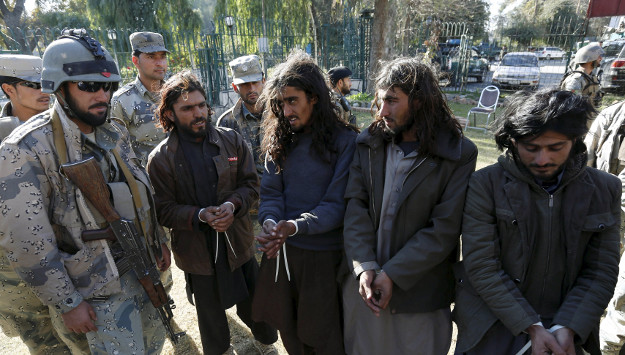
Much has been written on the evolution of Islamist terrorism in Pakistan, the role of military dictatorships in nurturing Islamist terrorist groups, and Islamist parties and proselytizing groups working hand in glove with terrorists. Al-Qaeda and the Afghan Taliban were born in Pakistan, in addition to the country’s own long list of local terrorist groups such as the multi-faceted Tehreek-e-Taliban Pakistan (T.T.P.). Pakistan is now going through a new phase of Islamist militancy, with new alignments and the adoption of new tactics by jihadists.
‘Linking West’ in ‘Unsettled Times’: India-G.C.C. Trade Relations
Economic and trade relations have been the most dynamic and significant component of the fundamental changes that have taken place in India’s relations with the Gulf Cooperation Council (G.C.C.) countries since the early 1990s. As a consequence, the Gulf has become of vital strategic importance for India in terms of energy security, trade, investment, and remittances. This essay discusses the contours of India’s trade relations with the G.C.C. countries, including the contributions they have made to India’s economic ascent and the scope for their further development.
Afghan, Iranian Officials Spar over Tehran’s Support for Taliban
The Iranian and Afghan delegations to the 136th assembly of the Inter-Parliamentary Union have had acrimonious exchanges over Tehran’s support for the Taliban, the Iranian media reports.
India has become Israel’s largest arms export market in the world over the last decade (replacing China); and Israel has become one of India’s largest arms supplier. Why did India develop a strong military partnership with a country it had ignored for 42 years? What can explain the development of defense ties in spite of limited political leadership involvement over the past decade? Finally, what are the prospects for defense relations as India grows to become one of the world’s largest defense importer? This essay answers these questions by providing an account of the evolution of Indo-Israeli defense cooperation over the past 25 years.
While the U.S. and Pakistani counterterrorism efforts have degraded al-Qaeda and the Pakistani Taliban in the Federally Administered Tribal Areas (FATA), sectarian violence across the country continues unabated and threatens to further destabilize Pakistan and the broader region.
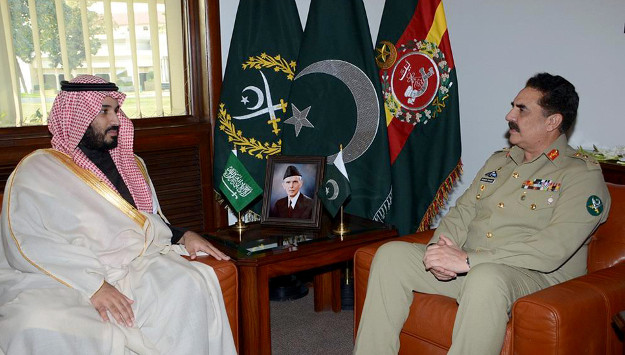
Pakistani General's Role in Saudi-Led Coalition Troubles Iran
The Iranian government has said it has “reservations” about the appointment of Pakistan’s former army chief, retired Gen. Raheel Sharif, as the head of the Saudi-led coalition.
Locating Syria in India’s Diplomacy toward West Asia
India has sought to continue its five-decade long cordial relationship with Syria despite the conflict raging there, and has been providing muted support for Bashar al-Assad’s government. However, as the Syrian conflict has dragged on, it has become increasingly clear that the conflict in Syria is the epicenter of the tremors that are shaking the region, placing India’s own national interests at risk. This essay examines the arc of India’s policy toward the Syrian crisis, within the context of the broader thrust of Indian foreign policy towards West Asia under Prime Minister Narendra Modi.
Shiite Mobilization and the Transformation of Sectarian Militancy in Pakistan
Historically in Pakistan, Shiite militancy has remained reactive and selective. But with thousands of Pakistani Shiites being recruited and trained by Tehran, the landscape of sectarian militancy is likely to undergo a momentous transformation with a possibility of a head-on confrontation between militant fronts of the two opposing sects. This essay assesses the future impact of Shiite mobilization in Pakistan on the country and how it could transform the local sectarian conflict by fueling radicalization and increasing prospects for ISIS to penetrate and exploit local militant groups to its favor.
Enhancing India-Oman Economic Engagement: Four Promising Initiatives
India’s interests and capabilities extend well beyond the sub-continent. This essay is part of a series that explores the geopolitical dimensions, economic ties, transnational networks, and other aspects of India’s links with the Middle East (West Asia) — a region that plays a vital role in India’s economy and its future. More ...
Iran and Russia Team up with Taliban to Undermine U.S.-led Mission in Afghanistan
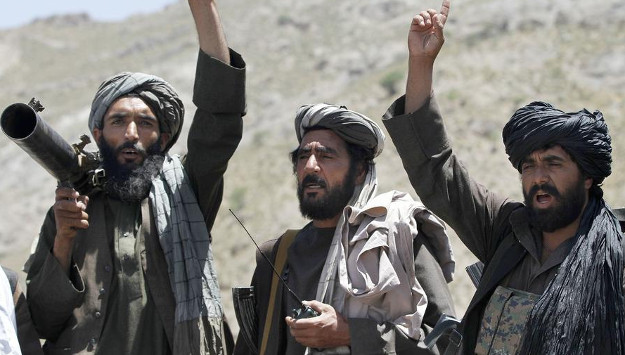
Afghan and U.S. officials say Iran and Russia have teamed up to undermine the U.S.-led stabilization efforts in Afghanistan by sheltering, training, funding and arming Taliban insurgents. They claim that the two countries have not only expanded their diplomatic engagement with the Taliban leadership, but are also providing advanced weapons to the insurgents that are fighting the Afghan government and the U.S.-led coalition forces in the country.
India’s Strategic Vision About West Asia and Its Limitations
The discourse of Non-Alignment continues to shape the political culture of the Indian establishment’s strategic thinking in the field of foreign policy, notwithstanding the decline of Gandhian-Nehruvian moralism and increasing adaptation to the culture of power-centered realism in recent years. This essay shows that gradualism and risk avoidance remain deeply embedded features of India’s conduct of external relations, including its relations with West Asia.