The Pakistani General Running Washington’s Backchannel to Tehran
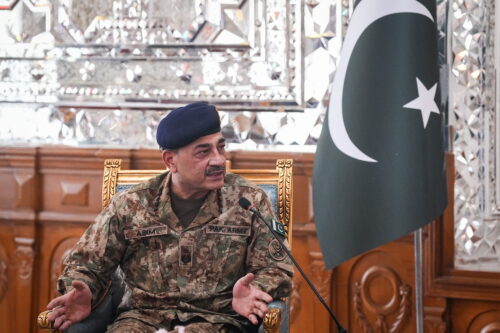
As Washington and Tehran edge closer to escalation, the most critical line of communication keeping the crisis from spiraling is being run not by polished diplomats, but by an unlikely figure: a Pakistani general. Field Marshal Asim Munir, Pakistan’s powerful army chief, has quietly become the key intermediary in the U.S.-Iran standoff, managing what may be the most important backchannel between the two sides. The mediation has thrust Pakistan to the center of the crisis while exposing it to enormous risk.
Bonus Episode: Stalled Talks and Next Steps for the US and Iran
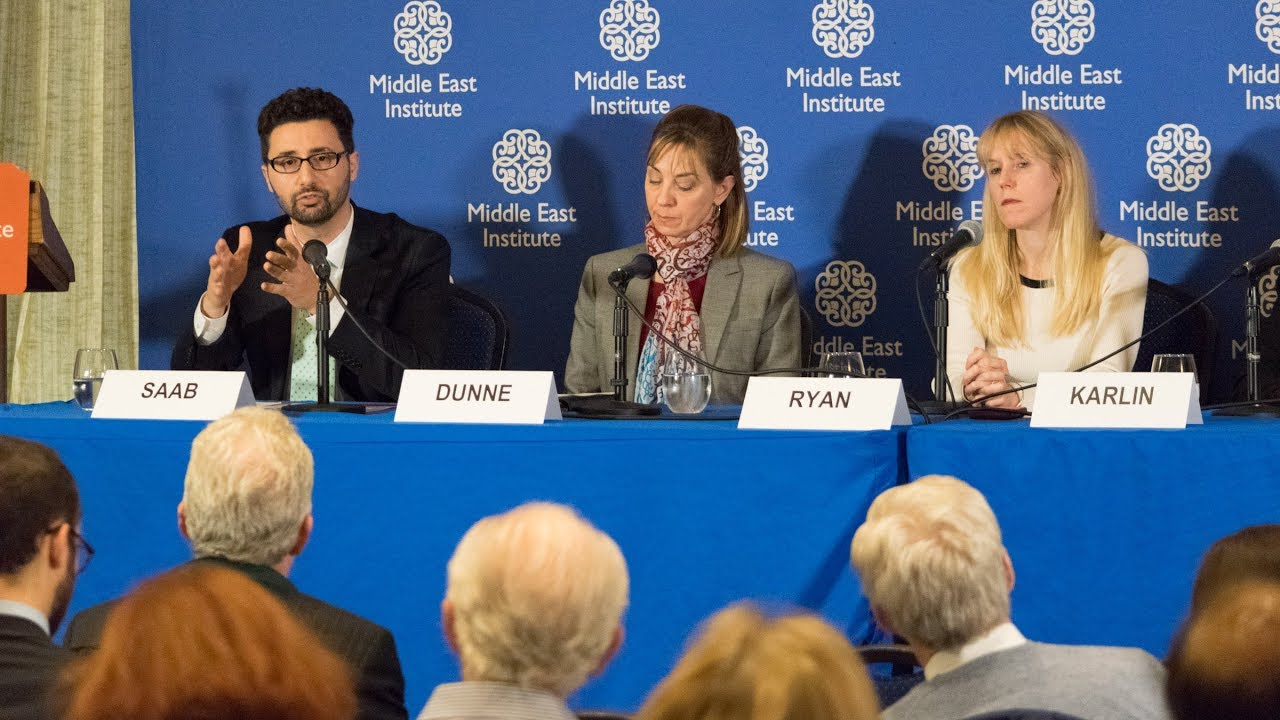
This bonus episode of Middle East Focus features a recent MEI Virtual Briefing. Director of Communications Zeina Al-Shaib is joined by MEI Distinguished Diplomatic Fellows Alan Eyre and Daniel Benaim to discuss the historic talks held in Pakistan last weekend between the United States and Iran. Tehran insists the US failed to gain its trust, while the US made its red lines clear and declared it would blockade Iranian ports in the Persian Gulf. What happens next? Eyre and Benaim offer insights into what goes on behind the scenes at such negotiations; identify the core issues at play; explore potential incentives to end the war; analyze the weaponization of energy; as well as assess the role of other regional players in this conflict.
The Pakistan-Afghanistan conflict: A strategic concern for the US
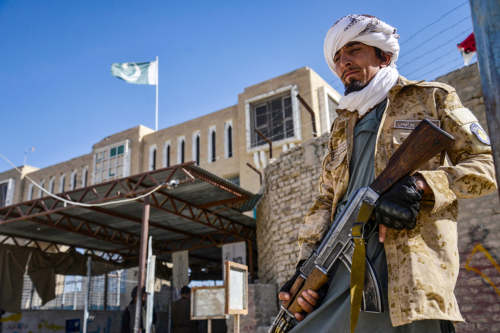
Pakistan’s relationship with the Afghan Taliban has shifted from open sponsorship in the 1990s to a silent partnership following 2001 to alienation and belligerence since 2021. Their current conflict, which comes at great cost to both countries and seems to have no easy military or political resolution, also poses a threat to the stability and prosperity of neighboring states. Although American strategic interests in the region greatly diminished following the United States’ military withdrawal from Afghanistan in August 2021, the region’s altered political dynamics have prompted a growing American engagement with Pakistan and tentatively with Afghanistan. At the same time, the US has become a factor in how both Islamabad and Kabul have come to form their national security strategies.
Europe has little wiggle room to keep Iran deal alive | Monday Briefing
In this week’s Monday Briefing, MEI experts Ahmad Majidyar, Alex Vatanka, Jean-François Seznec, Gerald Feierstein, Marvin G. Weinbaum, Gonul Tol, and Randa Slim provide analysis on recent and upcoming events including Europe’s scramble to salvage the Iran nuclear deal following the U.S. withdrawal, Iran’s response to Russia’s call for all foreign forces to leave Syria, a meeting by Saudi Arabia, the UAE and Russia to discuss the impact of new U.S. sanctions on Iran, the arrest of women’s rights activists in Saudi Arabia, new political tensions in Pakistan, a push in the U.S.
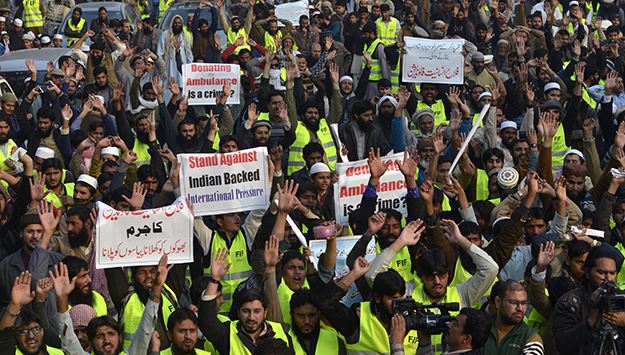
In this week’s Monday Briefing, MEI experts Charles Lister, Gerald Feierstein, W. Robert Pearson, and Marvin G. Weinbaum provide analysis on recent and upcoming events including the escalating deterrence between Israel and Iran, Pompeo’s pressure to resolve the Gulf crisis, Turkey’s increasing isolation, and the Pashtun protests in Pakistan.
In this week’s Monday Briefing, MEI experts Charles Lister, Gonul Tol, Paul Salem, Alex Vatanka, and Marvin G. Weinbaum provide analysis on recent and upcoming events including the Syria strikes, Turkey’s Assad paradox, the Arab League summit, EU’s view of the Iran nuclear deal, and clashes along the Afghanistan-Pakistan border.
Searching for the least worst option in Afghanistan
In her March 15 op-ed in The New York Times, “Tell the Truth About Afghanistan”, former National Security Advisor Susan Rice offers three “bad options” for the United States as a solution to the Afghan conflict: a limited engagement focusing on providing training, equipment, and advice for Afghan security forces which she argues would only slow down the Taliban; a complete withdrawal of troops, which would then leave the Afghan government prone to increased insurgency and interference from other i
A rare prospect for peace has come into sight in Afghanistan in the wake of Afghan President Ashraf Ghani’s bold offer to the Taliban. In a sweeping proposal, and for perhaps the first since the U.S.-led invasion of Afghanistan in 2001, Ghani suggested a cease-fire, removal of sanctions, prisoner release, recognition of the Taliban as a political party, fresh elections and a constitutional review. Speaking at the Kabul Process, a two-day Western-backed peace conference, Ghani has demonstrated remarkable boldness and vision.
Monday Briefing: Senate moves to end US engagement in Yemen conflict
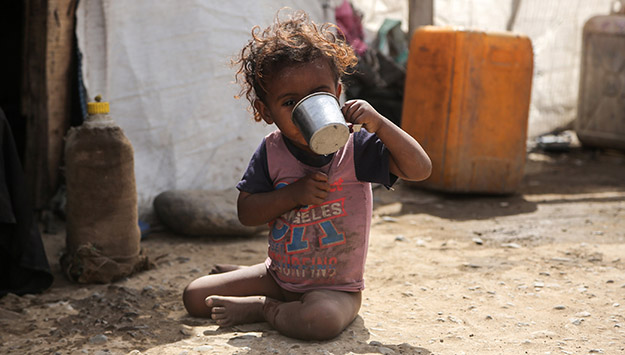
In this week’s Monday Briefing, MEI experts Gerald Feierstein, Alex Vatanka, Nathan Stock, and Randa Slim provide analysis on recent and upcoming events including the Senate’s decision to pull out of Yemen, enduring Iran-Pakistan political strain, Egypt’s role in Palestinian reconciliation, and America’s dissolving influence in Syria.
Russia and Pakistan align their Afghanistan policies
Pakistani foreign minister Khawaja Muhammad Asif’s visit to Russia from Feb. 19 to Feb. 22 was a desperate attempt by Islamabad to woo Moscow into countering mounting American pressure on Pakistan to close safe havens used by the Taliban, most notably the Haqqani network. However, the growing Moscow-Islamabad bonhomie is not good news for Washington’s current Afghan strategy, as it unmistakably signifies changing Russian perceptions and priorities in South Asia.
Reevaluating U.S. security assistance to the Middle East
Since 9/11, American security strategy has focused on building the military capabilities of global allies in order to advance shared goals and address joint threats. In the Middle East, the results of this approach have been mixed at best. Frustration over U.S. security assistance to the region has grown in Washington, as funding and arms transfers to various state and non-state partners have led to unintended consequences, prompting the Trump administration to reevaluate U.S. aid to Egypt, Pakistan, and the Palestinians.
Tightening the screws on Pakistan | Monday Briefing
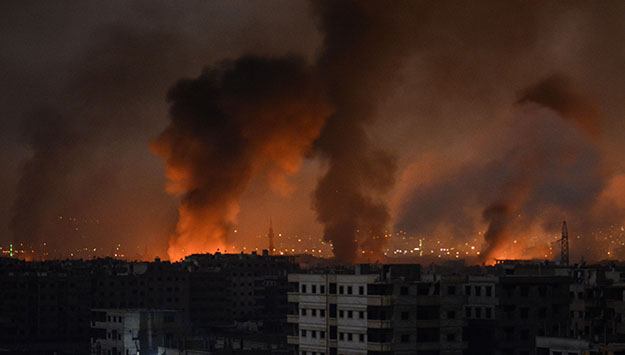
In this week’s Monday Briefing, MEI experts Marvin G. Weinbaum, Charles Lister, and Gerald Feierstein provide analysis on recent and upcoming events including the placement of Pakistan on a global terrorist financing “gray list,” the ongoing assault on eastern Ghouta following a UNSC cease-fire resolution, and diplomatic efforts on the war in Yemen.
The war in Afghanistan, the longest in U.S. history, shows little sign of winding down. Despite hundreds of billions of dollars in military aid and state support, Afghanistan still struggles with resilient Taliban and Islamic State insurgencies. Recent brazen terrorist attacks and growing disunity among the country’s political leadership raise new doubts about its future.
A series of devastating terror attacks orchestrated by the Afghan Taliban and the Haqqani network in the past two weeks have unnerved both the United States and Afghanistan. Visibly upset over the lack of success of his recently announced strategy on Afghanistan, President Donald Trump has declared that “We don’t want to talk to the Taliban.
Trump will no longer waive U.S. nuclear sanctions on Iran | Weekly Briefing
In this week’s Monday Briefing, MEI experts Alex Vatanka, Charles Lister, Marvin G. Weinbaum, and Eran Etzion provide analysis on recent and upcoming events including President Trump’s statement that he will no longer waive U.S. nuclear sanctions on Iran, new developments in northern Syria, Pakistan’s response to the withdrawal of U.S. security assistance, and Benjamin Netanyahu’s trip to India.
January 10, 2018 – Mobile technologies for consuming and spreading information are empowering individuals and nonstate actors in politics and in conflicts. Social media activists scrutinize authoritarian and democratic powers alike. Violent extremists such as ISIS have used the web to advance their ideologies, project invincibility, undermine governments, and sow fear and hatred. The information battlefield surrounds all internet users.